

While the traditional Warhammer Underworlds experience is a 1 vs 1 relatively competitive and balanced board game, this is not the only way to play. If you have a dedicated opponent, or an even number of people who show up to a game night, then have at it, but what do you do in different situations? Say you have an odd number of people who want to play – do you make somebody sit out? What if you’re having a casual meetup with ‘non-underworlds’ people, and everybody just wants a fun and quick party game? You don’t have to put your underworlds back on the shelf and cry inside as you pull out Scrabble, Catan, or Jenga for the 100th time! Let’s talk today about the ways we can be flexible with Underworlds and broaden the audience. Worst case you still got to roll dice, and best case you’ll have introduced some more people to this beautiful game.I’ll arrange this article by the type of company you’re working with/the day’s ‘vibe’ as the kids say. Who you’re looking to play with will determine what kind of game mode you could try out to suit their needs, and while there will certainly be other options, I’m going to propose what I think will be the most friction-free way to get your underworlds needs met in these different circumstances.
Experienced Underworlds Players
Say you’re at the club or game store with people who already know the game, maybe even have assembled decks on hand for a 1v1 environment. But you have an odd number of players, so somebody will have watch or scroll their phone while they wait their turn. Not so fast! There are plenty of ways to leverage the experienced player group and avoid anybody feeling left out. The simplest way to accommodate this, assuming everybody is on board, is to try for a Multiplayer Game. The rules for this are included in the core rulebook every season, but are quite rarely used by the community at large. It’s pretty straightforward – set up an extra board or two, a few more objectives, and then play the same game you’re used to, just with more opponents and more mayhem. Note that 3 player you each only get 3 activations/round (9 total per player), and 4 player the game skips round 2 so you only get 8 total activations per player. Set competitive expectations aside and just make goofy builds. Some cards will be ‘easy to score’ in a multiplayer scenario, while others will be much more difficult. Unless everybody built a deck with the expectation of a 3 or 4 player game in mind, it’s won’t be as ‘competitive’ as a normal 1v1, but that doesn’t mean it’s not worth a shot!
A twist on this is from the Shadespire season where you play a ‘King of the Hill’ version with a golden objective placed in the center of the place the boards touch. (Rules on page 26 of the original shadespire rulebook: Capture the Artifact) This objective is worth 3 glory if held at the end of a round, and the fighter holding it is inspired prior to the start of the next round. It’s a goofy twist on the multiplayer that definitely lowers the competitive balance, but ups the wacky fun and in my experience makes for great laughs and memorable stories. There are other game modes you can give a go with experienced players, and since this group already has a grasp of the rules it will be the easiest to try other things with them (Glass-Mad Gargant, Arena Mortis, etc). The general rules is try to take note of the score and don’t gang up on a losing player – try and make the experience fun for everyone. If in the right company though, absolutely cutthroat is an option.
Experienced Board/Card/Minis Game Players with Little to No Underworlds Exposure
If you have somebody in your life who is open to Underworlds but needs a slower starting pace, I wrote an article about how best to walk them through the nuances in a stepwise way and help ease them into the game. This works best when you are tutoring them individually though – you potentially could teach two other people to play against each other in a 1 on 1 game, but if the group is larger than that, especially if it’s in a casual atmosphere where it could be harder to hold people’s interests, I would suggest dropping the ‘full game experience’ from your list of goals and opting for something much more ‘beer & pretzels’. If somebody takes a shine to the game, circle back with them later for teaching, of course!In a party/game night atmosphere with multiple people, the full game of Underworlds probably isn’t feasible since you can’t engage everybody so easily (though, read the room – some people might still be willing and they’re great converts for later).
The party crowd of board gamers, or people popping in and out of MtG games, handing off video game controllers etc are going to take well to Underworlds if you can make it a party game experience. I worry that a four player Kidhammer without cards would feel dicey and not engage the experienced board game or 40K player’s tactical abilities, but trying to explain dozens of cards and scoring conditions, reaction windows, etc to multiple people might bog you down – so it’s probably time to try something else if the crowd is too large. The full game feels more like Chess than Apples to Apples, so adjust accordingly.
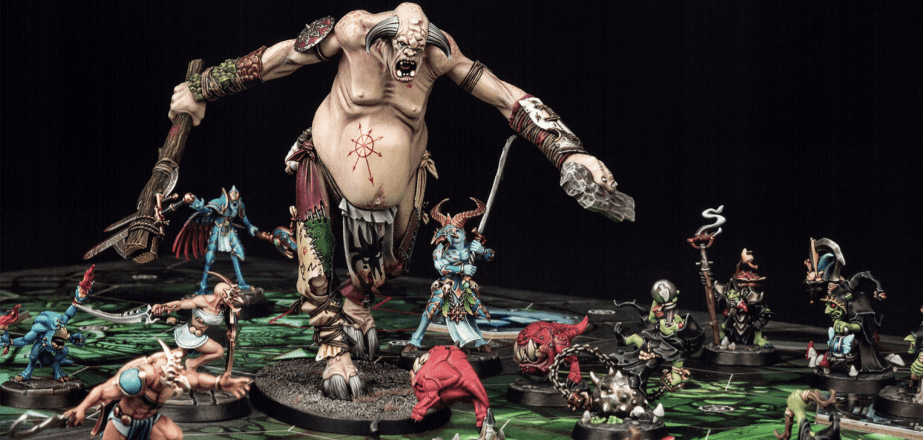
In my experience, with an Experienced Gamer group who doesn’t know Underworlds, the Glass-Mad Gargant is a solid option. Everybody is still competing against each other, but it’s more like a race than a head-to-head duel since you’re fighting the giant (most of the time!) rather than each other. It allows you to introduce upgrade or ploy cards if you wanted, but a big advantage of the game mode is that it plays pretty quickly and you can reset for multiple rounds without too much issue. In a party atmosphere, it feels a little less competitive and a little more cooperative, which I think can engender a more positive experience for people and warm them to Underworlds more reliably than a 3 or 4 player ‘standard’ game could. You also can play Arena Mortis for another good party mode, but seeing how Arena Mortis also shines in the casual non-gamer crowd setting, I’ll detail that below. (But don’t let it slip your mind if the group you are with might enjoy it!)
Casual, Non-Gamer Friends
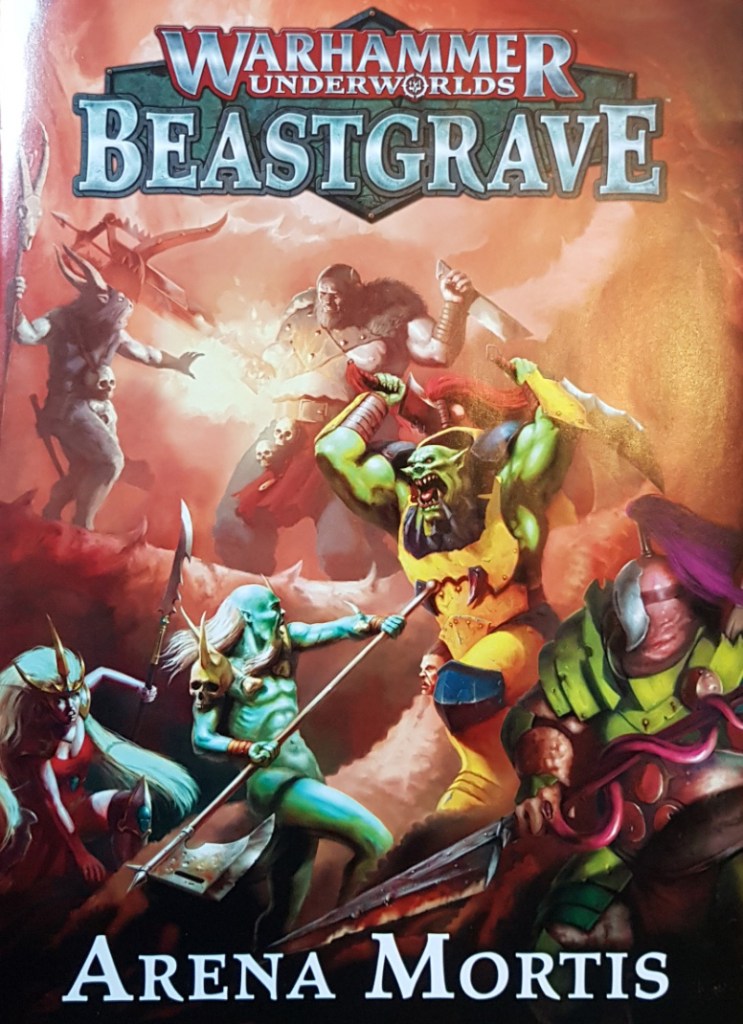
Casual gaming with non-game players is going to hinge on making things easy to understand, with little to no rules explanations. You could certainly ‘kidhammer‘ a three player game and just omit the use of objective or power cards, but I actually think this crowd is an ideal group to give Arena Mortis a spin (Warcom document here) (rules text here) (overview here). It’s simple in that you only control one fighter. The objective is clear in that you want to kill the other guys and stand on the special spot. The punishment for ‘failure’ is minimal since your fighter comes back to life and you get to keep playing, this time with a new upgrade. It allows for up to 6 players, so you can get the most people simultaneously involved out of all the Underworlds options. It doesn’t take super long to play, either! While Arena Mortis gets its share of derision online (largely because it was perceived as a ‘must buy’ for some championship cards at the time of release), It is wonderful as a casual, fast, fun game where the outcome doesn’t matter and the point is to have a party. If you know this is coming in advance, have a few Arena Mortis decks (one fighter, 10 upgrades, 10 ploys, no objective cards) assembled – ideally more than the number of friends you’re working with if you’re able to make that happen. This will allow everybody to choose something that’s “cool” in their eyes, and might entice people into playing a second or third round after you finish the game. After all, they had so much fun with the animal/pet or the armored hulk, but wouldn’t it be cool to see what that wizard could do? If you’re playing with Mortis Lenses, you also can see how changing which lens you’re playing with will alter the flow of the game, but admittedly this will likely have a stronger pull for experienced board gamers and Underworlds junkies.
—————–
Finding ways to engage everybody who comes to your Underworlds night helps keep your community strong and build upon your prior success. Finding opportunities to spread the obsession to other gamers/casuals at a board game night or party helps get the word out and could swell the ranks of those who play the game in your area. The above ideas can also help keep your committed players from finding the game stale (though the risk is low) by having them do something other than the same nemesis matchup for the tenth time. Now get out there spend some glory, and be sure to let me know how your next multiplayer game goes!





Leave a Reply