A common situation new players find themselves in (as well as some returning players who have been out of the game for a while) involves what to do with older warbands they’ve gotten second hand. Maybe you found an old box laying around, or you got something on a great deal from eBay or a garage sale etc. It’s not any of the newest season’s stuff, so that can leave people scratching their heads, asking the questions of “hey, I just picked up this old warband, are the cards legal, and is there anything I need in order to be able to play? Also, what new products should I try to match them up with in order to be more competitive?” These are very common questions that I hope to be able to help with here. So let’s dive into the first in a series of articles: “Can I Use This Old Warband? A Beginner’s Guide to the Nightvault Season”
You can find my other seasonal overviews here:
Shadespire (Season 1)
Beastgrave (Season 3)
Direchasm (Season 4)
Harrowdeep (Season 5)
Nethermaze (Season 6)
Gnarlwood (Season 7)
Wyrdhollow (Season 8)
Deathgorge (Season 9) and Wintermaw (Season 10)
Overview:
Everything from Nightvault (Season 2) is able to be played in the current game of Warhammer Underworlds. The only cards you’ll be able to use are the newer cards from Embergard, which have been released in the new edition of the game. All of the cards and boards from this season have been left behind as editions changed, so all you’ll need to hold on to are the minis themselves.
Some of the Nightvault warbands (Stormsire’s Cursebreakers, Eyes of the Nine, and the Godsworn Hunt) are in the “other warbands”/”legends” category in that they aren’t valid for competitive play and have to use generic warscrolls, but they’re still totally fine for learning the game and getting some casual games in. A few more (Thorns of the Briar Queen, Zarbag’s Gitz, Mollog’s Mob) are in the thirteen that have been carried forward into Embergard with free digital releases and are valid for competitive play, and two more (Thundrik’s Profiteers and Ylthari’s Guardians) are newly re-released in the Grand Alliance boxes and are also valid for competitive play.
Stormsire’s Cursebreakers
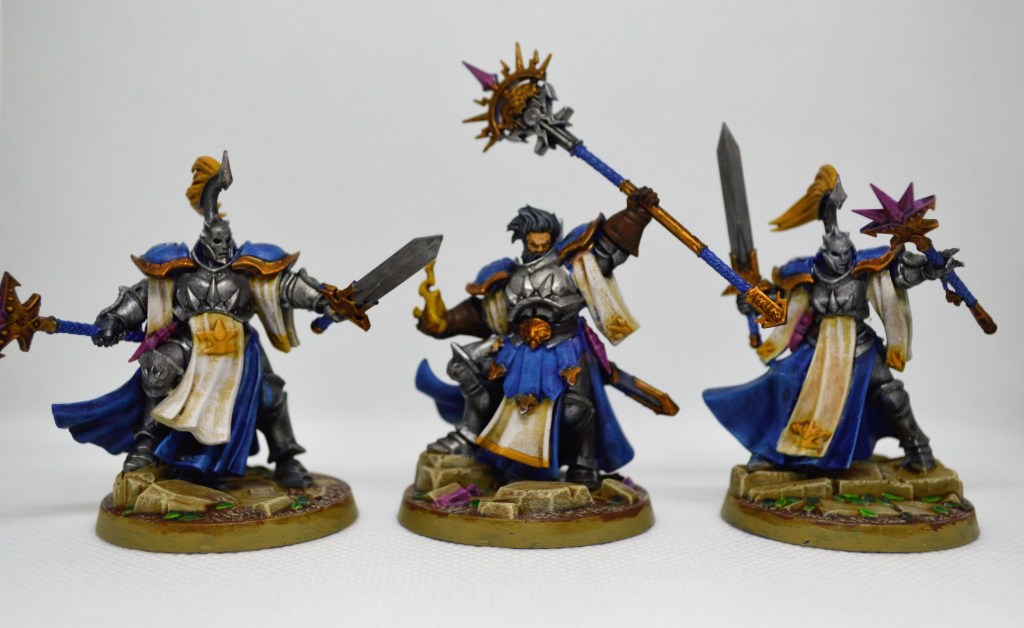
Stormsire’s Cursebreakers are the original spellcasting warband which has been somewhat genericized with the Embergard release. You’ll have to choose one of the Grand Alliance Order warscrolls and select your choices of Rivals decks based on that. Will you hold tokens, or slay enemy fighters? Either is a reasonable choice for Stormsire’s models, and you can reasonably pair them with just about any deck as a result.
Thorns of the Briar Queen
Note that this warband has been updated with the Spitewood Launch
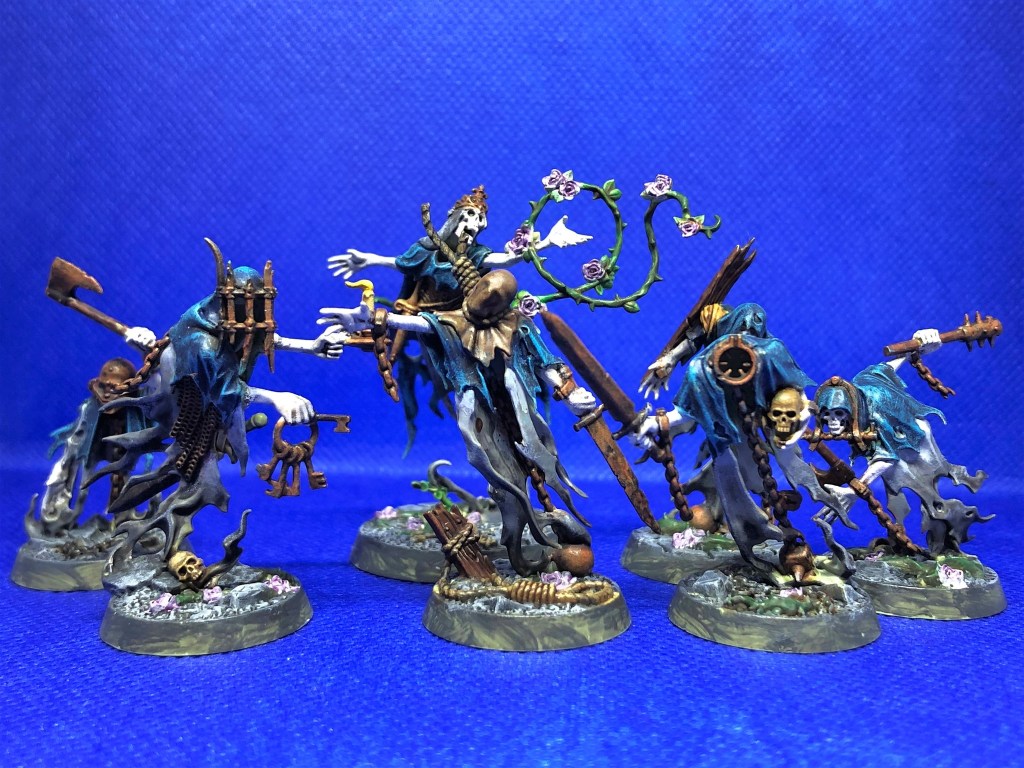
The Thorns of the Briar Queen are an evergreen warband with seven fighters classified as a Take and Hold archetype. The warband inspires any fighters at the start of your turn if they are adjacent to any enemy fighters. Assisting with this, or token occupancy, is the very powerful ability Soul Wardens which can push two minions up to two hexes, which notably is NOT tied to Varclav the Cruel anymore, so you can use it whether or not he’s on the field. You also can, should you choose, then give those minions charge tokens. This provides the warband with substantial action economy across the game. They all come with the “Wave of Terror” rule, where fighters with charge tokens count as surrounding rather than flanking, which means you can potentially set up some very accurate attacks out of your big hitters. The Take and Hold approach is certainly an option, but I actually think they have substantial play into a ‘horde aggro’ Strike/Flex playstyle as well – surround your opponent and inspire through judicious push use, then close in for the kill. This warband can do it all, whether you want to flood the board with aggressive minions, play a hold objective game, or a flex hybrid of both.
Your single-use warscroll abilities are all various ‘mugging’ teleports and are hugely impactful for making you a mobile threat literally anywhere. The warbands universal 2-dodge defense and everyone inspiring to 2 damage makes them potent on offense and defense. The warband is super good, is what I’m saying.
Rivals decks you could consider pairing with this warband include Emberstone Sentinels which lets you hold and fight, Countdown to Cataclysm (your fighters ARE going to die… again) which also supports the Hold plan, or Pillage & Plunder, with a mix of Blazing Assault if you’re looking to swarm for kills. Anything with pushes (especially Commanding Stride) can help you set up sneaky inspires as well. You could also potentially leverage some charge token/surrounded overlap with Reckless Fury. Really, anything can work depending on your approach, these spooks are just that flexible. They REALLY like Edge of the Knife as they have tons of Tempered fighters and can benefit from some push shenanigans to set up the positional scoring out of the lil’ guys.
Eyes of the Nine

The Eyes of the Nine are a 6 fighter warband (now that the horrors are fighters without special rules) near to many hearts, but far from most top tables. The warband is led by Vortemis the All-Seeing, who is a potent threat in his own right. K’Charik is a decent fighter (and incredibly charming as the narrative viewpoint in their short story found in the Direchasm novel). The rest are danglebros who are really only useful for holding objectives, and their ranged attack is garbage and can’t help you score much else. Frankly, you’re going to have a hard time competing with this warband, but you’ll have fun, so there’s that!
Rivals decks you could consider pairing them should probably center around defensive flex/take and hold strategies as your damage output is low and unreliable, but you have plenty of bodies. If you opted for the Slayers generic warscroll, better hope you keep the two big boys alive!
Zarbag’s Gitz

Note that this warband has been updated for Spitewood and you can find the review here.
Zarbag’s Gitz are the largest warband to be released to date with 9 fighters, and fit the Take and Hold archetype.
Snirk Sourtongue is probably the most important piece in your warband – not only does he have decent stats, but his Spinnin’ ability means that anytime a fighter enters a hex adjacent to him they’re tagged for a damage. If you have the ability to drive enemies back toward him or pushes that bring enemies into that zone, you can force some ping damage out. You can even use Confusion (placing Snirk first, then the other fighter) in this way. Since it’s a Surge ability it’s optional so you don’t have to hurt your own fighters, but could if that suited your gameplan. Place him somewhere important like a neutral territory objective and make the opponent wary of getting too close!
Rivals decks you could consider pairing them with include any Take and Hold or Flex decks, and I want to also suggest Countdown to Cataclysm since you’re basically guaranteed to lose many fighters and can advance your tracker pretty easily as a result. You could also try for a horde aggro approach with Blazing Assault, or straight Hold with Emberstone Sentinels or Pillage & Plunder – with so many fighters and the Scurry ability you’re going to very reliably be able to stand on things and hold or delve at your leisure. Wrack & Ruin could be used to take further advantage of their low damage attacks and Snirk’s power. They certainly can also be used in a flex-hold with some aggro seasoning – watch Julian play them quite well at worlds in this video where he used Pillage & Plunder x Blazing Assault! I have also had success with Edge of the Knife – six Tempered fighters at the start with the ability to sneak around using Scurry means scoring that deck’s Objective cards is a walk in the mines.
Mollog’s Mob
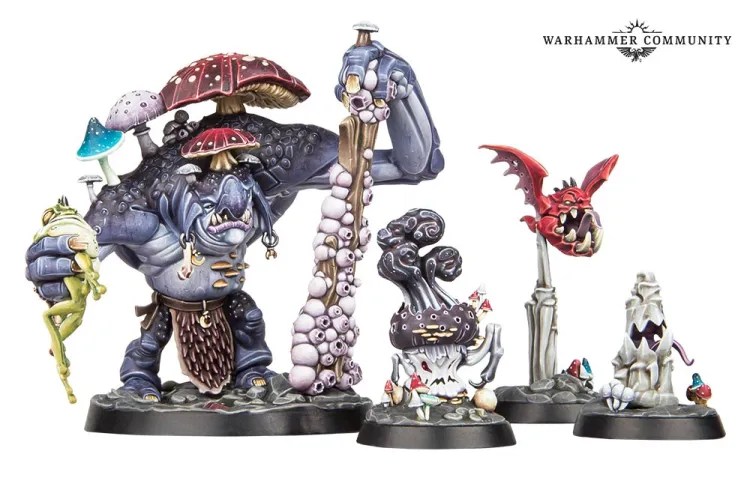
Note that this warband has been updated in Spitewood and you can read my full review here.
Mollog’s Mob is the original Big Boy warband which was a nightmare to face when they were first released. While a few rules have changed and he’s definitely playable, he’s not an unbeatable monster. Mollog is a 7 health fighter (still quite tough). His mob of squigs do more now than they used to, and you’ll have the option every round of choosing which of three things you want the minions to do – bite people who get too close, be more supportive of Mollog’s bonking, etc. If you like all your eggs in one basket, and think HULK SMASH is fun, then these are your guys. Point, Click, Delete. If Mollog dies though, you’re hard pressed to win the match. They’re in the “Mastery” archetype because so much hinges on a single fighter, and the Stalagsquig has zero move so ‘charged out’ is a tough board state to achieve.
Rivals decks you could consider pairing them with include Blazing Assault, which adds more mobility, durability, and accuracy for your big ole troll, and I have a special watch on Reckless Fury as it will allow Mollog to attack much more often and get multiple charges out. You could certainly play a Take and Hold/Flex strategy and dare people to approach your dank lair, but it will take even more finesse and as a Mastery warband you’ll already have a tougher time as a new player. Countdown to Cataclysm could allow you to possibly get Mollog up to 2-4 shields on defense and make use of Countercharge to get some more minion economy
The Godsworn Hunt
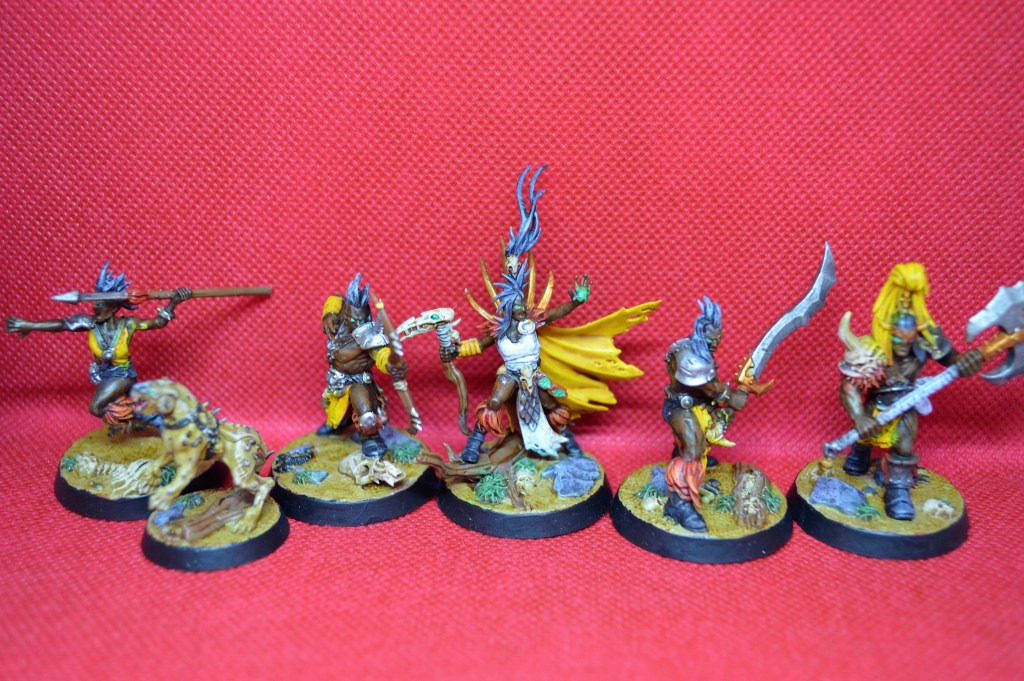
The Godsworn Hunt are a six fighter warband that’s restricted to the generic faction warscrolls and is not valid for competitive play. That said, the models rule and you now can choose between two different playstyles depending on which Chaos Grand Alliance scroll you pair with them. With 6 fighters you’ll probably do better with a take and hold strategy, but the old ‘charge and then die’ approach that served them so poorly in first edition still remains open to you here.
Ylthari’s Guardians
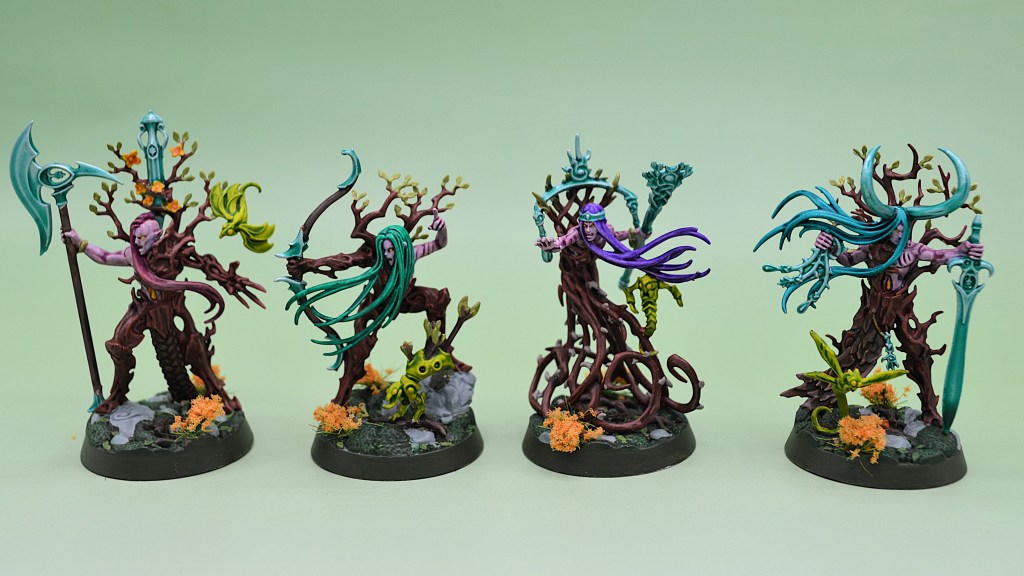
Ylthari’s Guardians are a 4 fighter warband that has been rereleased in the Order Grand Alliance box for Embergard. The warband has a Strike archetype, and while somewhat flexible, it suffers from the “Jack of All Trades, Master of None” problem in a game where it often pays to be Master of One. They have an average leader. They have a defensive castle. They have an archer. They have an accurate offensive fighter. They unfortunately don’t have enough of any one thing to lean into to develop a cohesive game plan, but you can make any of your fighters a hero. They inspire off of a somewhat complicated ‘planting a seed’ mechanic, but this also increases your card draw and a canny player can make a lot of good use off of this. The warband’s special warscroll options are choosing on of the four seasons each round and then getting access to something great – a teleport (great for retreating after a risky charge or daisy chaining charges deep into enemy territory), extra dice, extra damage, or a push, and these get stronger the more friendly fighters are slain. Seeing as your inspire is sped along by slaying enemies, you’ll likely want to kill and be killed in equal measure to get the most out of the warband.
Rivals decks you could consider pairing them with include your typical Strike decks, and they also can do well with Pillage and Plunder since it allows you to score despite losing fighters or even being tabled. Skyler of What the Hex took this warband to Worlds with the Pillage & Plunder x Reckless Fury combo, which you can watch here.
Thundrik’s Profiteers
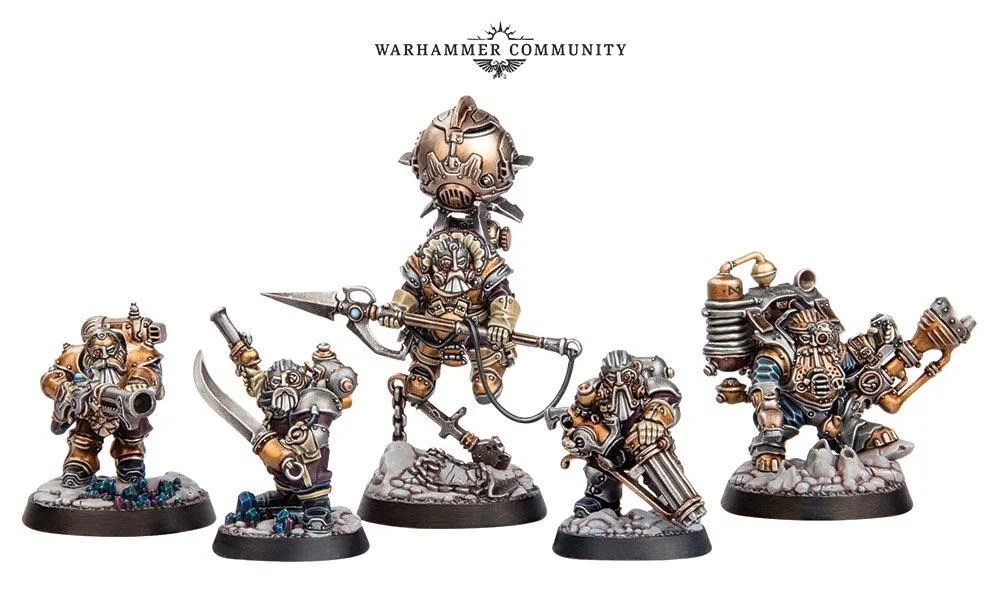
Thundrik’s Profiteers are a five fighter warband that has been rereleased in the Order Grand Alliance box for Embergard. A “Mastery” warband with excellent ranged ability offsetting their slower movement speed, you’ll likely need to find ways to succeed with staying in your home territory and shooting things up as they come to you. While not having the greatest damage output, the warband has excellent accuracy so you can rely on shooting into fighters as they come toward you while focusing on defensive cards. The unique inspiration ability of the warband is the Promotion mechanic, in which your warband can choose one fighter to inspire (assuming your leader is still on the board) whenever you score a card. Thundrik can even promote himself, which he does early and often like a true #Boss. This makes surge objectives even more important than usual – inspiration is nice for this warband because it gives them much needed mobility as well as an increase in offensive output.
You won’t probably be invading enemy territory, and you might struggle if your opponent doesn’t want to engage or can assassinate Thundrik in round 1, but the Profiteers are a fan favorite of many. Their warscroll is full of abilities that support the Take and Hold at home strategy, like not being able to be pushed off of tokens easily, pushing back onto them, creating a lethal bubble around your leader, and so on. Should some new defensive decks be released that allow them to score more reliably in their own territory, they could end up being pretty good as they dare enemies to run at them while they stand and blast away.
Rivals decks you could consider pairing them with include Emberstone Sentinels and Pillage and Plunder, as you’ll likely enjoy staying in your own territory, sticking to tokens, and getting a few easy delve surges to inspire. You could also use Countdown to Cataclysm for some easy scoring and a few pings, or Wrack and Ruin for extra ping to augment your otherwise low damage output. The Mastery archetype means you can take them in a few directions, but I’d lean towards a defensive hold approach for now until more decks are available.
Wrap
Ultimately, any and all season 2 warbands are playable in the Rivals or Nemesis formats if you pick up a universal rivals deck. You absolutely can play with those old toys you’ve just acquired, and in some cases still do pretty well with them. You’re likely safe to toss the ‘extra’ cards that come with them. Until next time, I hope you enjoy spending that glory!





Leave a Reply