


My compliments to the chef. Honestly speaking, the last handful of Rivals decks have been phenomenal and have so much good going for them. I wanted to take a moment to thank the design team for Warhammer Underworlds for their amazing work while also trying to provide some valuable insight to newer players about just why these decks are so well crafted, and how to make the most of them while you work on building decks of your own. As a general trend, these newer decks play into each other quite well, make for interesting mirror matches, and have the potential to synergize well with some old and forgotten teams without also being overly powerful with newer ones. Hopefully I manage to gush about everything and still have readers come away with some knowledge – no promises. Let’s look at the most recent four decks in turn.
Malevolent Masks
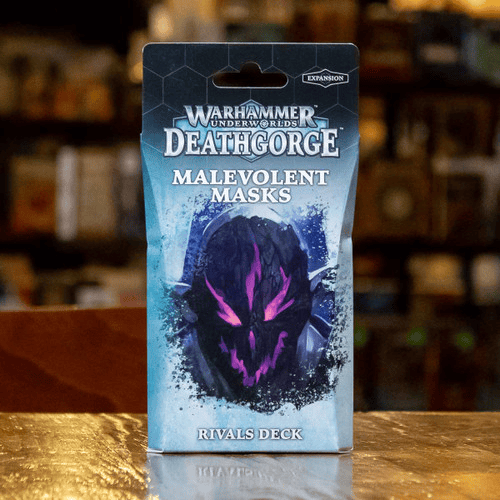
Malevolent Masks is a beautiful deck from an aesthetic perspective – the art is tremendous and as discussed in this Underworlds Underground podcast, it’s a wonderfully thematic experience with six Hexen Masks, each with their own names, character, and personality. You can envision this almost as a six-fighter warband with the images and quotes from these daemon-haunted masks and it really adds to the immersion into the lore of the deck and game to play with them.
This deck can be played in three ways, all of them viable. You can lean full hold (as I did in Maskwatch). You can play flex hold and fight, but with some interesting mechanics. You can tool up an elite or two and give them incredibly powerful mask effects and play it as an aggro deck with a bit of hold for taste. Heck, you can even go horde aggro if you have the right faction deck, and have fun regardless. The art is stellar, the effects on the cards are interesting and never-before-seen. Maskborn is an incredible card, and you can do nutty things with Revealed Aspect. Even though it’s ‘boring’, the ‘Tutor’ effect of Unveiled Ambitions brings a new flavor of card play that Underworlds didn’t have before, and makes the ‘you need a keyworded upgrade to score, so good luck finding one’ less punishing than it can be in Toxic Terrors (and for any sad souls who leaned into Exploration for Daring Delvers). Despite having no Plot Card, the deck rewards you for taking more of its pieces, and as has been described by others, it is a ‘puzzle box’ where more opportunities for fun shenanigans open up as you take a greater share of the universal cards within the deck. A deck with multiple ways to play and something for nearly every warband to explore, it’s refreshing and fun without tipping the competitive scales too far in either direction.
Rimelocked Relics
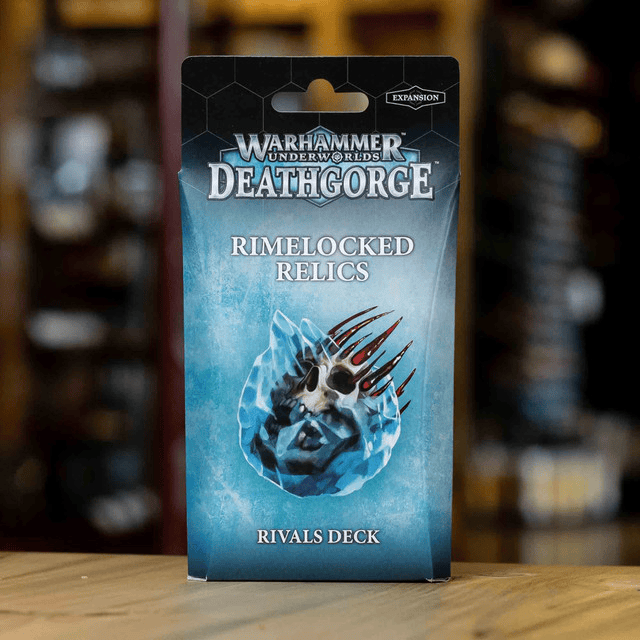
This deck is something that we have been missing in Nemesis since the format’s inception – a true ‘Flex” deck. Previously, if you wanted to do a little fighting and a little holding, you could try Daring Delvers as an invader or Fearsome Fortress as a midboard brawler, but they didn’t quite gel the way Rimelocked has. The deck is internally consistent, asking you to do cohesive things across the suite of Objective cards. It also has strong but balanced Upgrades, rewarding you for taking more of the deck and making the special keyworded Rimelocked Upgrades feel worth taking beyond simply scoring Objectives for having them, but also rewarding you for doing so. The face down placement adds a fun mid game layer to playing the deck – I placed a card down on a fighter, but you don’t know which one it is. Do you risk trying to deal with them and guess wrong about what I have? The ability to Rimelock some of your opponent’s cards as well can give you some disruption and ‘control’ ability, and all of this is gated behind the Thaw mechanic, so nothing comes online immediately – this means that the Upgrades can have quite powerful effects without being immediately punishing to the opponent since you have to wait to use them – yet they still count for scoring, which is a fine balance to strike. The design team nailed that tightrope walk in my opinion.
Ultimately, Rimelocked Relics makes Flex useful as a playstyle in a way we haven’t seen for years, and has revitalized so many warbands that weren’t seeing much play, and those that were struggling (like my precious Sons of Velmorn) now have a legitimately competitive option. A dozen other older warbands can truly compete now with this deck where before they didn’t have that ‘fits like a glove’ pairing, and despite bringing up some of the bottom tier, Rimelocked Relics somehow doesn’t also elevate the top tier warbands to unreachable levels. More variety in the game is always a good thing, and being able to introduce that in a competitively balancing way is just fantastic.
Having released so shortly after Malevolent Masks means the relics have overshadowed that deck’s flex approach, but as I described before there are more ways to make use of the masks and I don’t think it crowds out the ecosystem entirely. Topping it all off, it’s great to see the ‘ancient treasures trapped in ice’ that we were promised at the outset of Deathgorge come to fruition.
Hungering Parasite
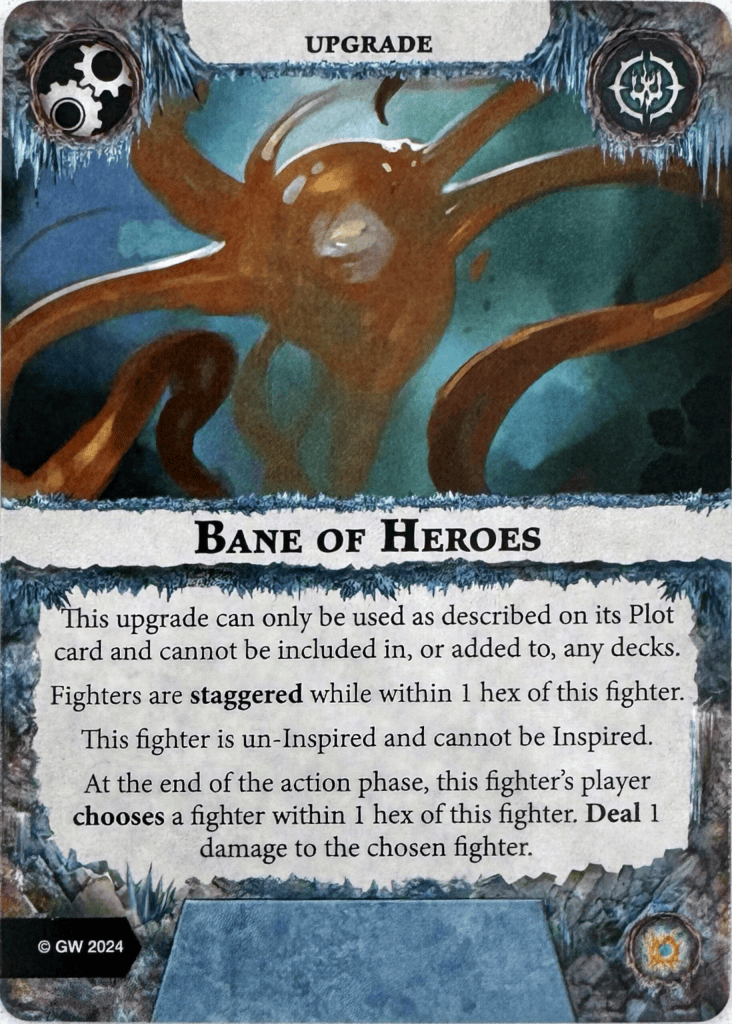
In a world where the ‘best’ aggro option was generally believed to be Breakneck Slaughter, we saw a new deck come to the tables that still support the ‘get over there and smash’ approach but with some really fun twists in Hungering Parasite. I’ll open by raising my glass for the theme – that globs of Drakatoa are out there latching on to our fighters and draining them of vitality while affecting nearby enemies – it’s a spooky concept that having a “Bane of Heroes” around can be a curse that helps and hinders both you and your opponent. So many horror moves (most notably The Thing) play on a similar theme, and it’s great to see the horror aspect of Underworlds continue with the story in this deck.
While you certainly can put the Bane on a powerful fighter, and notably this has brought new playable life to the ‘Big Boy’ warbands, you have other ways to play the deck as well. Players can tool up one powerhouse and go to town, pass it around to their own fighters to stagger and score at will, or hand it off to opposing players to weaken and eliminate key threats. You can play it primarily as a horde aggro and send in suicide chargers, or selectively disrupt your opponent with good pushes and other tech in the cards. It’s also nice to see a deck that allows you to manipulate inspiration and includes some decent healing options, both things that increase complexity of play and open up many deckbuilding opportunities depending on the flavor you want to take from the deck. It’s easy to pigeonhole a Rivals deck and say’ this deck is for doing XYZ’, but Hungering Parasite has multiple angles of approach and the game is richer for it. As an example of yet another fine balance to strike, a fighter (or even a warband) being in possession of the Bane can experience great benefits, but at a great cost that makes both the flavor and competitive balance of the deck feel pretty sweet.
Rimewyrm’s Bite
When this deck was announced, people rightfully feared that the number of “ping” cards available would make it too strong. I have spoken before about how ping isn’t the end of the world and I still feel this is true, but the Rimewyrm’s Bite ping is a different tune entirely. Previously, we had seen cards that simply deal a damage to a fighter, maybe gated behind a casting roll. In Rimewyrm’s Bite, the damage is largely relegated behind field hazards – positioning your fighters well and making selective board choices can protect you from some of the worst dangers, opening up more counterplay to protect you from eating the most damage possible. In addition, as exemplified in “Deadly to All” – this deck is deadly to all fighters and all players. Both warbands in a matchup are at risk of eating this damage, as thematically the Rimewyrms that infest the Wintermaw can and will chow down on both players’ fighters. I’ve certainly damaged my own fighters intentionally with this deck to score glory, which was a pretty rare tactic in Underworlds prior to the release of this deck, especially in Nemesis.
One thing that Underworlds hasn’t been as exposed to as you might see in other card games like Magic the Gathering is the idea of health as a resource to be spent to attain your goals. Certainly, you can play the deck in a way that tries to dish out the damage selectively to opposing warbands, working in a defensive-focused ‘control’ style that makes your opponent fearful to engage, and could be played similarly to how some Force of Frost builds were used. Having played more with this deck and against it, however, there’s another approach that I think bears looking at and celebrating – that of the ‘suicide aggro’ gameplan. Breakneck Slaughter was lauded for it’s ability to allow you to get into enemy territory and dish out damage with some downsides to your own fighters via the Impetus mechanic, and a similar approach can be taken here. Hurl somebody in, use them to dish out some ping, and don’t mind (or even hope!) that you get taken down by the Wyrm together. You can score cards by damaging your own fighters, and if you lose a body to score some cards, that trade can still be beneficial and opens up some interesting play lines we haven’t seen as much of. Multiple Objectives can be scored when ‘a fighter’ (not necessarily the opponent’s) is dealt damage by your power cards, when a domain is overridden by anther (which you can do to yourself if needed), and a handful of cards are scorable even if all of your fighters have been eliminated from play, so the ‘hit hard and die fast’ approach has a legitimate place. Additionally it allows for a fusion of aggro and control which previously was unseen – many of your opponent’s cards require interaction to score. You can slow that down by hiding away from them as you might see if another control approach, but Rimewyrm’s Bite allows you to do this by making sure you simply don’t have the fighters left on the table! They can’t be positioned relative to fighters you don’t have, nor can they charge/hit/take them out of action, so you might just brick their hand while still being able to score some of yours despite having tabled yourself. Cool stuff! A new play line!
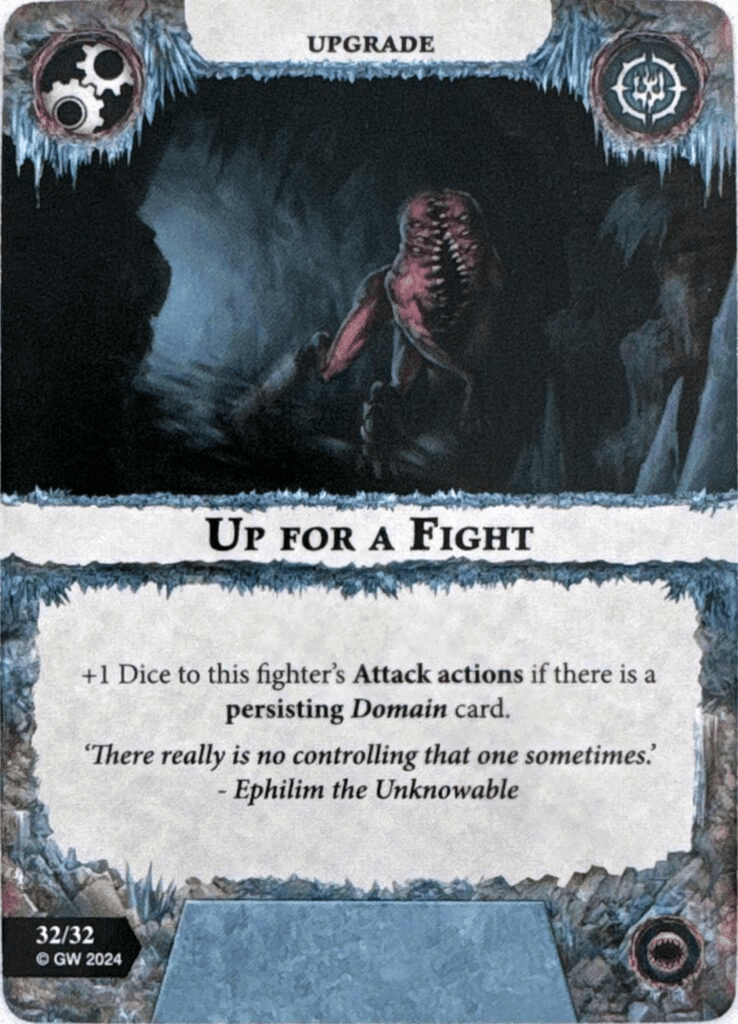
The deck also rewards Domains and punishes Stagger in interesting ways that we haven’t seen much before, allowing otherwise ‘lackluster’ mechanics an opportunity to shine and allows somewhat older or ‘lesser’ warbands who have them in spades to be more competitive. It also has an intriguing wrinkle in the Hungering Parasite matchup, since the parasite fighter will be staggered by default, making the Wintermaw core box matchup even more layered.
I think part of why this deck is so fun is that it has a lot of mind-game potential and changes the interaction dynamic between the players. This deck, perhaps more than any other save for Voidcursed Thralls, makes your opponent think twice about their action choice, and games with and against it really require conscious thought in a way that makes the game more engaging and interesting.
Wrap
We now have 14 valid Rivals Decks for use in Warhammer Underworlds, and despite the fact that we have a dizzying number of options (noting that these all need to be somewhat balanced with 50+ warbands), the creative minds behind the game have continued to come up with fresh, innovative, engaging, and fun ways to play. I can’t imagine how they do it, but these most recent four have all been home runs from where I’m sitting. I am so excited for more and can’t wait to see what they’re cooking up next.
What do you think about these decks, and what are you hoping to see next? Let me know at SpentGlory@gmail.com, or better yet, email the design team directly at whunderworlds@gwplc.com – they deserve to feel our love and not just balance complaints and FAQ requests!



 Spent Glory
Leave a comment