
By now, you’ve surely heard Embergard will be released soon, bringing with it some redesigns of core game mechanics. Several podcasts, blogs, Youtube channels, and others have discussed these changes in great detail, and it’s been the talk of the town on Facebook, Reddit, and Discord. Nearly everybody is talking about how it changes things they’re used to and whether they like it or not, how it will affect the existing player base and their enjoyment/engagement, and so on. Today I want to cover an angle on the new edition that others aren’t touching on as much: Why this new edition is GREAT for new and returning players, at least based upon what I have seen so far.
I’ll admit as a long-time and current player I am hyped, have largely positive opinions and views on the changes, and don’t think the game will be fundamentally altered in a way that ruins my experience. You’re more than welcome to feel differently, and I’m not here to try and convince you to see it my way. I’m writing today specifically to potential new players, and people who dropped out of the game some time ago and are considering giving it another try in this new edition.

“All competitively valid warbands will be available for purchase”
This is a huge winner for new players or returning players who haven’t grabbed any warbands in the recent years. Competitively speaking, there is no need to dig up old stuff, as you’ll be able to buy anything you’d ‘need’ to compete. I wrote somewhat extensively on this issue before, but the First Edition did definitely suffer from a predominance of out-of-print warbands maintaining competitive strength. When a huge contingent of the competitive scene shows up with a warband you literally can’t find except on eBay for hundreds of dollars, you have a problem. At least, if you want new and returning players to participate in your events, you have a problem. Assuming this promise is honored, it’s huge news for the ‘fairness’ of competition.
Deckbuilding Made More Fair
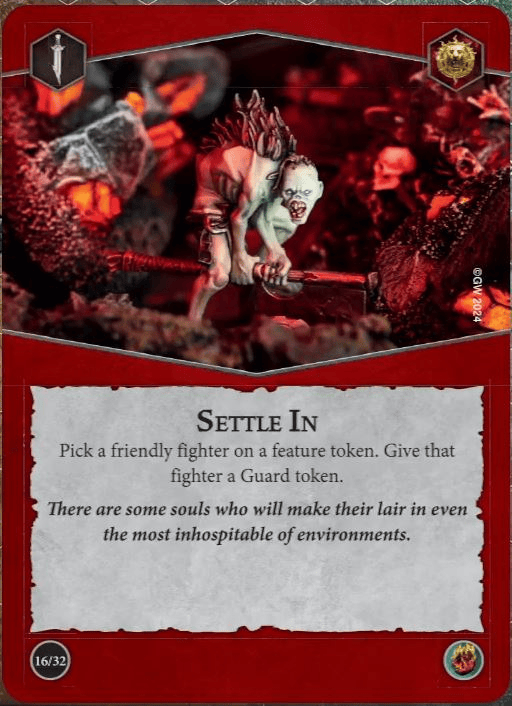
Nemesis has been confirmed to continue as a format, and presumably will be the main competitive format as it has been for the past few years. I know personally several players who stopped playing in seasons past and a handful more who never started because Championship was in many ways a “pay to win” system – if you didn’t buy everything, you couldn’t field the best cards and would lose to somebody who had spent more on the game. Now you’ll continue to be able to compete at a high level with just a card pack or two. With these not even tied to warbands themselves anymore, just about anybody can get a hold of two Rivals decks and be on a level playing field cardwise.

Crits Are Balanced
We were told ‘crits will be less dominating’ and have now been given the details. Firstly, crits just count as a regular success rather than overriding everything – if you roll two or three successes and they only have a single defense die, you can be more confident that your attack will land and actually accomplish something for you. One of the worst feelings in the game with the most swing potential, so much so that an old podcast was named after it, is the Crit Def. Those days are now behind us, at least in the sense that they invalidate all your resources you put into the attack. I have won games I ‘shouldn’t have’ because my leader rolled a critical defense. I have lost games I ‘should have won’ because their fighter rolled a critical defense. It’s a dice game, and variance is well and good, but for a single die roll to potentially have such cascading effects on the outcome of a game removes a lot of player agency, adds more swingy-ness to game results than may be warranted, and is visibly frustrating. I once taught a new player and after a couple rounds he said ‘So it looks like you just roll more sixes and win, right? This kind of sucks.’ It was hard to argue against him. He stopped coming back about two weeks later.
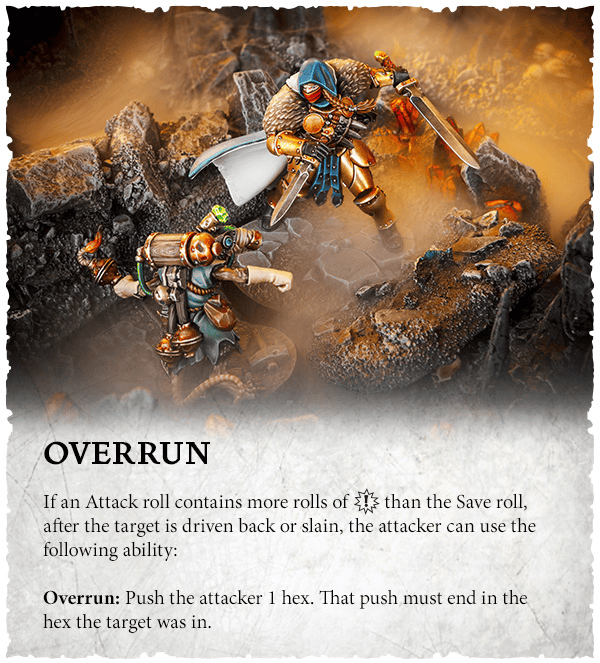
Now, critical successes will not lose ALL their power, and you’ll still feel good when you roll one. It’s just that your opponent won’t be so crushed as they currently are. Crits now trigger special abilities for all models – “Overrun” (which dramatically increases positional play and is a good thing for the game) and “Stand Fast” which allows you to potentially survive a hit – but still take damage – when rolling a defensive crit. One of the bummers about the current dice rules is telling a newer player ‘so this is where you would roll your defense, but you literally can’t succeed based on my attack roll, so don’t bother. Just take three damage’. Now there will be more circumstances where the defender can get something good out of a defense roll – the potential for -1 damage or the potential to deny an Overrun, in addition to whatever crit abilities their fighter might have – and that means more participation in the action. You want to be able to roll your dice, and you want to feel like your dice rolls matter.
Simpler Card Text
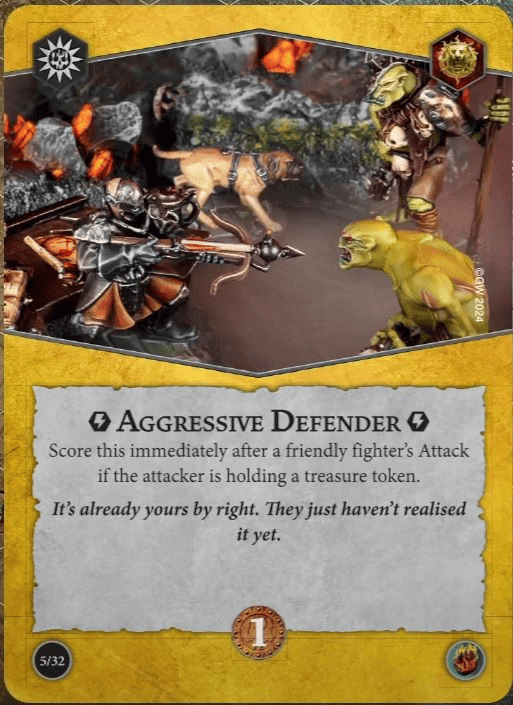
In Second Edition, it looks like cards are being worded with far less text on them. As a result, newer players more easily able to assess whether an effect is good to play in this moment. One of the harder parts of handing a newer player a First Edition deck is that they roll off, get to their first activation, and then spend 5-6 minutes reading cards, trying to figure out ‘what even am I trying to do here’ much less ‘how do I do it’. By the time you’ve finished deciphering your last card, you already forgot what the first one said, and by making each card effect more direct and straightforward in Embergard, we will almost certainly speed up how long it takes to onboard somebody into the game. Presumably it will speed up games even for experienced players, allowing you to get more gaming in through the course of a session.
Variable Bounty
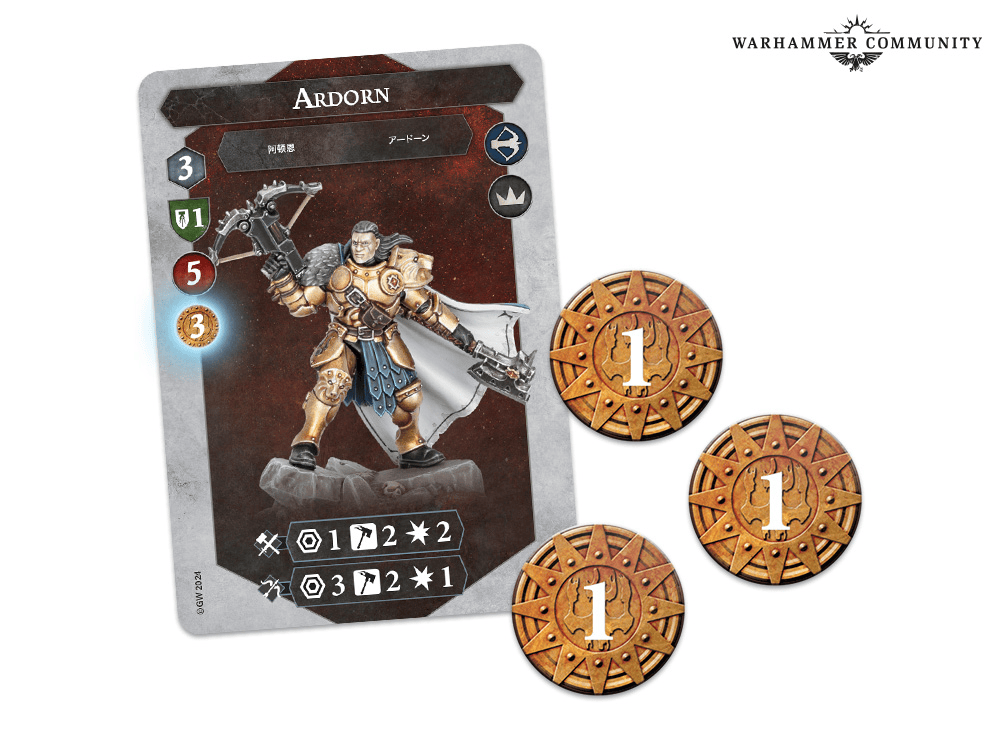
At first, I was hesitant about the increased bounty for bigger fighters. Aggro is already a pretty predominant way to play the game, and if somebody going aggro against me can net them even more glory than before with my fighters worth extra, isn’t that reducing viability of other playstyles? On more reflection I have come around a bit and think it can actually be less bad from that angle and has special benefits for newer players as well. Now, you get more reward for killing a tough guy. You probably had to pour multiple attacks, multiple ploys, and invest in an upgrade or two in order to take down that inspired stormcast. All that, and then you get one glory for your efforts. Now you’ll be more likely to receive an award in line with the cost of eliminating them, and that possible increase in feeling of ‘fairness’ can keep a newer player around for longer. It also makes 3 fighter elites less punishing to play against, which already was a source of frustration even for existing players.
The New Focus Action
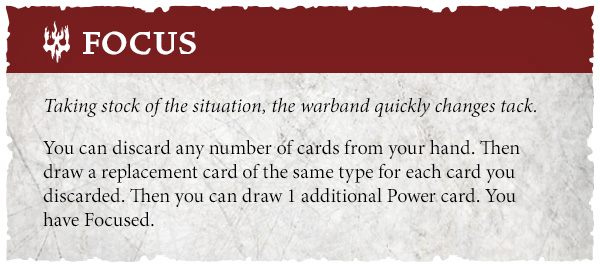
Previously, if you drew a bad hand, or some disaster befell your important fighter mid-round, you could end up with a fistful of useless cards for your current circumstance that people called a ‘bricked hand’. You need two different fighters to do something, but you only have one left? You need your leader to be somewhere but they’re dead? Out of luck, and only limited ability to do much to fix your hand. There’s the argument that a better deck builder or a better player will run into this circumstance less often, but it is still an issue for newer players which Focus mitigates to an extent. Additionally, a ton of people play their first (and often only) games in Rivals, which has a much higher ‘brick’ potential. If you have a dead hand in your first few games and nothing you can do about it, you’re probably not coming back to game night next week. Focus, which lets you discard any number of cards for an action, then draw replacements for all of them AND an additional power card, is incredibly potent for the cost of an action. It also increases odds of being able to engage throughout the whole game, which increases fun for both players.
Glory Refunds on Upgrades
Currently, if you spend a glory on an upgrade and your fighter dies, it’s gone, and so is the glory you spent to put it down. Occasionally this can be a gut punch when you’re behind and don’t have much glory to work with. In the current game that’s just the cost of doing business and is fair enough, but a newer player who makes an ill-advised upgrade and loses the fighter quickly now has no glory left to spend on the rest of their cards, which reduces their ability to engage with the game and feel like they can do something. Now that you get the glory back and can put it into new upgrades for other fighters, losing a juiced up fighter isn’t the end of your night, and it allows you to continue to play cards all game long even if you’re losing. “But that’s just rubber banding and is bad for competitive play!” I hear you cry. Not so! Now you’ll have a new layer of ‘do I kill this fighter, knowing I’ll be effectively giving them some glory’, and you can play psychological games this way by making different choices with your glory expenditures. It’s different, not dumbed down, and it’s done in a way that helps the less experienced player AND opens up strategies for the more advanced ones. Tragically, if does look like the end of ‘Spent Glory’ as a rulebook phrase though.
Variable Glory Cost of Upgrades
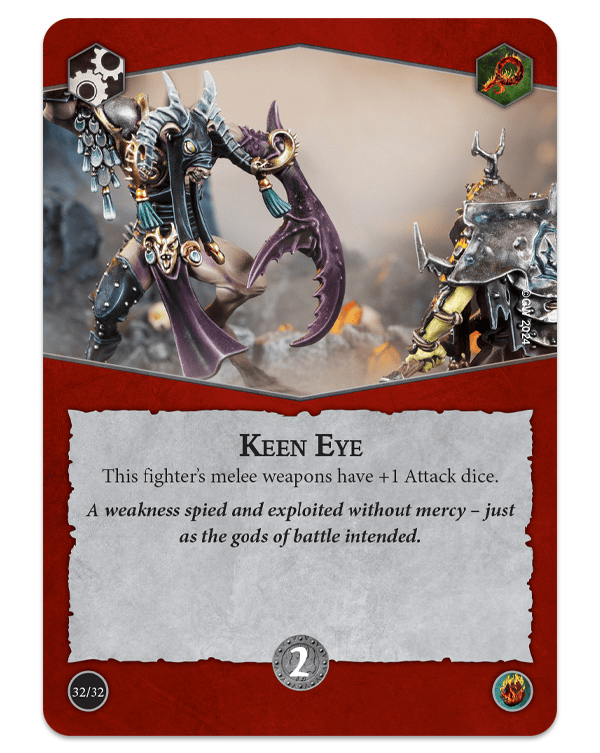
Before, you spent a glory and got an upgrade. Some upgrades were substantially better than others, which people thought ‘weren’t worth the cost’ and didn’t see play. Others were really good for a single glory and were played all the time, until they inevitably got an Errata that made them worse. Now, some Upgrades cost zero glory, while others cost 1 or 2 – potentially we could even see a 3 glory item down the line. This opens up design space, makes more upgrades’ worth taking/worth playing’, and lets you put a few upgrades out earlier, while slowing down the speed at which your opponent can load up on powerful ones. New players, will get to play cards earlier, have less’ well that was a waste of glory’ situations, and won’t get ground into the dirt as quickly – all better for the new player experience (and honestly, the rest of us too).
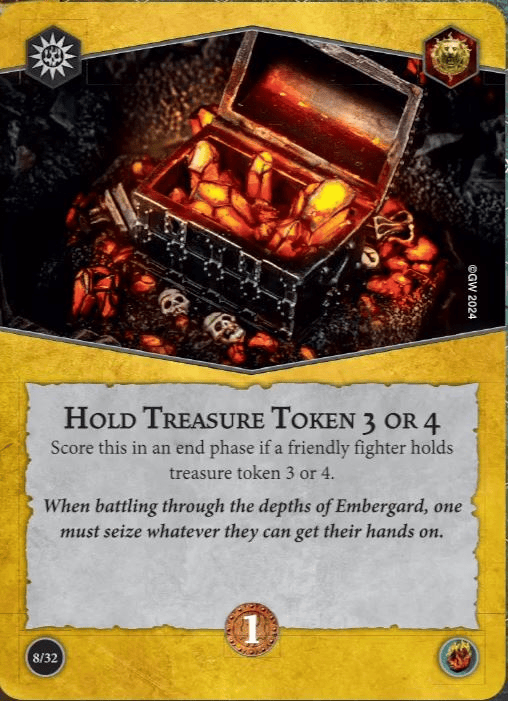
Renamed Treasure Tokens
“Ok, so to score this objective, you need to hold objective 3”. “How many objectives did you score this round” “This card says to remove an objective token” “I can only do this if I’m holding an Objective”. Time and time again, I have struggled to explain this to a new player, that two different but related things are called objectives. Such confusing wording never has to trip up a newb again. You have objective cards, and you stand on treasure tokens. Fantastico!
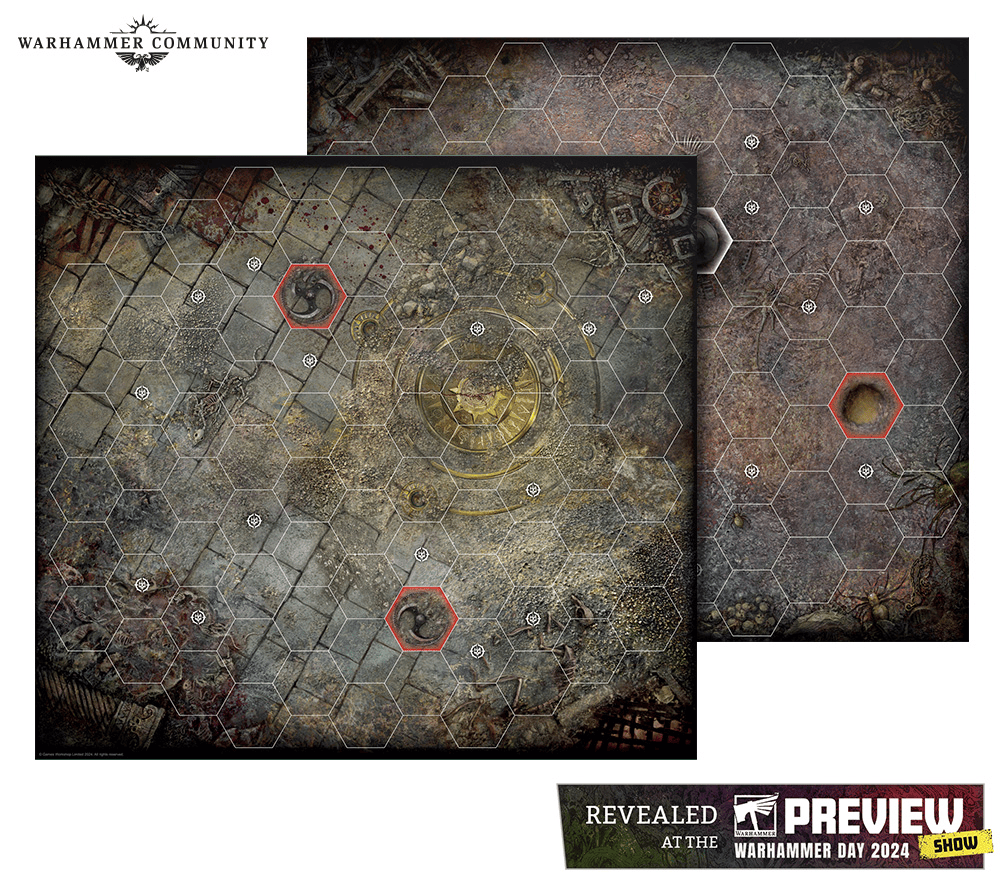
No Board Orientation
There’s a single board, and you just pick a side. This is how it works in most games in the world, including every other GW property. I personally like many experienced players love the depth and complexity of tactics that can arise from board orientations, board selection, and all the counterplay considerations that go into it. Realistically, outside the highest levels of play, people just grabbed the board they use every time and squared up. This takes the guesswork out of that, but more importantly reduces the number of times your plan will be totally derailed by being longboarded or offset. It also makes life easier for newer players logistically – they might not own any boards, or maybe a returning player only owns Beastgrave stuff that’s ‘invalid’. Now you just play on a board, have less stuff to lug around, less to keep track of, and less doubt that you ‘picked a bad one and now will lose’. Yes, the top end lost something, but we grow this game by making it approachable and accessible.
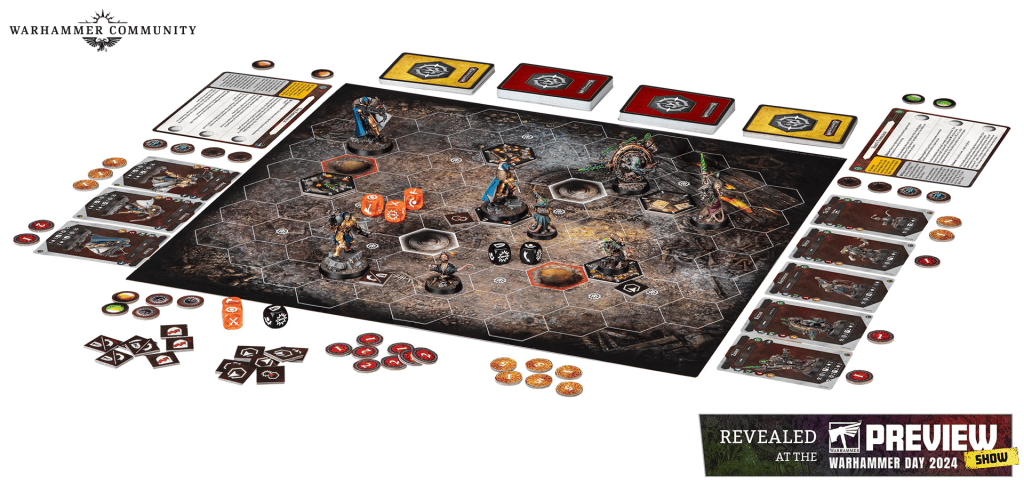
The Board Itself
The new board shape and starting hexes placement are designed to force engagement. Both players will immediately be stuck in and you can’t as easily hide in the back – and you can’t as easily blockade the center line either. Multiple people I know quit the game in passive play Shadespire and more in passive play Nightvault. Yes, it’s a tactical choice to read your tomes with a stormcast in the backfield while your opponent doesn’t get to play, and you might win a bunch of games. But are they really games? Is anybody having fun? I don’t know about you but I like it when dice get rolled, models get bonked, and stuff happens. Many might not know or weren’t around to see it, but the original ‘biggest shadespire tournament in the world’ was officially streamed by GW and was touted as the world championships. They canceled the stream midway through both semifinals and didn’t even advertise the finals or share the results, because the top of the field was a mirror match between teams who just drew cards all match and took their “I print a glory for free” action once they had the right stuff in hand/on the table. Players who wanted to, you know, actually play the game, lost against this passivity and were eliminated much earlier. Tournaments went from literal hundreds of players to less than 30 within months, and died completely in multiple countries. My local play group lost over three quarters of its players in a matter of weeks. We CAN NOT have that again, and this board thing, as ‘simple’ as it might be to some existing players, is essential to preventing that from ever coming back to haunt us.

Learning all the Cards is an Achievable Goal
When all the cards you’re ever going to run into are in universal decks, it’s so much easier to ‘learn all the cards’. Let’s say in First Edition you play a bunch of your favorite warband and not much else. You know your cards, and maybe have picked up other knowledge from playing your buddy who uses a different favorite warband. Then one day you’re playing against somebody else who has brought a warband you’ve never played before. They spring some crazy card on you that you have never heard of, may not know how it works much less that it was possible, and could have a bad ‘gotcha’ feeling. Sure, that’s the life of a ‘new’ player, but with 60 warbands and counting, it is very difficult to know them all. Since warband-specific cards aren’t a thing you need to learn, getting up to competitive speed is much more achievable for people now and you won’t be surprised by warband-specific cards you’ve never encountered.
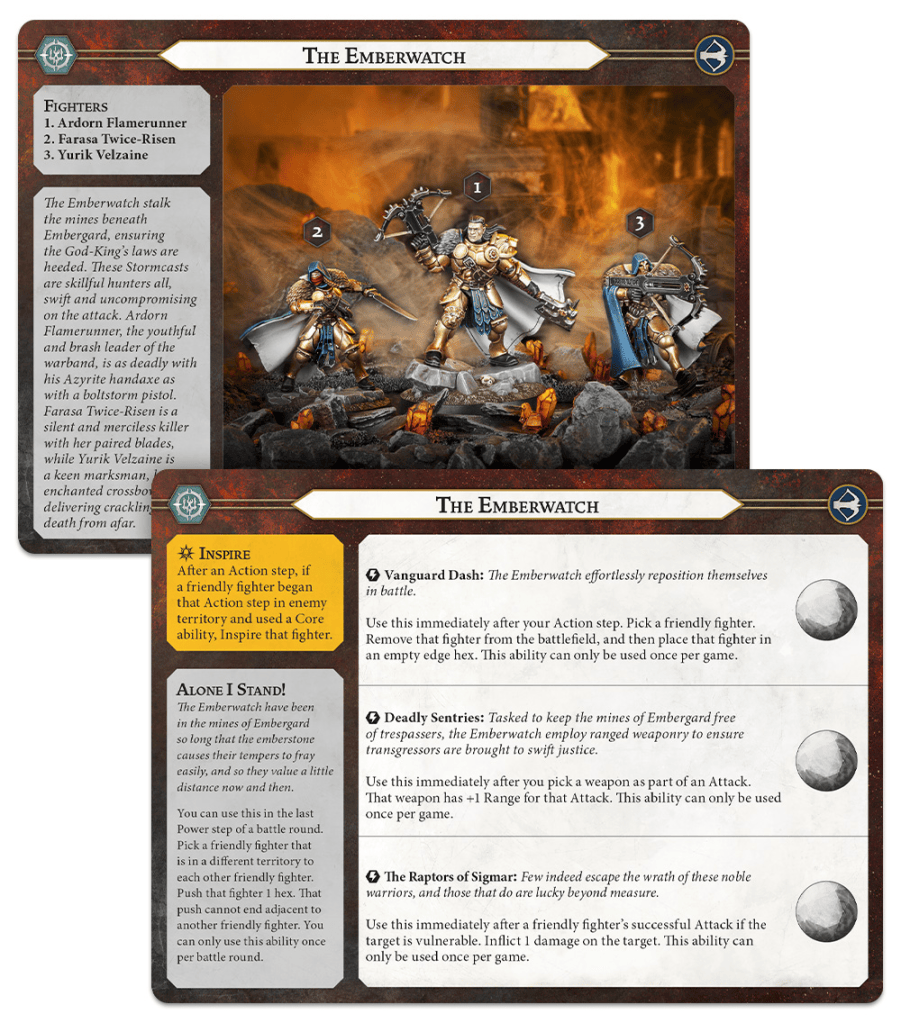
Warscrolls Are Open Information
This gives us similar gotcha prevention as eliminating warband decks. Somebody is playing a warband you have never seen before, and you can just read their warscroll and know what options they have. It’s anecdotal but I saw it in a store tournament in real life – we were holding a rivals event and two players were at the top table having never faced each others’ warbands before. The Soulraid player asks the Shadeborn player “you don’t have like a ‘deal a damage to somebody in cover’ or anything do you?” And he said “No I don’t think so”. Elathain moves into cover to end the round. Next round, Shadeborn draws into exactly that card, plays it, and kills Elathain. Was he lying for advantage? Was it an innocent mistake? Should the Soulraid player have known better? Did the glass trophy go to a cheater? Is this event a major part of why the Soulraid player quit playing with us the following month? I don’t have to lay awake asking myself these questions if both players can see ‘deal a damage to a fighter in a cover hex’ is clearly written on a Warscroll card both players can read all game long.
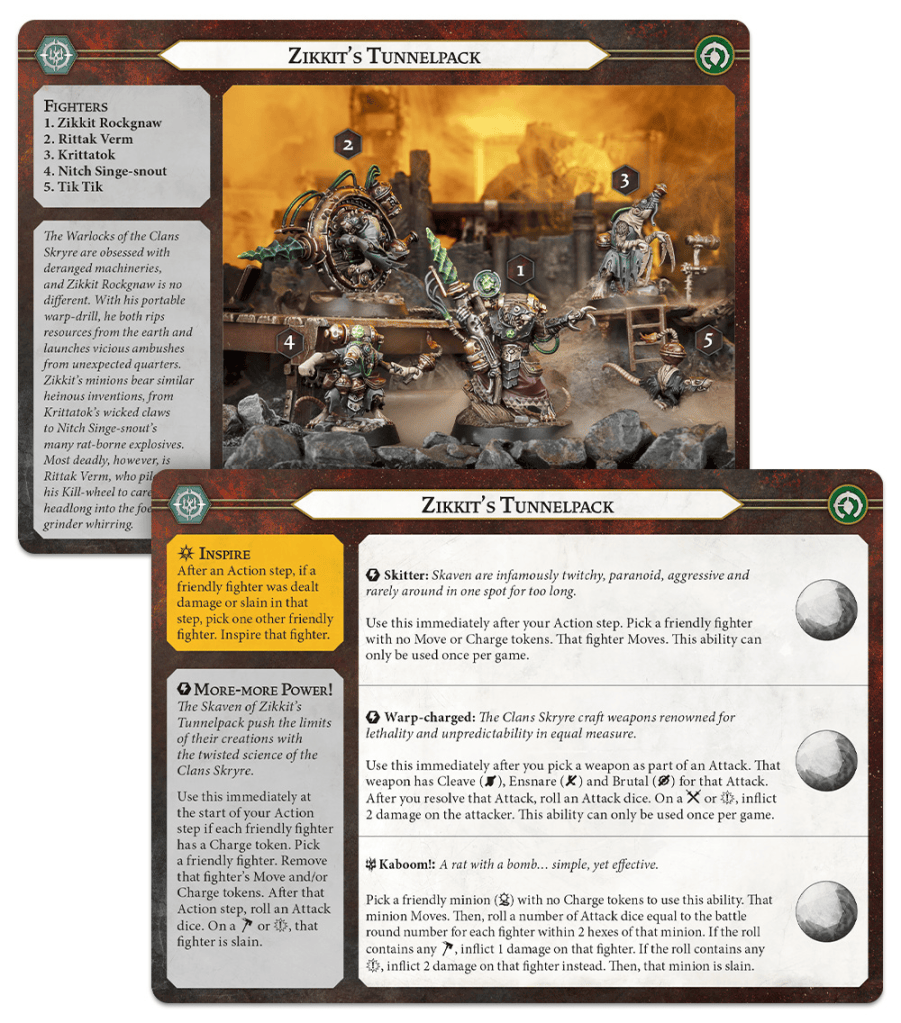
Warscroll Abilities are Always Available Immediately
You’ll catch more flies with honey, and you’ll catch more new players by telling them ‘these toys are cool because you can do this cool thing’ – and they actually get to do it. I’ve seen the sadness on a new players’ face myself when they never draw that important faction card that lets them do whatever hype thing they’re planning. Now, with single-use gambits on a warscroll, they can reliably plan to do their unique warband things every time. You also get more options overall in this new ruleset – envision the wqarscroll abilities as effectively 3 free gambits that will awlays be in your opening hand and do not take up space – that also means you have more chances to do something impactful with your opening hand. More action, more fun, more engagement, more chance of joining the community full-time.
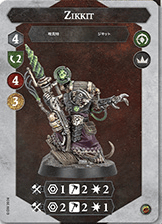
Warscrolls Contain the Abilities and Text – Not The Fighter Cards
Now, there is only one place to look instead of multiple cards when you want to understand an ability your fighters might have. This means less chance of missing a rule since it was on a different fighter’s card. It also means more space on the fighter cards themselves for wound counters etc and you’ll only need to check a fighter card for that specific fighter when you need to know their stats. We can talk flavor and tradition all day, but for a new player it’s a simpler experience and will make onboarding much easier.
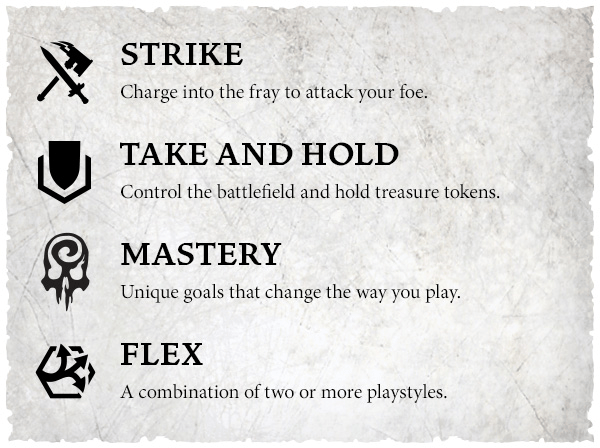
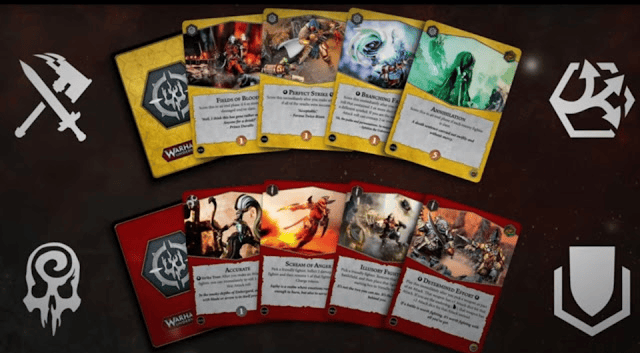
Warband and Deck Archetypes
Things now will be receiving icons and labels for Flex, Strike, etc. Beforehand, you would get a new warband release and would await content creators’ articles about ‘this looks like a good aggro option’ or the like. Newer players who weren’t as into the blog/podcast scene just had to make their best guess. Now it will be a lot easier to assess a decent pairing – does this deck fit with my guys? Sure there will be nuances for more experienced deckbuilders, but today you have a lot more reading and homework to do to find a good pairing for your warband. In Embergard, you find the symbol that matches, and off you go. Similarly it will be easier to decide on a purchase for less informed players. This new Rivals deck is going on preorder – should I get it? Well it’s a Strike deck, and I play a Hold warband, so probably not. Fewer regretted purchases, fewer bad games, more fun and more community growth.
‘Bad’ Warbands Are More Viable
In full honesty, a substantial number of casual or newer players pick up the game because there are models for ‘their faction’. With this relaunch I have multiple people in my area asking about getting Idoneth or Kharadron models. Let’s imagine you were a player who only wanted to play as whatever you like in Age of Sigmar – if you even manage to pick up Ylthari’s Guardians, as an example, you would be incredibly limited by their bad faction cards. No matter what deck you pair them with, a good chunk of your cards are going to come from a pool that’s incredibly slim pickings. Sure, a given warband might have a weaker warscroll or fighter stats, but that kind of thing weas always true. Now you’re not as dragged down by faction cards and the guy who ventures a game or three with Daggok’s Stab-Ladz actually keeps playing with you because they might have won.
Similarly, for returning players, they might only have Shadespire or Nightvault era warbands. Yes, they could play Nemesis in First Edition with Garrek’s Reavers or Ironskull’s Boyz (and I have), but being told ‘sure you can play your old warbands but you really should just buy something new’ can really take the wind out of the sails of the desire to return. Now they’ll just print their warscroll and have the same cards everybody else does, and a much better shot of enjoying the game and having a winnable experience.
Underdog
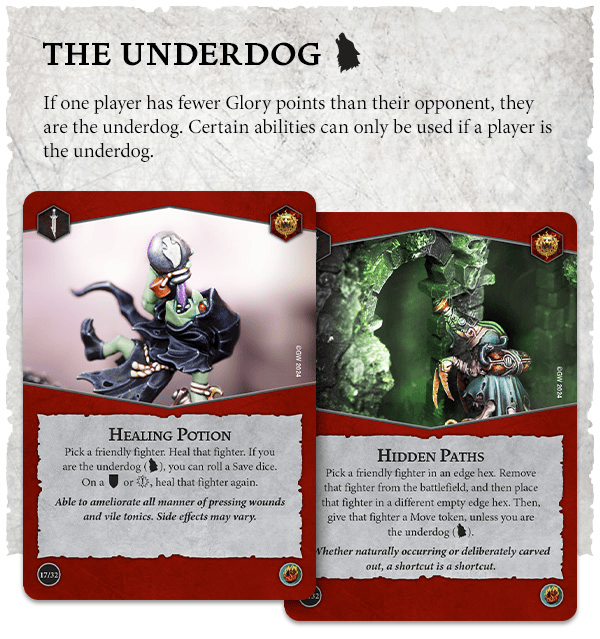
Embergard has brought in the Underdog mechanic that was quite well received in Spearhead for Age of Sigmar, where some things happen if you’re behind on glory. Underdog will allow for some cards to have better effects if you’re losing, you’ll win tiebreakers on a roll-off, and so on. Warhammer Underworlds has historically had quite a strong ‘snowball’ effect – the player who is ahead has more tools to pull further ahead, and the player who is behind may end up getting obliterated with no chance to fix their situation without significant luck. At lower levels, this keeps the game fun and engaging and less likely that you want to give up because you’re getting crushed, and is good for new players. It also is good once they transition to higher levels, because now there’s a tactical consideration for ‘who is the underdog when’, and you’ll have to think about when and how to score/play cards with that in mind.
FAQ/Errata Problems Hopefully will be Less Confusing
Right now, a newer player can walk into a tournament and be totally wrong-footed by an FAQ or Errata they didn’t even know about. I played someone who was using Domitan Force of Frost, who had clearly done some practice and was making smart plays, but he didn’t know that Chill of the Grave needed three out of action to score, or that Frostwyrm Cloak no longer reduced damage from adjacent attacks. I can’t say he lost our match for sure because of those misinterpretations, but they didn’t help, and I haven’t seen him since. It’s possible the feelsbad of being told ‘oh actually your stuff doesn’t work that way’ kept him from engaging with us again.
Universal cards will probably continue to suffer this issue, but after 7 years of the First Edition our documents are gargantuan, and there are three of them. By taking the warband half of the equation and moving them to online warscrolls – which can be updated much more easily than out of print faction cards – some of the ‘gotcha’ here will be less likely to ruin a newer players’ day, and thus make them more likely to hang out and play more games.
Wrap
That was long, but in short; nearly every change we have been shown for Embergard looks to be a boon for those of us who want to expand the player base, bring in new people, bring back old people, and keep those new recruits playing for longer. This new edition looks like a lot of fun for existing and experienced players as well, but I am very excited for the potential to get this game in the hands of more people and bring the Underworlds community to the next level. So grab your copy when you can, teach a few friends, and have fun spending that refundable glory! Let me know what you think at SpentGlory@gmail.com – and if you’re a potential new player or a returning player who thinks this just might be the game for you (it totally is) – check out this directory of local groups to see who is in your area to meet up with and get some dice rolling!





Leave a Reply