
Howdy, Spent Glory fans! Now that Embergard/Second Edition has been live for a few months and I have gotten the chance to play a few dozen games, I wanted to toss out a few observations I have made and chatter I have heard from people online about the things that might cause some good ole’ consternation. I have made many of these mistakes myself, multiple times in most cases. If you’re still in your first handful of games, hopefully I can help you avoid some of these pitfalls, and if you have been making these mistakes like I have, hopefully this article will help us both crawl out of the pit and prove that old dogs can eventually learn new tricks.
If you started in second edition, check these out and make sure to point and laugh derisively at your aging and decrepit opponents. Then, make sure they aren’t using these things to cheat accidentally or give themselves an unfair disadvantage either. Only you can prevent yourself being taught something wrong by somebody who didn’t know things have changed!
Quick Draw McGraw
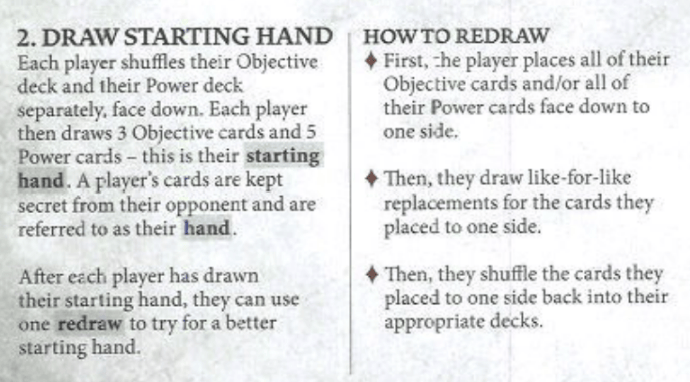
This is the thing I continue to mess up the most. In Embergard, you draw your cards BEFORE you set up the board, place Treasure, or do anything else. After you reveal your warbands and deck pairing, you draw cards, and then can mulligan if needed. Do this first. You get the benefit of that information when choosing boards or where to place tokens in the new rules.
Consolation Draw
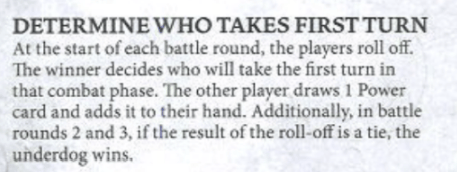
Lose the roll off? Draw a card. The player that loses the roll off at the start of any round (not the board orientation step though) draws one additional power card. This is true even if the winning player elects to go second. Forgetting this means drawing 1.5 fewer cards per game on average, and that could be bad for you. Stack that power hand!
Supports Don’t Stack Like Before
If you have ‘flanked’ from a card like Hidden Aid, and your target is flanked from an adjacent fighter, that enemy fighter is not surrounded. Most of the first edition cards that mimic this effect would have said ‘count as having one additional supporting fighter’. The Flanked effect is distinct from Surrounded in second edition, and two Flanked don’t necessarily add up to a Surrounded. Additionally, if a fighter cannot be Flanked, they still can be Surrounded. We have to stop thinking about things as 1+1 and view them as separate conditions.

“You Can’t Resolve That” Looks Different Now
In the old days, if you couldn’t resolve an effect, you couldn’t play a card or take an action. Say you had a fighter at full health, they couldn’t be healed. If you had a card like Malefic Siphon from Hungering Parasite in first edition – if your fighter wasn;t damaged, they couldn’t be healed, and then couldn’t ping somebody afterward. Now, when a fighter would be healed but is at full health ‘nothing happens’ – but you could still continue to read the card and do subsequent things. One of the more impactful ways this ‘you can’t resolve that’ change happens now is when looking at the Crimson Court Warband. According to page 20 of the rulebook, you can uninspire an uninspiured fighter – they don’t need to be inspiured to un-inspire them, they just don’t change status since they’re already there. This means you do NOT need to inspire, then uninspire to become Savage, and can make a fighter Savage from their uninspired side without issue. This has been confirmed in the FAQ as well.
Flying Fighters Behave Differently
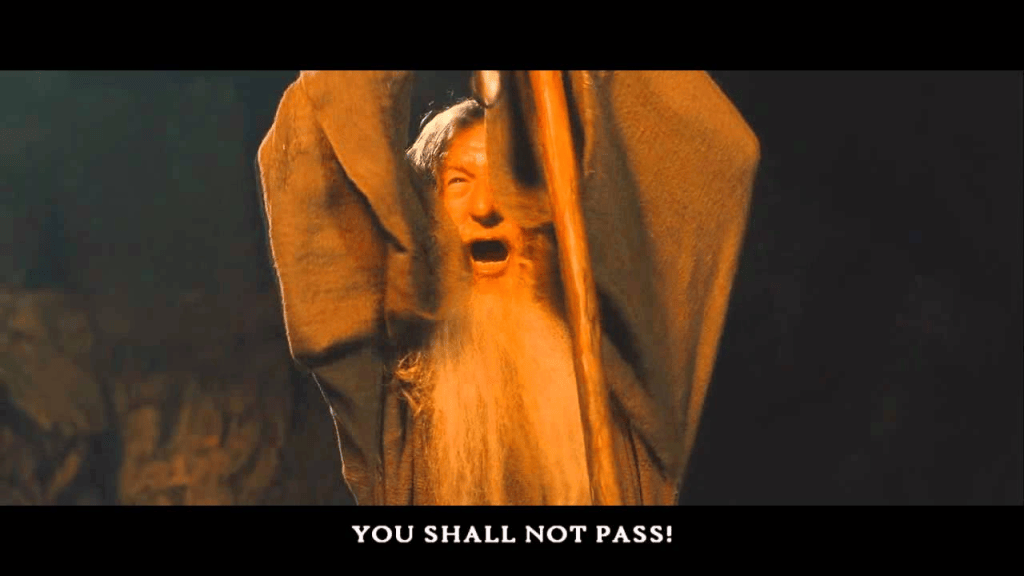
Once upon a time, flying fighters could go through anything and not be affected by it. Eventually the rules changes to say they could be driven back into a stagger, lethal, etc and it would be a problem, but during their movement they were immune to all that jazz and could rock through other models and blocked hexes like they didn’t exist. In Embergard, the rules designers have finally remembered we are playing underground and in caves/ mines, labyrinths, etc. That means that flying fighters can NOT move through blocked hexes anymore. You’d think maybe ghosts could, narratively at least, but the 2.0 rulebook just says they ignore stagger hexes and other fighters during movement – blocked hexes are not on the menu.
Incomplete Hexes Do Not Exist
This one is somewhat intuitive but I have seen people, even Worlds Judges, have to think about it so it’s worth calling out. In first edition, with half a hex surrounding the board edges to allow for two boards to be placed next to each other, you had incomplete hexes around the border of a given territory. During an offset board orientation especially, you could run into issues where you couldn’t move or shoot through an incomplete hex. Now that we play on a single shared board in Embergard, there are no incomplete hexes. You can see along the edge of the board. If your fighter is in an edge hex and wants to attack at range 2 or 4 against somebody along that same edge, they can still see them and can still attack them.
Don’t Get Trapped in the Past
In first edition, there was a condition known as Trapped. If your fighter could not possibly be driven back because all the available hexes were blocked or occupied behind them, any attacks made against them that resulted in a draw would could the attacker as having an additional success, effectively acting as a tiebreaker. In Embergard, Trapped is not in the rulebook. That condition is gone so you will not win on a tie as the attacker, and you just fail in the case of a draw on number of successes. Don’t be cheating! Don’t be trapped in the past.
Get Your Delve On, Shaky Legs
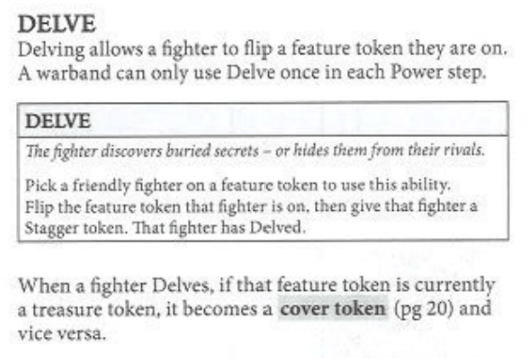
In Embergard, you can still delve a feature token while staggered. Delving still gives you a stagger token, but having a stagger token doesn’t stop the delve from going off. This dramatically opens up your options to score things in the Pillage and Plunder Rivals Deck, counterplay that deck, and potentially other interactions in game. If you’re operating on the old rules where a stagger means no delving, you’re streets behind. That said, you can still only delve once per power step, even if you have multiple fighters on tokens at the same time. Players using Pillage and Plunder who are aiming for multiple delves in a round will need to keep this in mind!
Guard and Stagger: Together like PB&J
Back in ye olde days, going on guard removed/flipped a stagger token, and staggering a fighter removed/flipped guard tokens. This meant you could undo a stagger by taking the guard action, or screw over somebody’s guard plan by playing a stagger card. In Embergard, a fighter can be on guard and staggered at same time, they no longer supersede each other. You need to be on guard? not much they can do to stop you. You need an enemy staggered? they have no way to undo it. This makes both effects more reliable and more powerful, and I find myself taking the guard action more than I used to as a result.
You Can’t Take It With You
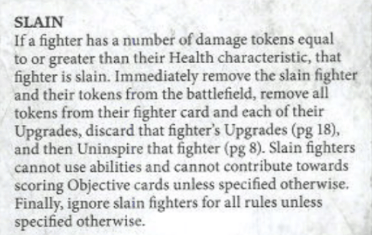
Much like in the real world, your toys don’t follow you to the afterlife, even if you’re buried with all your trinkets. Sorry King Tut. In First Edition Underworlds, when fighters were taken out of action, their cards were not affected, and if they were raised later in the game, got to stay inspired with their brace of upgrades still intact. In Embergard, slain fighters break their upgrades and uninspire, and then are removed from the battlefield. If they are raised later on, they remain uninspired (unless like some warbands such as Zondara’s Gravebreakers or the Sepulchral Guard, being raised is their inspire condition). Additionally, they do not come back with their upgrades. Sorry, Hungering Skaven. That guy just can’t buy a win.
A Charged Debate
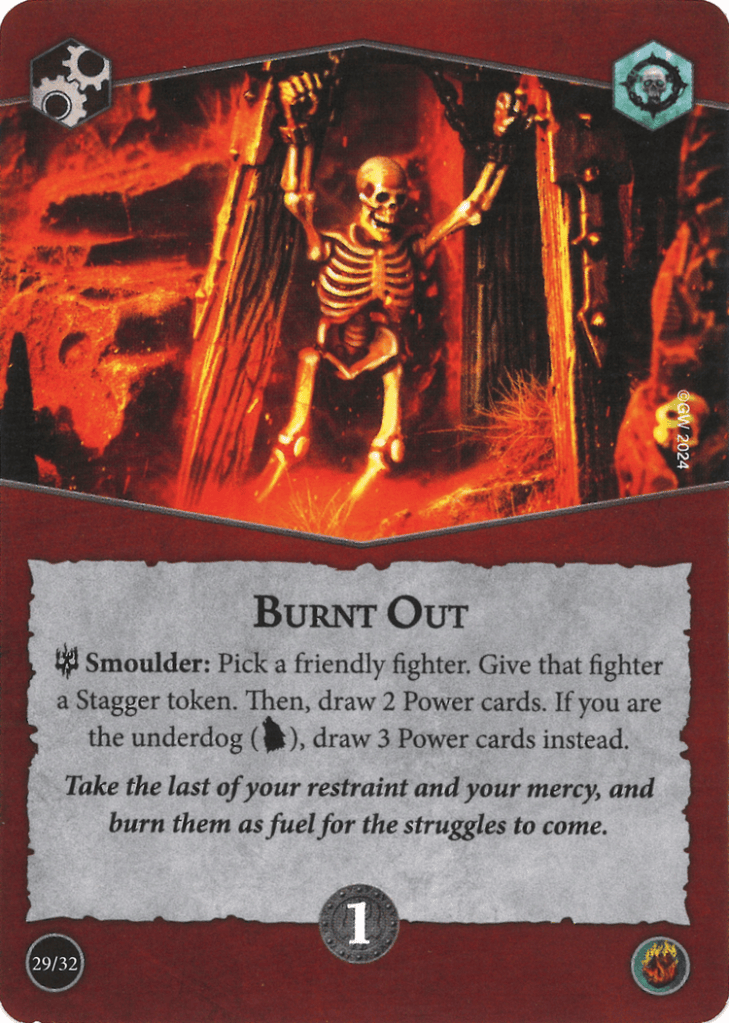
The Charge Token, and the ‘Charged Out’ rule, is NOT exactly the same as before. Previously, a fighter with a charge token could not be picked to activate, unless every fighter in the warband had a charge token. Then, that fighter could only move, attack, or go on guard. Now, if you have a charge token, you cannot take the move, attack, or guard actions (unless you reach charged out like before which allows you to then do those things). The fighter can perform other actions though, such as any that may be conferred from an upgrade like Smolder on Burnt Out. Unless specified otherwise, these do not require you to be ‘charged out’. Theoretically you could charge with a fighter in activation 1, and then use that fighter to make a special core action from your warscroll or an upgrade in activation 2 without having charged anybody else.
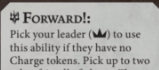
That said, some other core abilities on some warscrolls like the Sepulchral Warden’s “Forward!” action will specifically specify the fighter cannot have charge tokens if they want to use it. This means even if you do manage to reach ‘charged out’ with all of your fighters, you still can’t use these core abilities even though you could do something like attack again, for example.
The Name Game

Some things have had their names changed. It’s not ACTUALLY important, but they’re called Treasure Tokens now.
And the card type is a Ploy. There is no such thing as a Gambit anymore.
Don’t be like me and confuse your new players in a learning match when you start talking about things that aren’t in the rulebook.
Wrap
That’s all I have for right now, though I’m sure I’ll trip down here in the Emberstone mines for a while longer while I get my bearings. Let me know if you disagree with my interpretation of any of those rules, or if there’s something important you think I have missed so I can update this for the future readers! Now draw those cards, break those upgrades, and (don’t) spend that glory!



 Spent Glory
Leave a comment