
Today’s topic will focus on tournaments and other similar events. Having competed in a fistful of them and been the TO for several smaller local clashes, I have had some exposure to both of these commonly used formats. “Best of 1”, where a pairing plays a single game to determine a winner, has some advantages and drawbacks over “Best of 3”, which is the rulebook’s recommended format. Which should you choose when designing your own event to host? What should you think about when preparing to participate in an event of either format? Let’s explore below.

If you’re looking to run a tournament, check out these TO articles
Prize Support and You
A Discussion on Tournament Tiebreakers
How to Run a Local Tournament
If you’re looking to compete, check out these other competitor resources
Contender Series
Participating in your First Tournament
What to Expect at Your First Grand Clash
Playing Well With Others: How to Become a More Courteous Opponent
Before we get too into the weeds, I wanted to mention that there does exist a format known as the ‘Best of 2″, but I have never held or competed in a Bo2 so my understanding is far more theoretical. In that format draws are more common (as a pairing can end 1-1), and so you’ll need to be much more intentional about tiebreakers but otherwise can serve as a middle ground between the other two formats, depending on your needs.
For those interested, Critical Focus Channel made a video on a similar topic a few years back. It’s outdated now but still has relevance.
What is a Best of 1?

A Best of 1, or Bo1 format, describes a tournament in which each pairing plays a single game to determine a winner. This approach has many advantages from a TO’s perspective – there’s less math involved, the rounds can be a more predictable length, and you can fit more rounds into a given day. If you don’t have a long time to run your event but still want to determine a clear tournament winner, you’ll need to jam enough rounds into your time to leave one undefeated player atop the pack. Similarly, if your event is very large, you probably won’t have the time to play a dozen rounds if you are running longer matches in a Bo3. At the Sunday tournaments held at my local Warhammer store, we only have about 6 hours (including a lunch break where the store closes), so it’s tough to get more than 4 hours of match time. As a result, any tournament with more than 4 competitors wouldn’t end with a single undefeated player in a Best of 3.
However, there exist several drawbacks/Cons in the Bo1 format. You’re only playing one game, and somebody has to win that opening roll-off, giving them a distinct advantage in board selection and orientation, token placement, and fighter placement. In a perfect tournament, things would be more ‘fair’, and Underworlds is innately imbalanced (though not dramatically) by the setup stage.

We have all had games where one player’s dice are exceptionally hot, or another’s exceptionally cold. If your opponent hits crits on every attack in round 1 and you fail every one of yours, you’re probably losing that game regardless of player skill. In a best of one, that spells doom with no chance for a regression to the mean to allow you to win the next two in a Bo3. Similarly, card draw variance can tank your chances in a single game. Start the game with no surges and no ploys, and you’re in for a rough time out. That critical card you really need to execute your plan gets bottom-decked. You lose and are hard-pressed to podium. If you play more games, your deck shuffle and your dice result should even out across the match.
Finally, in a large enough event, players know they may have to rely on tiebreakers to place well, especially if they aren’t going undefeated. That means things like glory differential might be what gets them a prize or sends them home empty handed, and so they may be more incentivized to take greedier plays/bigger risks they otherwise wouldn’t. That can lead to some feels-bad moments when one player gets blown out, somebody’s big gamble doesn’t pay off, or someone who played ‘smart’ loses to a bigger risk-taker in tiebreakers at the end of the event.
What is a Best of 3?

Best of 3 format, or a ‘standard competitive match’, is a method of tournament in Warhammer Underworlds where a pair of players will play until one player has won two games. As ‘true ties’ in second edition are pretty rare, it’s very likely that the match will either end 2-0 or 2-1, and have a winner and a loser. This is helpful for your tournament scoring, but also can help determine a ‘real winner’ in a given pairing, at least subjectively. The winner of a match had to beat their opponent twice and is far less likely to have ‘lucked their way past a better opponent’. As discussed above, dice and card variance will be less pronounced. And, perhaps most importantly, ‘better players’ will be able to use information about their opponent they learned in game 1 to counterplay and win more reliably. Gotcha cards might get ya in a one-off game, but unless you fall for it twice they’ll have to beat you another way. It also allows skill expression for the player who is winning in game one to potentially choose not to play a card or score an Objective so their opponent won’t have as much knowledge of their deck going into game 2. Simply put, a winner in a Bo3 is more likely to be the ‘better’ player and ‘more deserving’ of the win (obviously exceptions exist).

So why wouldn’t you always play best of 3? Well, it has drawbacks too. Best of 3 takes considerably longer than a single game. If we assume game 1 takes an hour, maybe game 2 can take 45 minutes, but you might have to go to a game 3 and across an event you undoubtedly will have a few matches that do. That means your round timing has to be long enough to accommodate 3 games. If you only have your event space for a certain time, you can’t run nearly as many rounds. You might also be forced into a multi-day event, which is much harder to coordinate and get attendance for, and you risk drops between days which can mess up your brackets as well.
The player experience can suffer as well, because some of your players will finish their match 2-0 quite quickly and then have to sit around for extended periods. Meanwhile, another pairing is sweating out an intensely close game 3 and then has to dive right into their next match since your event is likely on a time crunch. Ever played nine games straight without a snack break?
Player Considerations
OK, so you’re not a TO. Please consider becoming one!
But in the meantime, you’re gearing up for that event. What should you do differently if you’re playing a Bo1 vs a Bo3?
Prepping for a Best of 1 Event
If your event is playing a Best of 1, there are a few things you can do to maximize your success. When building your deck, it’s somewhat safer to include ‘gotcha’ cards that are potentially counterplayable, but your opponent may not expect. Big end phase Objective cards like Annihilation, Strip the Realm, and so forth might not score in games 2 and 3 of a set, but are higher value in game 1. With Annihilation as an example – knowing it’s in your opponent’s deck means you’ll probably make a move to run away with your last surviving fighter, go on guard, or whatever helps you survive since blocking that massive 5 glory payout will do more for you than whatever that single fighter could score for you in the closing activations. This, of course, is something an opponent might not do if they don’t think you have the card – and who would take Annihilation to a tournament?
Conversely, you have to assume your opponent IS running those big score cards. You won’t have any knowledge of their deck in the first (and only) game, so play like they might pull a fast one on you and always be on the lookout for those big surprise cards that could be in their pairing.

The second big thing to think about in a best of 1 is the tiebreakers. A common first tiebreaker in a best of 3 tournament is ‘game losses’ – just win 2-0 whenever you can. That isn’t an option of Bo1, so your TO will have to go for something else. Depending on what that is, you’ll want to make sure you do that so you will be at the top of whatever pack you’re in when the standings are finalized. If total glory or glory differential is the primary tiebreaker, you can’t afford to let up and play safe if you’re winning, since you may also need to win by more.
Don’t be afraid to discard cards in between rounds if they don’t seem useful or scorable, since giving that information to your opponent is less harmful to you in a Bo1. Sure, they know you don’t have it anymore this game, but they won’t be able to use that scouting for subsequent games since you’re probably not playing them again.
Preparing for a Best of 3 Event

One of the major differences between a B03 deck and a Bo1 deck is that a Bo3 deck needs to be all the more consistent. You want to be able to score most of your Objectives every game, even if the opponent knows they’re coming. Building your deck with fewer ‘gotcha’ cards will be to your benefit, since while they might win you one game, if they can be blocked easily you won’t get much use out of them in the next two.
When playing, be sure to be very mindful in game 1 and 2 of what cards your opponent has played and keep track of them for the subsequent game(s). If you haven’t seen Confusion yet in game 2 after getting burned by it in game 1, you need to remember they might have it. If they’ve scored (or discarded) strip the Realm in game 1, you MUST be on treasure tokens in games 2-3 until you see it discarded. The player with better memory has an advantage, and it is acceptable in the rulebook to look through your opponent’s discard pile/scored Objectives pile at any point in a game.
In a similar vein, your opponent, if they’re good, will be using the knowledge you give them against you as well. If you’re surely losing a game but will be playing another, conceding is always an option to limit the information you divulge (though you’ll also get less info from them). You may want to consider holding a card rather than discarding it between rounds so that it doesn’t become public information, and you can use that mystery to your advantage in subsequent games. Don’t just play a ploy or apply an upgrade because ‘whatever I’m losing anyway let’s have some fun’ – a canny opponent will use that against you in the next one.
If you’re the player who is winning, you can also opt to not press your advantage with those cards. You only have to win by one glory, after all, and running up the score might feel good, but will provide information to your opponent they could use to beat you in the next game. Additionally, you’re less incentivized to beat your opponent by bug margins since the primary tiebreaker is usually game losses – winning 2-0 in a set is more important than winning by double-digit glory twice but only winning the set 2-1. Be sure to confirm this is true for your event though, as some may use different tiebreakers!
Wrap
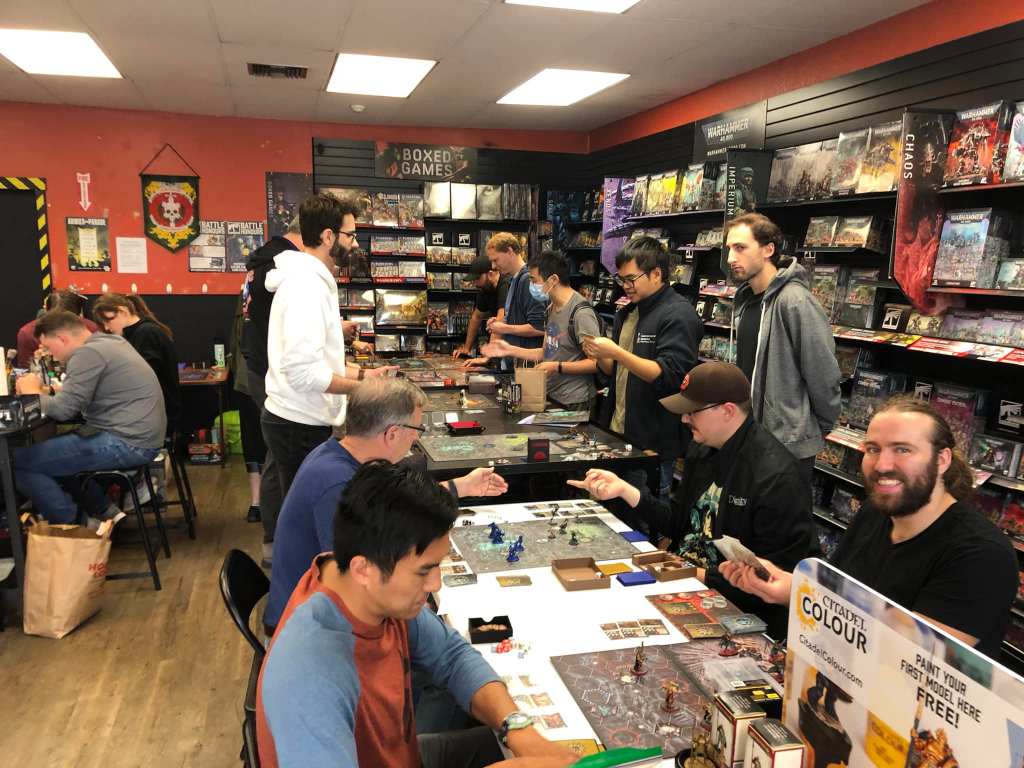
Those are my two cents on the primary formats for events, based on my experience as a competitor and TO. What do you think? What has your experience been with Best of 3 and Best of 1 events?
If you’re looking to run a tournament, check out these TO articles
Prize Support and You
A Discussion on Tournament Tiebreakers
How to Run a Local Tournament
If you’re looking to compete, check out these other competitor resources
Contender Series
Participating in your First Tournament
What to Expect at Your First Grand Clash
Playing Well With Others: How to Become a More Courteous Opponent
Whether you’re at the table or holding the clipboard, I hope you have fun spending your glory!





Leave a Reply