In full honesty, I had this article partially written and saved for ‘some time in the future’ when I got the preview copy of Raging Slayers. It was originally to be titled “What Would a Leader-Centric Rivals Deck Look Like?”. Having stewed on some ideas for a leader-centric deck right before getting something close enough in my hands, I decided to rewrite a bunch of this to include both a ‘what did RS do right’ and ‘what could RS have done better’ in regards to the focus on the leader, then push it right up the queue to release it at a ‘relevant’ time.
What Makes a Leader-Focused Deck Special?
I love the idea of a deck that maximizes the leader runemark, and I’m glad to have seen one now in second edition that has a little more reliance on it. Some warbands, by the way they are constructed, have greater or lesser reliance on their leaders. The Grymwatch, as an example, lean on Dule Crackmarrow a good deal. He is necessary for their warscroll ability In the Name of the King – without him, you are not resurrecting your fighters, nor are you inspiring them mid-round. Blackpowder’s Buccaneers are leader-centric in a different way – the pirate is the only one who can access warscroll abilities, and is in many ways the basket in which all the fighter stats eggs are placed. He’s a terror, but his friends are relatively unimportant. Grymwatch and leader-centric bands like them rely on their leader surviving and being protected. Blackpowder and warbands like him rely on the leader being able to make as many efficient activations as possible.
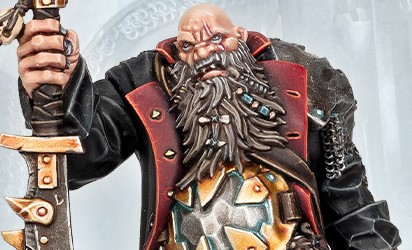
Other warbands have far less reliance on their leaders. These warbands have leaders that don’t give up much (or any) additional bounty compared to their other fighters, and those leaders’ stats are relatively unremarkable compared to the rest of the warband. Their warscroll abilities don’t depend on the leader to use or maximize, and as a result the leader is ‘just another fighter’.
Regardless of which flavor of warband you’re using, a leader-centric Rivals deck is one way to change up the way the game is played and provide more variety in experiences. If you’re a leader focused warband already, leaning into that can feel very fulfilling and on-brand. If you’re a warband where the leader feels ‘same-y’, a leader-focused deck can be one way to breathe new life into your activation choices. If you’re playing a warband where the leader is only marginally more important than the other fighters, a leader-oriented deck can help elevate that difference and create some differentiation.
It’s also great for the narrative experience to watch your leader be the hero, scoring Objectives only they can score, and taking actions that are better than their followers’ options. I know HeroHammer isn’t for everyone, but for those that enjoy the trope, It’s nice for them to be able to play their way.
History of Leader-Centric Cards
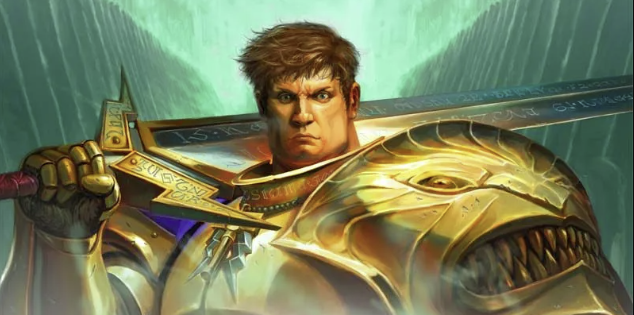
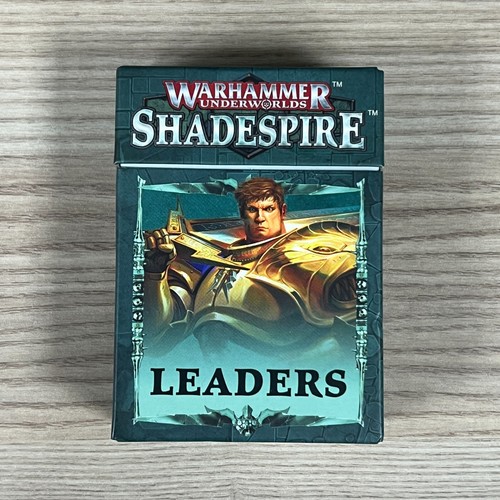
In first edition, we had multiple renditions of leader-focused items that made their way into the card pool. In the Shadespire days, there was a set of cards called the Leaders Pack that included a handful of cards for every warband. Inside were Objectives that could only score if your leader met some condition, Ploys that required your leader to be on the battlefield, and Upgrades that only your leader could equip.
Throughout the pre-nemesis version of the game, we had several other card types that played on the same trope – your leader takes something out of action, you slay the enemy leader, or your leader slays the enemy leader? Here’s some Glory. They unfortunately were usually not worth the reward, especially considering much of it was out of your control.
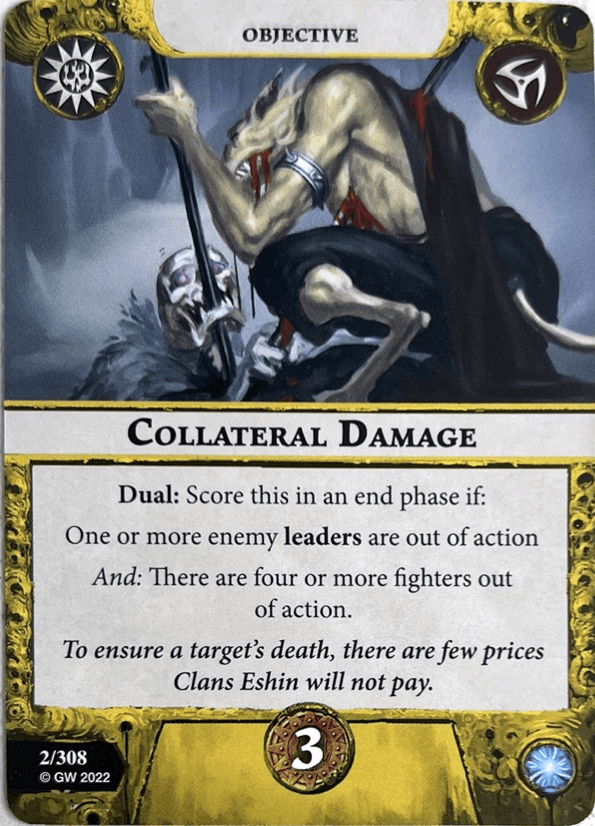
In Nethermaze, a warband named Skittershank’s Clawpack was introduced. That warband had one major goal in their faction-specific deck: slay the enemy leader. Their warband inspired based on attacking he leader, cards scored when attacking the leader, and more. It was a nice way to make a showing of leader-focus that didn’t just make your own leader a monster, but you had to address the enemy leader as well.
In Wyrdhollow, and now fully into the Nemesis ecosystem, we saw the release of the Toxic Terrors Rivals Deck. This deck had multiple flex/strike components, but also a heavier leader focus than other decks that had come before. Carve a Path rewarded you for having a leader attack more than once in a single round, with a bonus if you did so successfully in enemy territory. Superiority Confirmed rewarded you 2 glory if your leader was in enemy territory and 4 or more health worth of enemies were slain. The deck also focused on some specific upgrades with a keyword, and specified some of those couldn’t be given to large fighters – preventing certain powerful leaders from abusing them. Ultimately the deck wasn’t incredibly relevant competitively, but that wasn’t because of the leader components, which were generally well received.
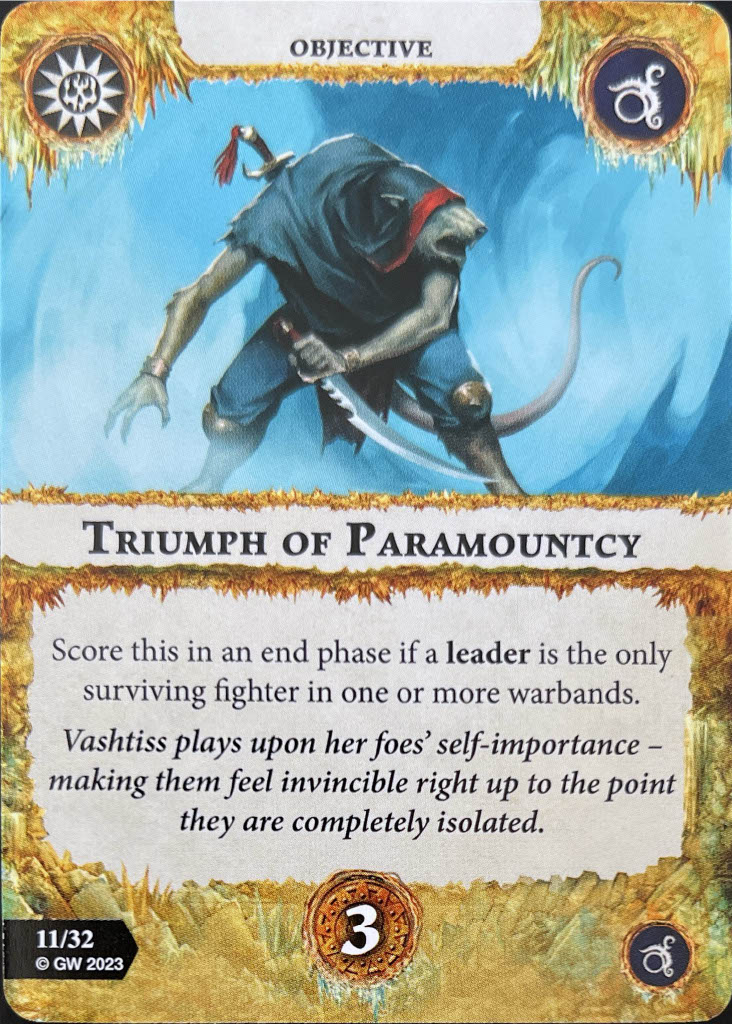
Thricefold Discord, a warband released in the Deathgorge season, also had a particularly spicy card for leader-based play. Triumph of Paramountcy was a warband specific 3-glory end phase that required a leader to be the only surviving fighter in one or more warbands. They could score this is Vexmor was the only survivor on their team, but could also score it if they killed everything except the enemy leader. Its existence fundamentally changed how some warbands had to approach the matchup, and the dual nature of the card was really intriguing to people.
The Current State of Leader-Centric Cards

As of today, we only have a limited suite of cards that reference the Leader with the Crown runemark.
- Blazing Assault has Commanding Stride which allows a leader to push up to 3 hexes, so long as they end in a Starting Hex. It also has Strike the Head, which grants a glory for slaying the enemy leader (or a target with health equal or greater to the attacker’s). These cards allow your leader to have better positioning, presumably for more opportunities to attack, as well as a modest to weak Surge Objective to potentially reward assassination.
- Pillage and Plunder also has Commanding Stride, which can allow a leader to reposition for more attacks, to get to safety, to get closer to a token for delving, and so on.
- Edge of the Knife has two Leader-focused cards. Usurper is a 2 glory end phase with the unfortunate requirement that the enemy leader be slain that round, and that it be slain by a Tempered fighter. An interesting ploy it contains is Spiteful Traps, which can hand a move token out to a 3+ health fighter within 2 hexes of your leader. This could be used to keep things from charging at your leader and protect them, but can also be used to keep things from getting away from an aggressive leader.
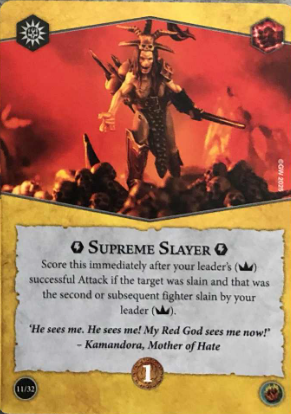
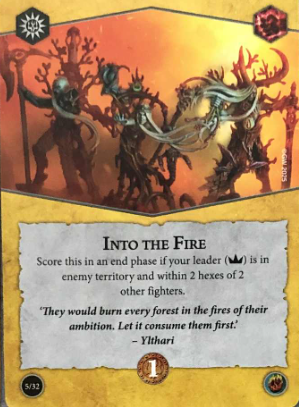
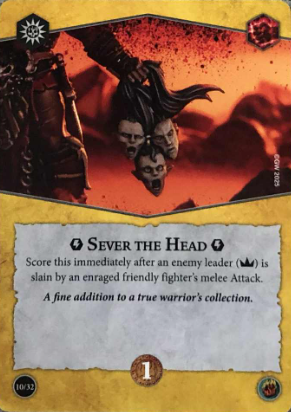
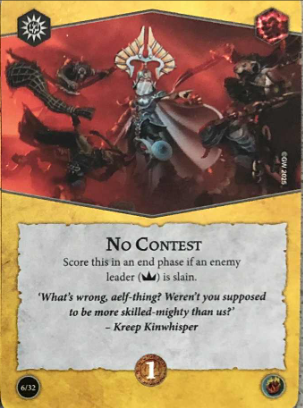
- Raging Slayers is the deck that currently has the greatest explicit leader focus of any deck, as it contains four objectives and one ploy that use the leader runemark. Five total Crowns, when every other deck has two or fewer. Three of them reference your own leader – you have a ‘your leader kills their second enemy’ surge for a disappointing 1 glory (as surges are limited to 1), ‘your leader is in enemy territory and near other fighters’ for another low 1 glory, and a ploy to push a friendly fighter adjacent to your leader. These imply a focus on getting your leader into the action and laying about with their weapon early and often. The two that focus on the enemy leader are ‘you slay the enemy leader with a fighter who has charged’ for 1 surge glory, and ‘the enemy leader is slain’ for 1 end phase glory.
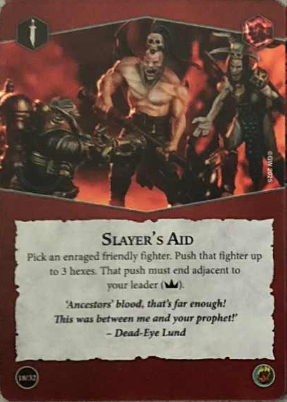
While I would argue the rewards for these cards are a little lower than the effort might suggest, it does guide a player’s approach to either use their leader aggressively, target the enemy leader for execution, or both. But it’s not just the crown-marked cards that do this!
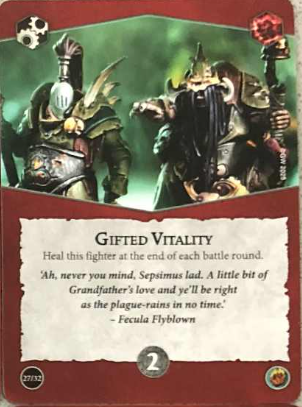
Raging Slayers also has several other cards that don’t require the leader, but certainly could be made use of well by a prominent leader strategy, such as Blinded by Rage, which appreciates a charged out fighter making a second or subsequent attack. The deck also contains the most healing of any currently available choice, with Gifted Vitality potentially letting you heal the same fighter 3 times in a game (2 times which might be relevant), and What Pain? allowing you to heal two fighters once apiece. This could potentially allow a heroic leader to take three points of healing across the game (or any other key fighter you might choose).
Other cards across other decks decks aren’t exclusive to leaders, but occasionally contain bounty characteristic-related effects. Objectives like Supremacy, Frenzied Rush, and Arena Mortis are easier for many warbands if the leader gets in on the party, and Fields of Blood works better if you’re hitting the enemy’s bigger fighters and/or letting your bigger ones get hit.
In sum, if you’re looking to maximize your leader, you’re generally going to be doing it with regular cards that benefit everybody like Great Strength, rather than the Crown Runemark cards. If you’re looking to assassinate the enemy leader, you’re probably not taking the cards the specifically ask you to do so in all honesty, as they’re low-yield from a competitive standpoint.
If you REALLY want to make your leader into the hero, you could do so with any deck, but Raging Slayers is going to give you the most reward for it. I’m going to roll into some commentary on what RS does for players looking to maximize their leader play, and what I would have hoped to see/and putting on my Christmas wish list for a future deck.
What Did Raging Slayers Do Well For Leader Play?
- Provided multiple leader-runemarked cards, rewarding players for committing their leader to dangerous positions and using their power cards to augment their leader’s success in particular
- Provided incentives to specifically hunt down the enemy leader, creating a leaders’ duel narrative
- Provided a powerful leader-locked ploy that pushes another friendly fighter, which can increase their accuracy on attacks, success rates on defense, and help score Into the Fire
- Contains multiple other cards that don’t require the leader, but are likely to be used most effectively by a powerful leader without the drawback of a ‘dead card’ should the leader be slain
Where Could Raging Slayers Have Done Better For Leader Play?
- Currently, RS contains a large emphasis on multiple fighters having the Enraged state, so everybody has to charge. This means you can’t necessarily use your leader as often as you’d like and also score RS cards.
- Provided a powerful leader-locked ploy that pushes another friendly fighter, so the leader can’t necessarily do everything alone
- Your leader generally needs to be Enraged to access the power of the deck, so you have to choose them to charge. Historically, leader-centric play focused on pushes and attacks from standing so that your leader wouldn’t take a charge token and could keep swinging
- The Runemarked Objectives that require your leader to do things don’t give enough reward. Into the Fire bricks if your leader dies, and you’re almost by definition putting them… into the fire… yet only hoping to squeeze one glory out of that risk. Supreme Slayer needs your leader to kill two different fighters themselves which can be a very tall ask, especially since you need to have the surge in hand when it happens. After that, you only net one glory
Theorycrafting a New Leader-Centric Rivals Deck
Could there actually be a reasonably balanced Leaders Rivals Deck these days? Some Theoretical deck named Flameforged Crown or Charred Exemplar sounds neat and all, but we have to make sure it’s good enough to see play without being so good it takes over the scene. The elephants in the room are the following questions:
- How could you balance a deck that has Kro-Jax and Mir Kainan but also Grinkrak and Kamandora asked to do the same things?
- How can you provide a card mix that would make the deck more enticing for Leader-focused players than another deck like Blazing Assault? You’d need a deck that has something better than Great Fortitude, Duelist, etc but also doesn’t create some Unkillable Death Star
- How do you create sufficient rewards for risking your leader while also having a deck that doesn’t auto-lose if the leader dies?
One balancing option to allow smaller leaders to participate might be cards that scale to the bounty or health characteristic of the fighter in question. A few cards in the deck could help turn 1 or 2 bounty leaders into something on par with the 3 bounty leaders who would get less benefit (or not be able to use the card at all).
Perhaps specific Upgrades with a deck keyword could help. Say the deck was to be named Molten Mantle. Several of the Upgrades could be given a keyword like Raiment. Anybody could equip it, but the leader might get a modest benefit over a regular fighter. You could have Objectives that gave you a number of Glory equal to the number of Raiments your leader was wearing up to a maximum or 2 or 3, or simply 1 glory if a different fighter is wearing any Raiments.
In Embergard, we have only seen one variable glory card in Spread Havoc, and while that card is undeniably too strong as written, the variable score still can be useful here. A community driven first edition effort called Beardgrave created a full season of custom warbands that had variable glory objectives and it’s incredibly well balanced, so it’s possible to do. Creating objectives that score for 1 if accomplished, and 1 more if done by the leader can be a way to walk the ‘al your eggs in a basket’ tightrope. If this breaks the rule of “Surges must be worth only one glory” then so be it, in my opinion. Having a specific, very important fighter do something that risks their life and can’t score 2 if they’re slain when you draw it seems reasonable to me.
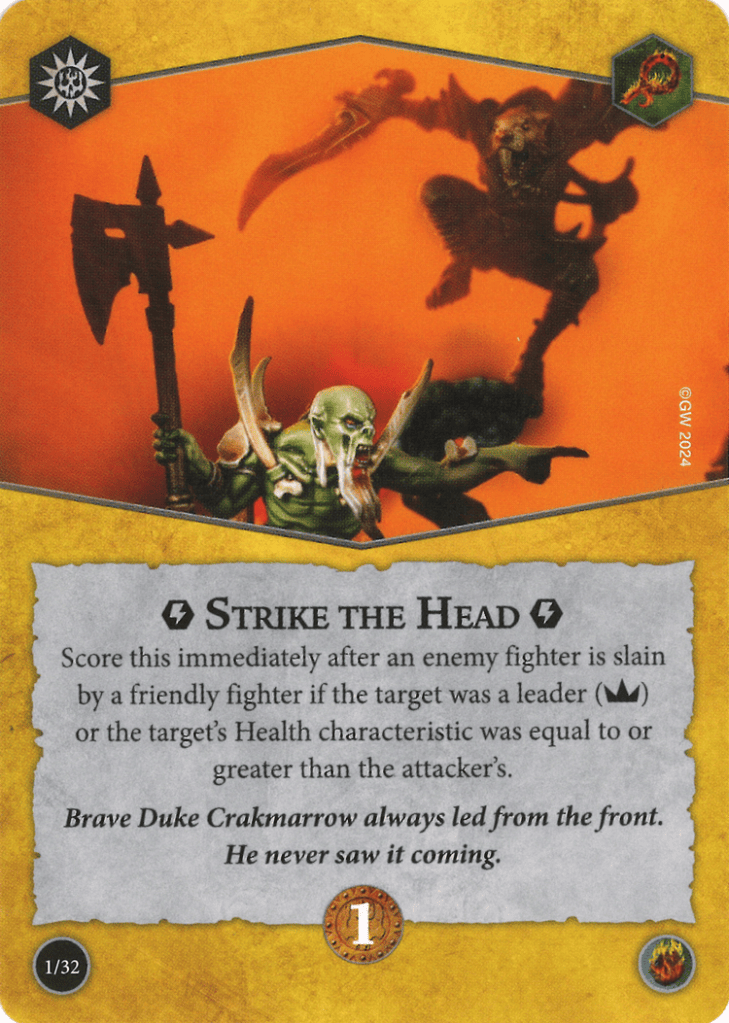
If you’re going to include things that reference the enemy leader, we will need to do so with a lot of care and intention. Far too often in first edition and unfortunately also in second edition now, the ‘enemy leader’ objectives are just not worth it. Strike the Head is honestly too difficult for 1 glory since you need to have the card in hand when you slay the leader. It does have the excellent secondary condition of ‘take out something your own size or bigger’ but kill surges are honestly not making the cut most days. Sever the Head is the same but worse, as it does not have a secondary condition and requires the attacker to be enraged. No Contest is a good start, since it simply wants the enemy leader to have been slain at some point, but having it worth only 1 glory is not enough. Usurper gives you 2 glory, but requires the leader to die at a specific time killed by a specific flavor of fighter, which is honestly too much to ask.
Enemy leader cards should, in my opinion, reward 2 bounty, generally not be Surge objectives, and have fewer limitations of timing or attacker. I don’t want a card that says ‘the leader was slain this battle round’ unless it’s worth a lot. “The leader is slain” for 2? Now we’re talking. “The leader was slain by your leader” for 3? Maybe. I don’t want extra conditions on my 1 bounty cards. I want ploys and upgrades that help with the condition like “+1 dice if you target an enemy leader” or “push a fighter 1 hex closer to the enemy leader” or “attacks targeting the enemy leader have Brutal” and so on. If you want to bring out terri-bad first edition throwbacks like “the enemy leader was slain by your leader’s attack this round” that card had better be worth 4+ glory, and we will definitely need to break the ‘no Rivals deck can exceed 16’ rule if that’s the case.
Season 1 Cards To Draw Inspiration From
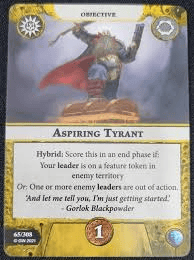
Aspiring Tyrant from Blackpowder’s Buccaneers – You can score it either by slaying the enemy leader or by having your leader holding treasure in enemy territory.
Broad Shoulders from Brethren of the Bolt – gives +1 health to a fighter like great fortitude, AND if the leader is out of action they become the leader. Good contingency to circumvent some of the over-commitment to Leader scoring
Scornful Stance from Ephilim’s Pandaemonium scores 1 glory is the leader holds a treasure token, regardless of location. Could be useful for multiple playstyles – this leader centric deck doesn’t have to be invasive aggro by default!
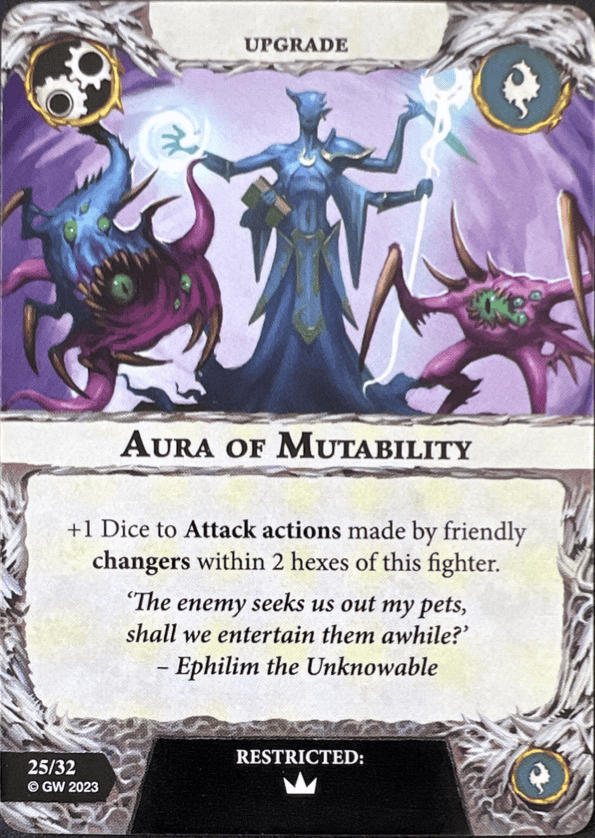
Aura of Mutability from Ephilim also has a nice design space, granting extra attack dice to other friendly fighters near the leader. We don’t necessarily have to stack that fighter entirely, but their charisma should rub off on their followers!
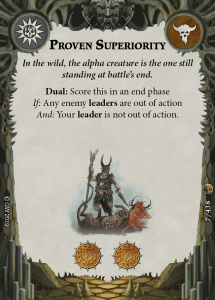
Proven Superiority is a Grashrak’s Despoilers card for 2 glory where your leader lives, and the other doesn’t. It’s a nice idea – 3 might be too much glory, but 2 somehow doesn’t feel like enough. Maybe 2 glory base, 3 (or 4?) if your leader slew the enemy leader.
Enthusiastic Dubbing from Grinkrak’s was hilarious – damage a friendly and then inspire them as the cruel leader prods them on. More ways to maximize the leader’s presence without tooling up the leader themselves.
Biggest an’ da Best from Ironskull’s Boys was only worth 1, but rewarded you (appropriately, in an end phase) if your leader took something out of action that round. Maybe make it say ‘your leader took something out of action this game’ instead, to make 1 glory seem more reasonable.
Vindicated Arrogance from Ironsoul’s Condemnors is also a nice tool – your leader was targeted at least once this round and is still alive? Grab a glory. Compels you to risk your leader – though in today’s smaller boards and strike-heavy meta, that will probably take care of itself (especially if your opponent knows you’re running the leader deck)
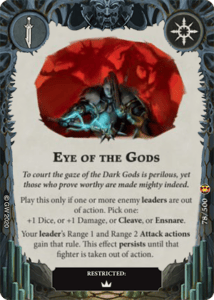
Eye of the Gods from Khagra’s Ravagers was really cool. It was a ploy-speed permanent stat boost/free upgrade that could only go on your leader, and only if the enemy leader was out of action.
Khagra also had Spurred On, which helped her warband’s move efficiency. There’s a risk that a Big Boy warband uses this to sneak minions around for extra delving shenanigans, but it was still nice. Blocks charging out, which in some sense is a good thing balance-wise, and promotes the idea that they’re you know, leading.
Sepulchral Guard’s refresh had a card called The Necromancer Commands, which allowed a non-leader to re-do a failed attack if the leader is on the field. A way to encourage getting more fighters into the fray, and your leader still being relevant.
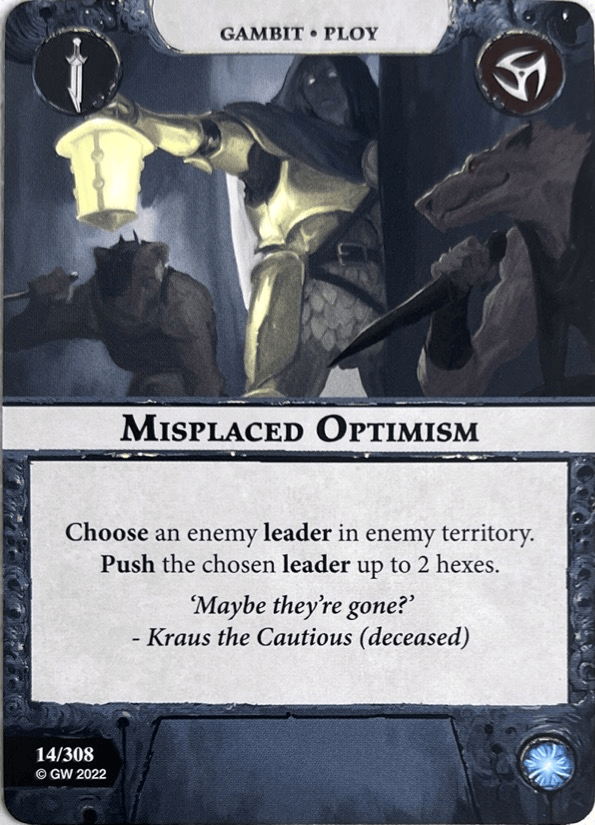
Misplaced Optimism from Skittershank’s was BRUTAL. You had to target an enemy leader in their own territory, but you could push them 2. Draw the leader out to close on them. 2 hexes might be too much, but it was powerful anti-leader tech.
Sons of Velmorn had a surge called Absolute Monarch, which is the way I’d prefer these 1-glory ‘your leader lives while the other doesn’t’ cards. This way, your leader can still die right after, but if you got their leader first, you can grab the score.
Velmorn also had a solid Ploy called Father’s Pride – once another fighter succeeded on an attack you could push your leader one hex. This allows your leader to get out of trouble, get into the fight, you name it. Relies on other fighters hitting, so you can’t VOLTRON your leader and reliably use it.
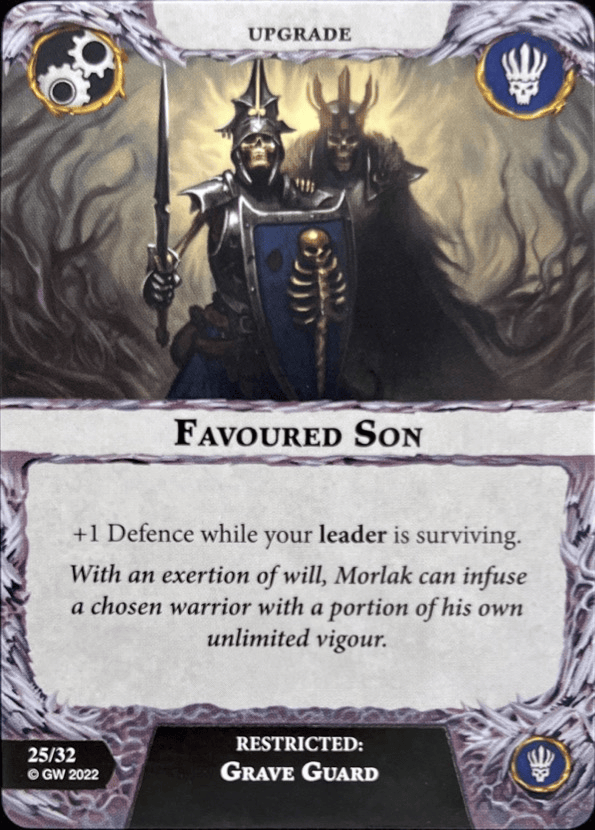
Velmorn (my favorite, sorry for the bias) had a great Leader Upgrade as well, called Favoured Son. You gave +1 defense to a non-leader while the leader was surviving. This was great for their flex/hold plan, and who doesn’t love +1 defense? It can’t go on the leader, and breaks when they die, so it’s not busted.
Spiteclaw’s Swarm had a funny card called Leading from the Back, in which you scored a glory if your leader was in your territory and not adjacent to an enemy. Depending on which flavor of hero (frontline brawler vs backline support), this card could see play or not.
Steelheart’s Champions had an upgrade that went on a non-leader which allowed a solid weapon upgrade attack to reroll failures if targeting the leader. As written, it infinitely rolls until it hits so we’d have to change that, but great for promoting the ‘slay the leader’ plan.
Pride of the Lodge was a Chosen Axes card that promoted stacking upgrades on your leader. We’re probably doing that anyway, might as well get rewarded for it.
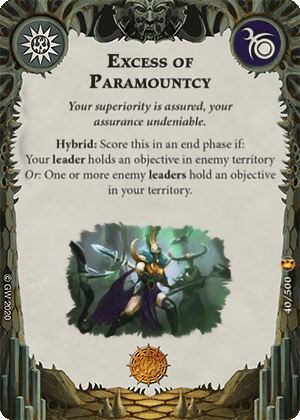
Dread Pageant had a card called Excess of Paramountcy that was very interesting – your leader could hold a token in enemy territory, or their leader could hold one in yours. As long as at least one leader was stylin’ on their opponent, it scored.
Skinnerkin had an upgrade titled Kitchen Director, in which your leader’s accuracy increased for one attack if they had flanking fighters. Promotes the leader doing work still, but encourages positioning and a team effort.
Power Unbound gave The Briar Queen a card called Freezing Fear, in which an adjacent fighter was given a move token. Potentially shutting down a charge from a key piece is pretty strong, but that fighter can still swing back at her. We might want to make it happen only after a die roll or only after a successful attack or something though.
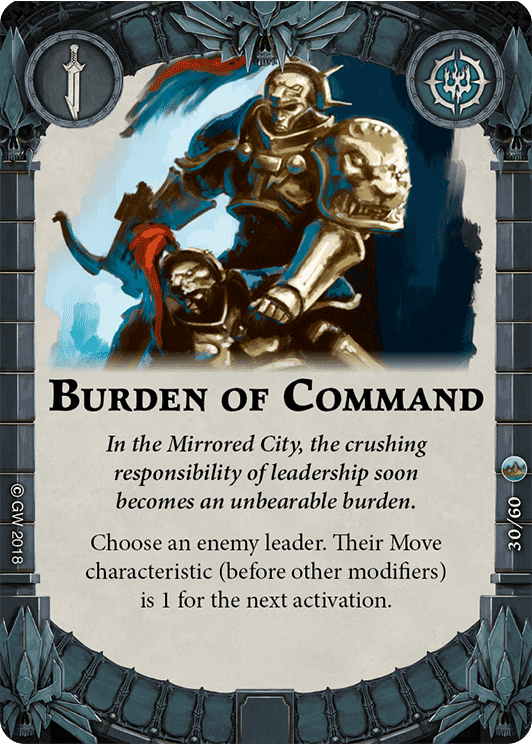
The Leader’s Pack had several cards that we can steal ideas from. Burden of Command was great anti-leader tech: Choose an enemy leader. Their Move characteristic is 1 for the next activation. Crippling Doubt said choose an enemy leader. The Dice characteristic (before other modifiers) of their first Attack action in the next activation is 1. Either one can force an enemy leader to be less efficient, or force your opponent to activate someone else.
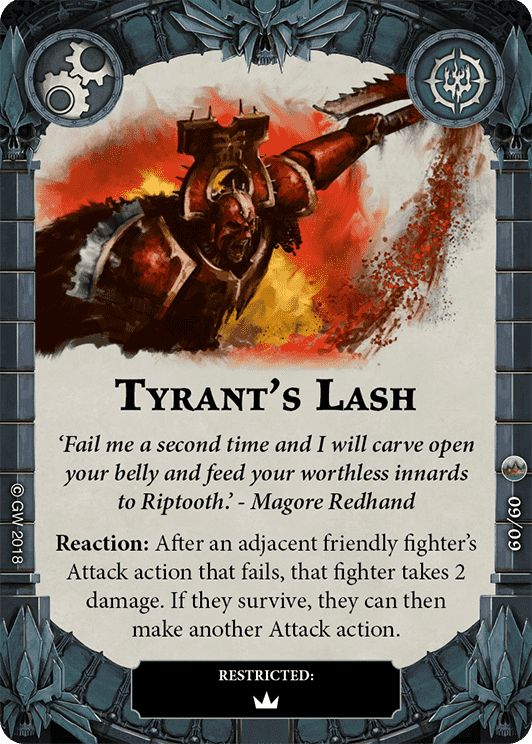
The Leader’s pack also had a handful of cool upgrades to borrow: Commanding Presence allowed friendly fighters to treat their targets or attackers as Surrounded if the leader was adjacent. Cursed Shield could only be worn by the leader, but came with a cool tradeoff of +1 Defense, -2 Wounds (to a minimum of 1). Kingsbane was a weapon that dealt big damage but poor accuracy unless targeting a leader. Rising to the Challenge gave a non-leader extra health and dice if the leader was slain. While it’s honestly straight wild, it’s also on brand for Magore: Tyrant’s Lash read After an adjacent friendly fighter’s Attack action that fails, that fighter takes 2 damage. If they survive, they can make another Attack action.
Harrowdeep gave us Dark Determination, which effectively gave non-leaders +1 dice when targeting an enemy leader for the round. Could work as a Domain for us in Embergard.
Tooth and Claw had a few leader specific cards: Focal Point which asked your leader to be in enemy territory and near fighters from both warbands, as well as Supreme Savagery where your leader slays their second thing, and Savage Helix which could turn off the ability to hold for an enemy near your leader. It also had a few options for targeting the enemy leader – Leaderless pack asked that the enemy leader is out of action, and Paragon of Ferocity rewarded you for slaying something in enemy territory or the enemy leader.
Daring Delvers gave us Conqueror’s Circlet, an upgrade I very much enjoyed. Only the leader could wear it, and they both gained a move as well as all their friendly fighters had the same move characteristic.
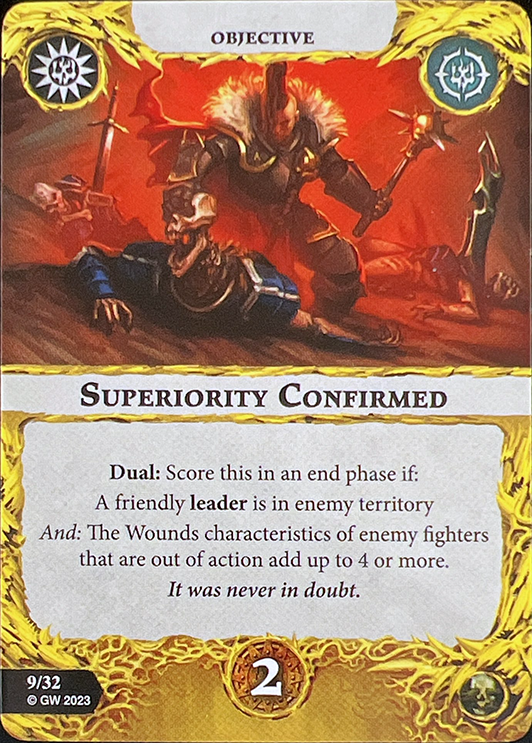
As previously mentioned, we had multiple cool cards in the Toxic Terrors deck – namely Carve a Path (your leader makes multiple attacks, more glory for successful and in enemy territory) and Superiority Confirmed (4 or more wounds out of action and your leader in enemy territory). These encouraged you to get busy slaying stuff in enemy territory with your leader, and should they happen to be equipped with the deck’s Poison upgrades, you can get even more scoring synergy there.
Wrap
Do you enjoy Leader-centric play? Does Raging Slayers look like it’s going to scratch that itch for you, or are you left wanting more? Would you be interested in building a community-designed Open Play Leader deck with me? Let me know in the comments or by emailing me at SpentGlory@gmail.com especially if you have a good deck name (Rizzing Chad might need some workshopping). Regardless of your stance on the Crown runemark, I hope you and your leader can enjoy spending some glory soon!






Leave a Reply