
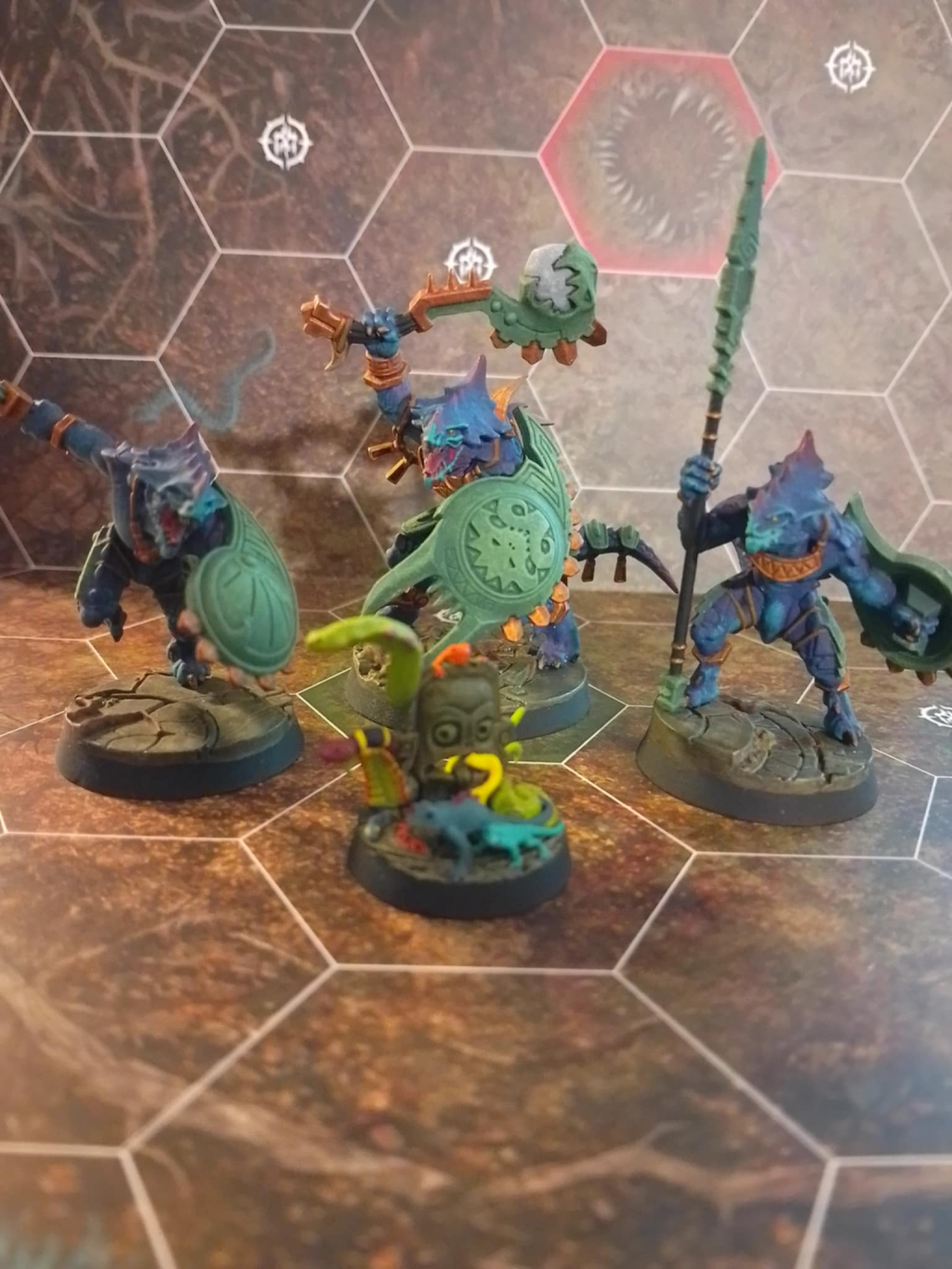
We’re back with another entry to the Love Letters Series, where readers discuss the warbands and pairings that they enjoy the most. Today we are graced by Mads B, one of the Ravaging Danes who stormed into Atlanta for the World Championships of Warhammer and came away with the crown of Best National Standing for Denmark. He’s here to discuss the Jaws of Itzl and his deck that he took to a stunning 8-2 finish, landing him in 17th place after narrowly missing a shot at the top 16 in the cut.
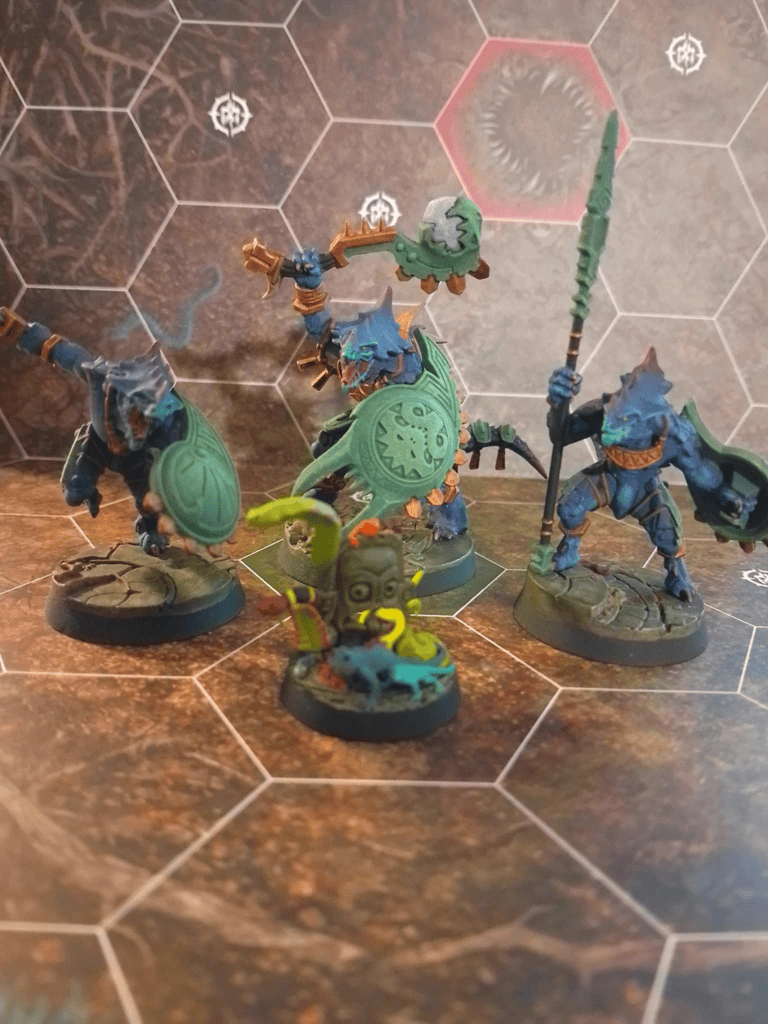
Warning: This article contains an unhealthy amount of Jurassic Park quotes.
Intro:
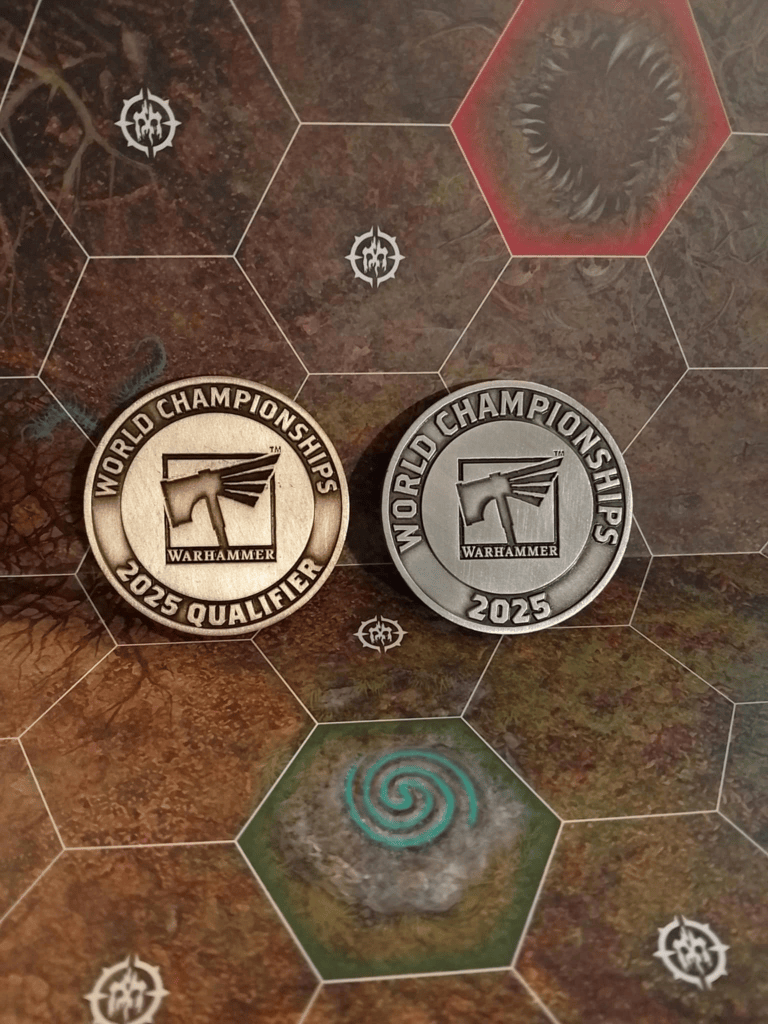
Hello my name is Mads (mbb on Discord) from Denmark, I have played since the end of Nightvault, am an avid magic the gathering player, WHU is my side hobby, and I´m always on the lookout for a future ex-Mrs. Malcolm. Last year I made the top 16 cut of worlds and through that got reinvited to this year’s worlds. Alas at this year’s worlds I did not make the top 16 cut, we were five players with a 4-2 record and one player with a 6-0 record in my pool, and the three players with a 4-2 record that had lost to the 6-0 player made the cut due to SoS (strength of schedule), which is unfortunate for me but fair. SoS is much better than glory differential as a tiebreaker in my opinion. But by some miracle I managed to go undefeated for the rest of the tournament ending with a quite impressive 8-2 record, made me the winner of the Worlds Bracket and the player with the third best record of the entire field. So, despite not making the top 16 cut I am more than pleased with my own and by pairings performance. In this article I will talk about the pairing I brought to Worlds and the ins and outs of how it works.
The Pairing:
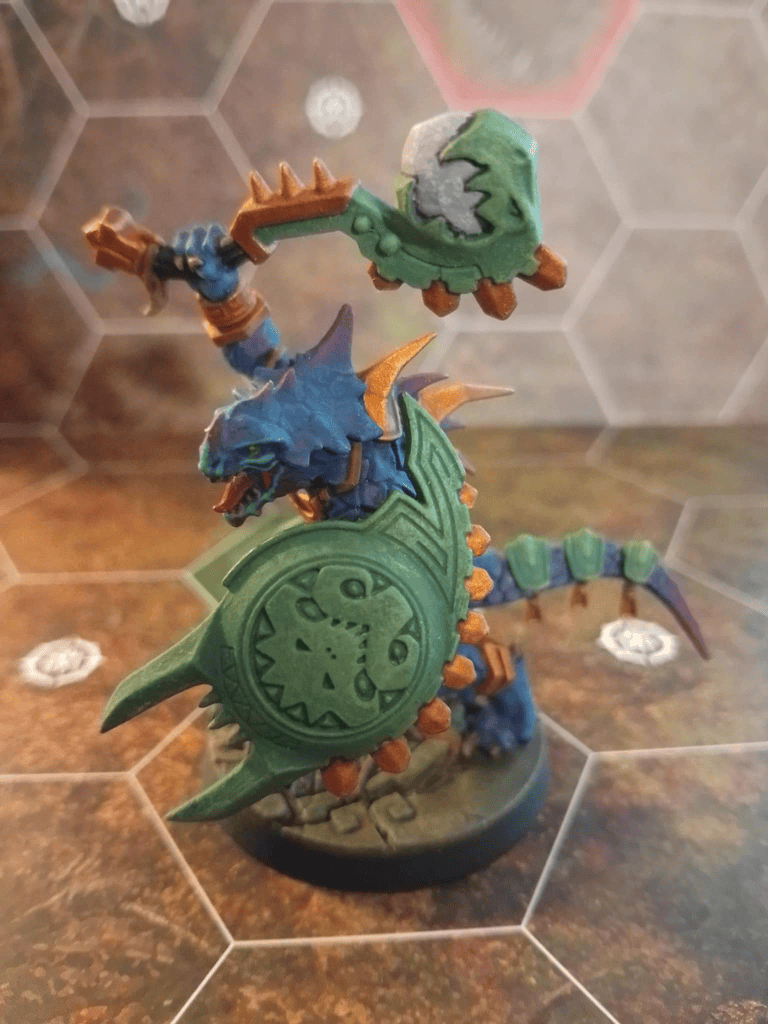
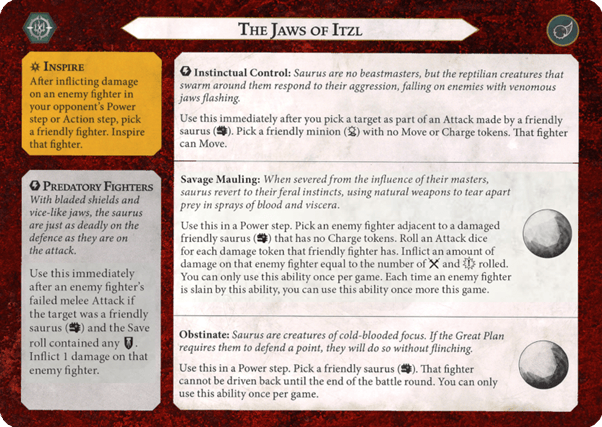
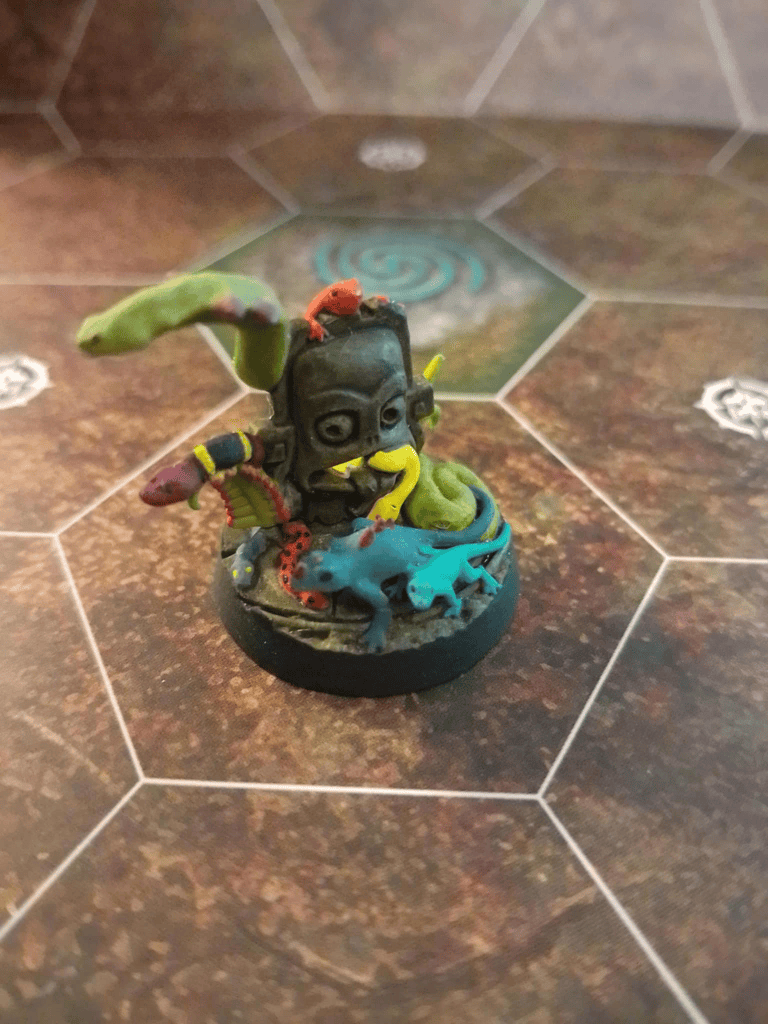
At worlds I played Jawz of Itzl with Pillage and Plunder + Emberstone Sentinels. PnP+ES is a solid mainstay of the format but pairing it with Jawz is quite unconventional, as most players go the aggro route with the warband, which is quite understandable, as several aspects of the warband screams offensive. This is probably also why I have yet to play in a tournament or even see a tournament, where someone else brought Jawz with a dedicated hold treasure tokens strategy. Originally when I build the deck, I was trying to come up with deck ideas for WTC in Vienna. I liked Jawz a lot as a warband and wanted to play them, but the aggro archetype is initially not my cup of tea, as I find it too rng heavy, and I find the aggro pairing with Jawz even less to my liking, so tried taking a different approach. Instead, I tried to lean into the warbands ability to get on treasure tokens fast and stay there; here I am of course referring to the Instinctual Control and Obstinate abilities on their warscroll.
At first, I was a little hesitant to pair PnP with ES as I did not like the idea of giving my opponent free rerolls from delving when I am trying to stay on treasure tokens. But life finds a way and it turned out, if you are tactical about when you delve, the upsides of the pairing outmeasure the downsides. The deck pairing has a lot of defensive and anti drive back cards, so it supports the warscroll’s strengths nicely. I played a few test games and it worked fine, so the Danish team brought it to the WTC, where the deck was one of two undefeated decks of the entire tournament, not too bad, lets not talk about the Danish teams performance overall (cough). Since then, I played the list in local tournaments and leagues and continued to have great results with it, so it became the obvious choice for me to bring to worlds. But then GW dropped a heaping pile of new content on us just weeks before Worlds and all meta preparation went down the drain. Initially I quickly dropped the pairing, as the restriction to Claim the Prize seemed too big of a nerf to the deck for me bring it. Replacing the surge forced me to be more invasive with my treasure holding and I did not like that. So, I tested a lot of things, but it all seemed too dice heavy and easy to lose with if you made a mistake or had a bad matchup, and of course the less prepared you are with a pairing the more likely you are to make a mistake, so I ended up back at Jawz. It is a common rule that it is better to bring what you know and trust than to go with what is new and shiny. Also, I had spent a lot of time painting the figures and were very pleased with them and I had the promo fighter cards, I had spared no expense. Overall, it just felt right to bring them, which I think is most important.
The Deck
So, I recalibrated the list to the new meta to the best of my ability and ended up with the following list:
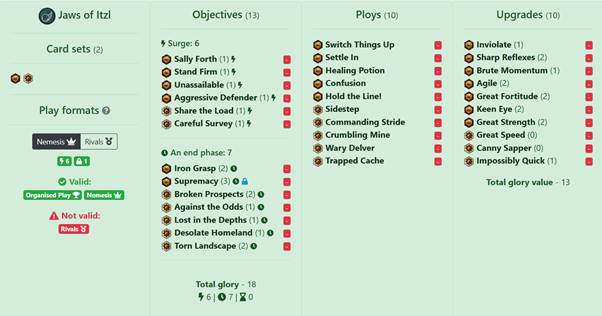
Now I am not going to go through each card, as most of them are self-explanatory, but I will focus on key cards, uncommon picks, important interactions, and cards I left at home.
The surge package is built so it is possible to score as many surges as possible with the fewest number of activations, remember with Instinctual Control you can score Share the Load and Careful Survey in the first activation. Hostile Takeover, Aggressive Claimant and Step by Step were considerations, but in the end, I found that this surge package I played to be the most synergistic.
The end phase package builds itself; I do not like Strip the Realm (A LOT more about that at the end of the article), the three hold number # or Slow Advance. Initially I did not love pairing Torn Landscape with ES objectives, but it turned out not to be that big of a problem.
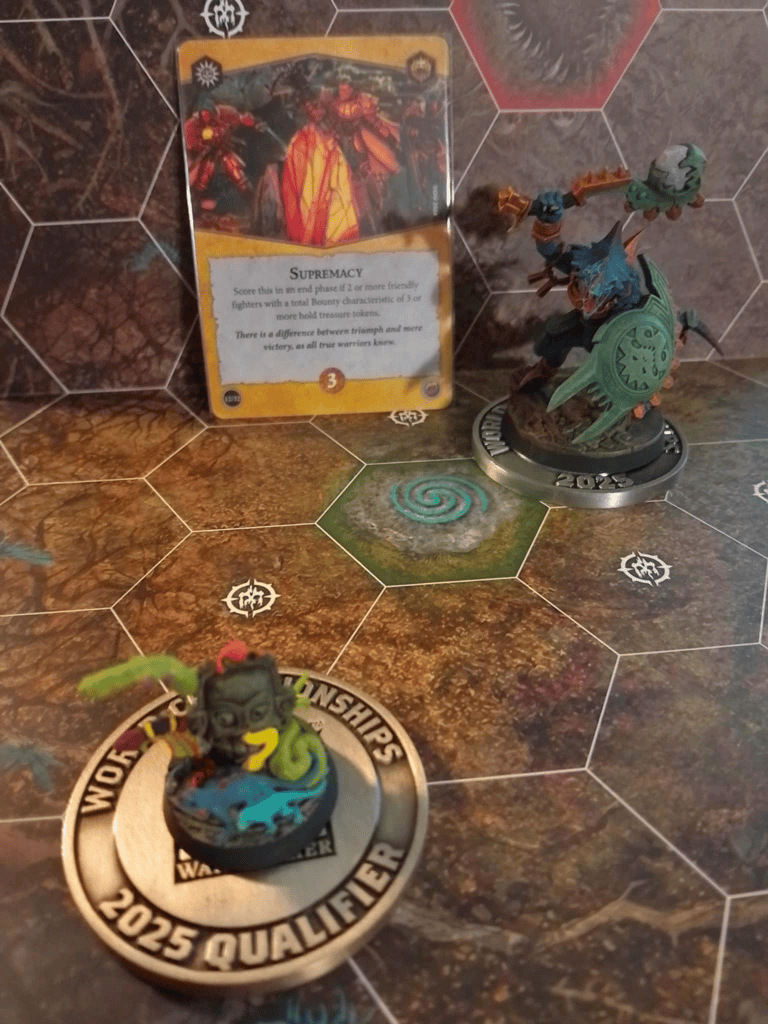
The ploy package was also easy to build. The only thing I considered was running By the Numbers over Crumbling Mine, as I was not sure if Crumbling Mine was needed, I ended up being quite happy going with Crumbling Mine. Switch Things Up probably seems like an odd inclusion, but it is here to help score Broken Prostects; if I only stand on two treasures, it can get me the third, and if an opponent held a treasure at the start of the round, I can just swap that one with one I am on and score Broken Prostects that way. You do have to be a little careful with Switch Things Up, as it enables your opponent to score Broken Prostects as well and Closed Down.
The upgrade package is self-explanatory. My only consideration is which two of Great Strength, Keen Eye, Swift Step or Dualist is the best to include. I still do not know it, and I probably never will. Let us say it is a matter of preference.
How to mulligan cards often depends on the matchup. For objectives I usually mulligan for a hand with two surges as I want to go through my objective deck as fast as possible, I also favor Surpremacy and Iron Grasp in the opener, as they are easier and better to score earlier than late. For power cards I usually dig for what I need to win a match up; I need Sidestep to counter Lure of Battle, I need Confusion to counter opponents Confusion, and if none of that is needed then Trapped Cache is probably the best card to start with, both for early inspire or to kill a pesky Spinefin. For upgrades Inviolate is a big counter to Mollog, Briar Queen, Deadly Synergy, and such. Besides that, Canny Sapper is always good to have, as it can save whatever poor dino takes a beating round one.
Playstyle
Treasure placement: You want at least one token in your opponent’s territory which you can get onto at the start of the round, and as few in your own territory to make Iron Grasp and Desolate Homeland as easy to score as possible.
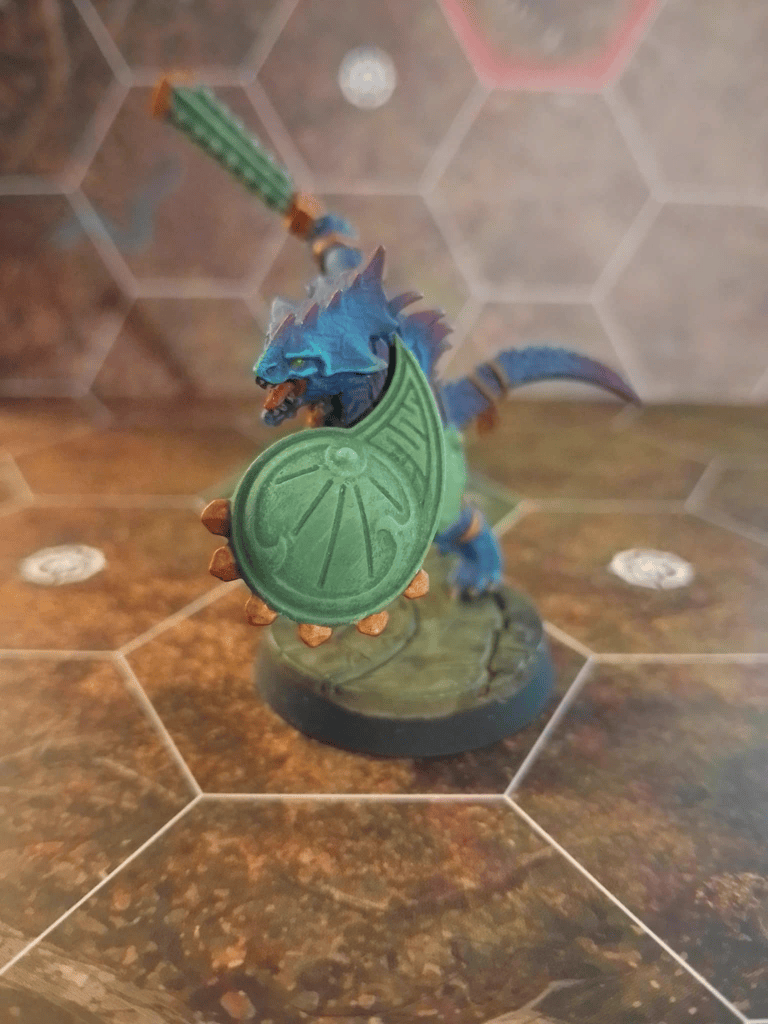
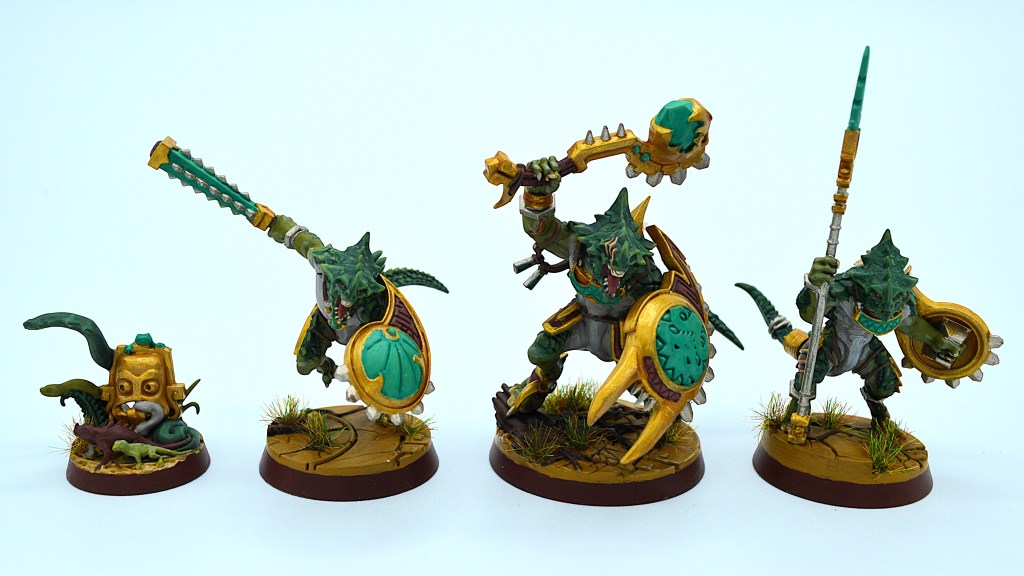
Deploying: You want to make sure you have fighters positioned so they can get onto the treasure tokens you need to get onto to score your objective hand. Here you should remember to take advantage of RO-TAKs range two attack, as there will be times, where he is the only fighter able to charge onto a treasure token in opponents’ territory from the get go. KRO-JAX should be kept as safe as possible, as he is your best inspired fighter and the one your opponent fears the most. SO-KAR is your go too frontline punching bag. SOTEKS´S VENOMITES should always be used as fast as possible to score objectives, also deploy them tactically in regards to what decks your opponents are playing is important, as some decks have cards like Trapped Cache that can counter or exploit your one wound fighter from the start.
Turn one: If I win the roll off, I will chose go first, charge onto a treasure token in opponents’ territory, move the VENOMITES onto another treasure token, delve with the VENOMITES and either use Obstinate or a ploy to make sure the dino stays on that token for the rest of the round. If I go second I will basically do the same as much as possible. The best counter to this is to block the opening and don’t let her get out.
For the rest of the game: I just try to control the treasure tokens I need to score my objectives. The deck plays a form of hold treasure token counter punch game, where you often do not charge all over the board, but just walk onto tokens to score objectives, and then when your opponent comes at you, you may swing back. I say may as there are several factors to consider here. First, Jawz is not an accurate warband, each time you make an attack your assumption should be that it is going be a failed attack, I only attack when it is free, needed or the potential upside is too high to ignore. Often it is better to go on guard to raise a fighter’s survivability or to focus to sculp a better hand. I do not care about their batting average, I just care about their on base percentage, hence the deck name; Money Ball. Also remember it is no shame to run away to deny your opponent an attack if it wins you the game.
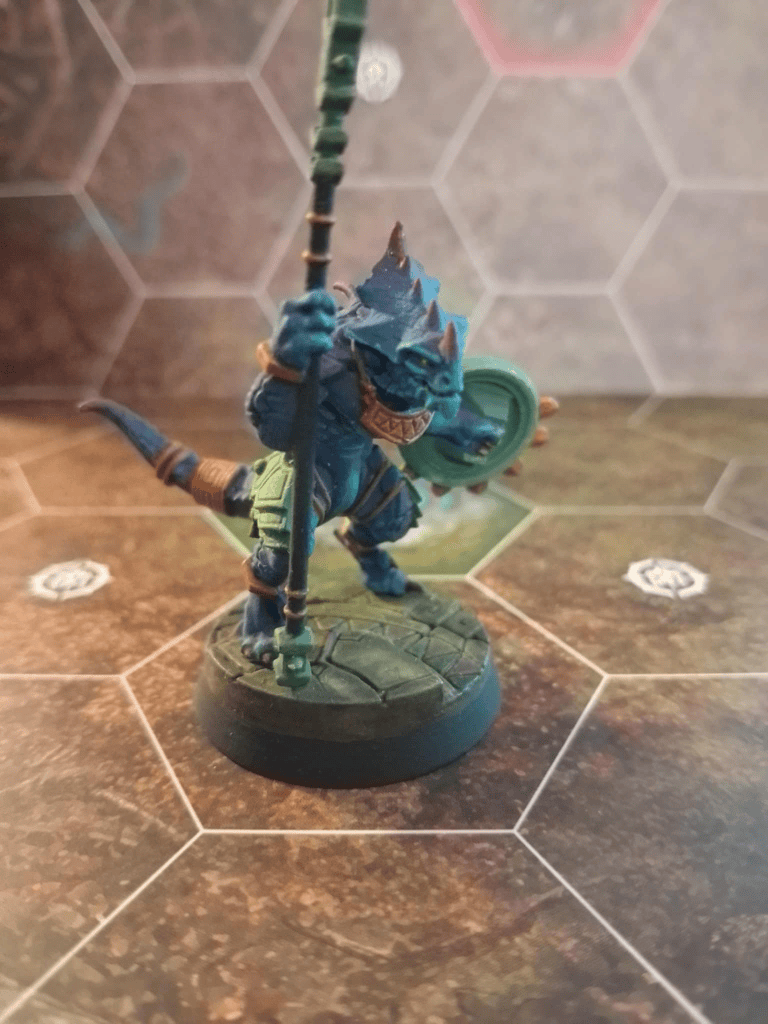
“I don´t blame people for their mistakes. But I do ask that they pay for them”.
Now just because we do not hit does not mean we do not bite. Predatory Fighters and Savage Mauling are two very punishing casino abilities, you cannot reliably depend on any of them to work, it is almost chaos theory, but when they work, they can be back breaking. So, you charge at a dino, what is the worst that can happen? How about you miss, I get a shield for Predatory Fighters so you take one damage and I inspire whatever fighter I want, and now I can slap you back free of charge. Or you hit, and now I use Savage Mauling with up to five dice, with Great Fortitude ofc. and see if I just straight up kill you or at least ping you and inspire. Let me tell you, I am glad I was not my opponents having to make those four swords with a reroll attacks into my two guard with a reroll dinos at Worlds. A lot can go wrong fast with some bad dice luck. Several of my opponents throughout Worlds made range three one damage attacks, when they had access to better attacks, just to postpone those melee attacks for as long as they could. People also seemed to easily forget about Savage Mauling and were caught off guard with a “oh right, you can do that” when I used it. I have several “and then I rolled a nat. 20”-stories about Savage Mauling from worlds I will not bore you with, just believe me when I say that the ability is not wrongly named.
The Devil’s Greatest Trick:
This is a little rant about Strip the Realms place in the meta that I have not really seen talked about anywhere else, so hold onto your butts as I use this opportunity to preach my gospel; Strip the Realm is simultaneously the best and the worst objective in the game.
The worst: Getting 3 glory from an end phase objective for doing nothing is insane, but then again, if your opponent does anything you will not score it. And yes, there are situations where you have tabled your opponent, they cannot afford to stop Strip the Realm, they have not done what is needed to stop Strip the Realm or you have just the right combination of plays, cards, and luck to score Strip the Realm, but honestly how often does that happen? Against an inexperienced opponent, it will happen more frequently of course, but against a good and experienced player, it will rarely happen. And who of the two should you care most about when building your deck? The (excuse my French) bad player or the good player? Against the lesser of the two Strip the Realm is a win more card, as you should be winning anyways solely based on the difference in skill, and against the good player you should in theory never score it, because the know to stop it and how to. And yes maybe 1/10 games a situation occurs where you are lucky enough to score it, but is that really worth a card in your deck? I don´t know about you, but personally against tough opponents I believe one glory in the hand is worth three in the bush. I therefore believe that Strip the Realm is a trap card for deck building, and that you should never play, as it will just rot in your hand, unless you discard it, which is even worse than discarding it. Now why would discarding a unscoreable objective be worse than keeping it in your hand, you might ask. Because now your opponent knows you can not score it any longer.
The best: The greatest trick your deck ever pulled was convincing your opponent that you played Strip the Realm. When a you sit down opposite your opponent, and you tell them, that you are playing Pillage and Plunder, their first thought should be; I need to stop Strip the Realm. This is what makes Strip the Realm the best objective in the game. Just that the card is available in your card pool means, that your opponent must respect its potential inclusion in your deck. How big of an impact this has on your opponent’s game plan is of course based on their pairing of decks and warbands; Against Gitz with PnP, not a big bump on the road, against Wurmspat og Mollog, they must be very aware of their positioning and may have to waste activations on making sure you do not score Strip the Realm. Now the advantage you get from this obstruction exists whether you play Strip the Realm in you deck or not, but the advantage is only free if you are not playing Strip the Realm, else it comes at the cost of a card in your deck. So, with this, potentially free, advantage combined with the downside of playing the card, why even play it at all? You should just leave Strip the Realm at home and instead score your modest one glory objective, while your opponent is moving onto treasure tokens for no actual reason at all.
The trick: Now if you are a clever girl you can take this concept one step further. At worlds I quickly attained the knowledge that SoS (Strength of Schedule) was the first tiebreaker and not glory differential for bracket placement. Which is the superior choice in my opinion, as it does not punish close games and rewards unfair stompings. This meant, that several times during the tournament I chose not to score one of my end phases in the third end phase, when I knew that scoring that single objective would not change the outcome of who won that game. In this way my opponent would think that I had an unscoreable Strip the Realm in hand and continue trying to stop me from scoring it in the following games. Whether I had Strip the Realm in hand or not, was also the most asked question from my opponents throughout the tournament, and my answer was always: “maybe…hehehe, rawr”.
Conclusion:
I am very pleased with my run at Worlds and the pairing performed way better than I could have hoped for. PnP+ES is obviously a strong high scoring pairing with a lot of defensive tools that should be able to hang in this current aggro heavy meta. Jawz has showed, that their warscroll is more than a one trick aggro pony. To be fair there are some situations where Strip the Realm is more playable than normal. In best of one it has more legs than in best of three, and paired with something like Soulraid, that was good tools to alter opponents positioning, I also like it. But if you are playing a run of the mill PnP list consider leaving Strip the Realm at home, as it will probably give you a better result in your tournament in the end.
Wrap
Thanks again to Mads for sharing his approach, and by reminding us that the greatest trick Strip the Realm ever played was by making us think it didn’t exist. ES/PP is a solid pairing and a somewhat unconventional one for Jaws, but Mads proved that it can absolutely perform against the world’s hardest lists and it worth taking a look at if you’re searching for success with your own Jaws (since I certainly haven’t figured them out)
While there are a few Love Letters in the works, there is always room for more. I’d love to hear your thoughts about an older or lesser or weird warband/pairing, what drove you to fall in love with it, and how you’ve piloted it to success – and especially piloting it to fun. If you have a warband you’d love to wax poetic about and serenade the wider community, let me know! I’m always accepting new submissions at SpentGlory@gmail.com. Until next time, grab the warband you love, a couple friends, and Spend some Glory!






Leave a comment