

Please note: This article was written for the first edition of Warhammer Underworlds and as such some information may not be applicable to Embergard/Second Edition. The new Contender Series for Second Edition can be found here!
This article will be the first in the Contender Series, the goal of which is to encourage players to begin participating in Organized Play events, attending tournaments and Grand Clashes, and overall up their competitive game to improve as players and ultimately win more often. While I am not personally some competitive ace taking home glass every weekend, I do have advice to help get newer players off the ground and set you on the path to success, and also can point you to better players than myself where you can get more focused advice when you’re at that stage. I will attempt to keep this article series ‘timeless’, so while I’ll reference specific warbands, cards, and mechanics occasionally, I want it to be relevant for years and so will try to refrain from focusing too much on today’s current competition climate. With those things said, let’s dive into this article’s main topic: warband choice and meta considerations.
Check out the rest of the Contender Series for more competitive pointers:
Warband Choice
Deckbuilding Overview
Deckbuilding: Objective Cards
Deckbuilding: Gambits
Deckbuilding: Upgrades
Board Choice and Placement
Objective Placement
Mulligan
Fighter Placement
So you won the roll-off, do you choose to go first or go second?
Practice
Check out other tournament related articles:
Participating in your First Tournament
How to Run a Local Tournament
Counterplay series: how to prevent your opponent from scoring

When playing casually at your local game night, trying out a new release, or just messing around seeing if you can make a funky combo work, the warband you choose isn’t that big of a deal. You’re here to have fun! In those situations, play what you like and winning is just gravy. While you certainly can enter a tournament with the goal to ‘be the hero who wins one game with that dumpster tier warband’ or ‘see if you can surprise people with your mad scientist experiment’ (like I did with The Sons of Velmorn), many players are hoping to bag a trophy or at least land in the top three. While some particularly skilled, innovative, or lucky players can come out on top in an event with a weaker warband, you will generally find more success bringing ‘better’ toys to the table. But how do you pick which warband to bring along?

Relative Competitive Power
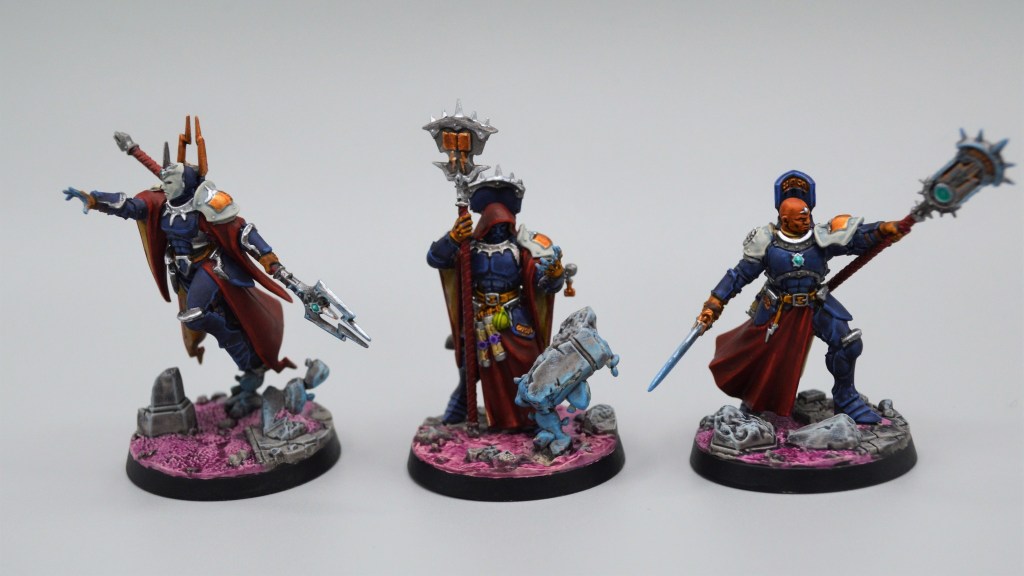
Power rankings and tier lists are a complicated topic and there is broad variability among different lists written by different people (and at different times). That said, there are general things people can agree upon. Some warbands at a given time with the given card pool are going to have a much harder time (or are lower tier) and some are going to have a much easier time (and are higher tier). Which warband is in first place might be more of a debate, but people will often cluster 2-5 warbands as the ‘top dogs’ at a given time. Below that are groups of warbands that range from pretty good to pretty bad. Ultimately, you’ll want to avoid the ‘pretty bad’ and probably even the ‘middle of the pack’ warbands if your goal is to win. It can be done, but your odds of winning are higher the ‘better’ your warband is. You can ask around your local groups, online in places like the Discord, Facebook, and Reddit pages, or by checking out event results to see what’s the current hotness as you prep for your event. I don’t explicitly want to encourage people to take only the best of the best, but you probably want to shy away from the mediocre stuff if you’re looking to bring home a trophy unless you’re already a highly skilled player.
Card Synergy with the Event’s Format
The second thing to consider when choosing your warband is what format the event is to be played in. If you’re attending a Rivals event, you will be restricted to the warband’s faction cards alone (unless you try something off the wall like a universal rivals deck instead, which generally speaking won’t be the winning choice). A warband might be very powerful in Nemesis or Championship, but if they are relying on universal cards to find their success, Rivals will be a place they struggle more. In a Rivals event, you’ll find your best chances lie with a warband that sports quality fighter card stats and a good faction objective deck, especially if it has 6 reliable surges.
If the tourney you’re attending is a Nemesis event, it’s going to be important to pick the correct Universal Rivals Deck to pair with the warband you choose. I will cover deckbuilding choices in a later article in this series (and have touched on it in a Nemesis deckbuilding beginner’s article), but suffice it to say that the warband choice is going to be influenced by the availability of a compatible and synergistic Nemesis pairing. A warband might seem very strong in Rivals because it has a solid faction deck, or do well in Championship when they have access to the biggest card pool, but if they can’t reliably score 12 objectives from their faction cards and a single Universal Rivals Deck, you may want to avoid them in Nemesis. This can be a tricky thing to figure out, and often a good warband will have 2-3 Nemesis pairings that ‘can work’, but choosing the right one can be the difference between winning and losing that glass trophy. If you’re in this scenario, choose the warband that has good synergy with the Universal Rivals Deck you’re most familiar with and/or is in the best ‘meta’ position at the time (more on both these concepts later). I have thrown together some pairing recommendations for older warbands if you’re stuck on where to start and want to take one of those.
Attending a Championship event broadens the pool of warbands that can be considered ‘top tier’ in most cases, as you’ll have the biggest selection of universal cards to shore up their faction deck deficiencies and/or take advantage of their unique fighter abilities and stats. To some extent, the rich do still get richer, but you have a better chance to make a ‘pretty good’ warband become an authentic competitor in Championship. Similar issues you find in Nemesis also apply when considering your ‘Plot Lock’ deck that you’ll have to choose from. Additionally, warbands with certain weaknesses might find themselves getting exploited more often (many low-wound fighters will be taken out of action much faster, for example) so some of the mid-tier warbands may actually find themselves having a harder time in Championship and should probably be avoided unless the meta is favorable.
Meta Considerations
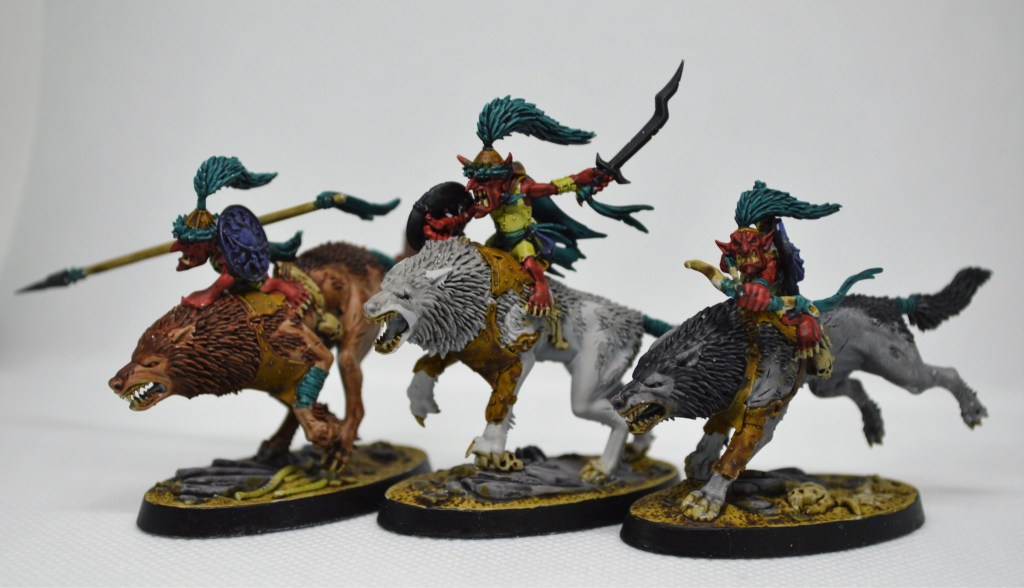
Look at that segue, like I’m a real journalist or something! Anyway the next thing to consider when choosing your warband for a competitive event is what the current ‘meta’ favors. The shorthand definition for newer players is ‘what style of play, type of card, or general strategy is ‘good’ right now based on the ruleset and available cards/warbands’. This has less of an effect in the Rivals format since you aren’t picking cards, and is only influenced by the ruleset, but still does matter. In Beastgrave and Direchasm you had to deal with many lethal hexes and eventually Primacy. in Harrowdeep and Nethermaze you had to deal with Cover hexes and Delving. In Gnarlwood and Wyrdhollow you had to deal with Stagger hexes. Depending on what the ruleset says at the time you’re playing, certain warbands will have an easier time even in Rivals considering how the board is going to look with the current season. And depending on what other warbands are ‘good’ at the time, might preclude you taking certain others. If you expect to see multiple of a strong warband that your choice is really weak against for one reason or another, then maybe you need to choose something else.
In Nemesis and Championship, you will also have to consider the card meta. Do you expect there to be lots of spells/magic? If so, either choose a warband that can take advantage of that or is strong against it. Do you expect lots of ‘ping’ damage from gambits? If so, choose a warband that can either leverage or counter that or has fighters who don’t mind getting a wound chipped away. Is Hold Objective play particularly strong at the moment? If so, choose a warband that enjoys that playstyle or you feel can disrupt your opponents’ hold. Whatever you expect people to ‘be doing’ at the time of your event, you will need a plan to address it and either outscore that strategy or find a way to mess with it. Rarely does everybody go for a single playstyle, but you’ll notice a few predominant ones based on the meta and a warband that can thrive with one and/or shut down another is a warband that will trend toward more success in constructed formats.
Personal Familiarity
So you have assessed the relative competitive power of the warbands you’re looking at, evaluated their place within the format your event will use, chosen a synergistic deck if you are in a constructed format that your warband is well suited for, and evaluated the meta to determine what’s likeliest to take you to the podium. That’s great! However, unless you only own a couple warbands, you’re probably still left choosing between a handful after the lesser choices have failed to make the cut. At this stage, you should definitely be leaning toward the warband you have the most personal familiarity with, or at least will use the cards and/or playstyle you’re most experienced with.
It’s easy to get swept up in the trend at any given time and grab whatever the ‘best’ warband is according to other people online. Maybe a new release came out this month and everybody is saying it’s high-powered. Maybe another player won a recent Grand Clash with a warband people had been sleeping on and now you want to follow in their footsteps. Those are all well and good, but if this event is one of the first times you’ll be piloting the warband, you’re unlikely to be able to get the most out of them. Chances are you will be making misplays out of ignorance and lack of practice, which across the duration of an event will potentially lose you games you otherwise could have won.
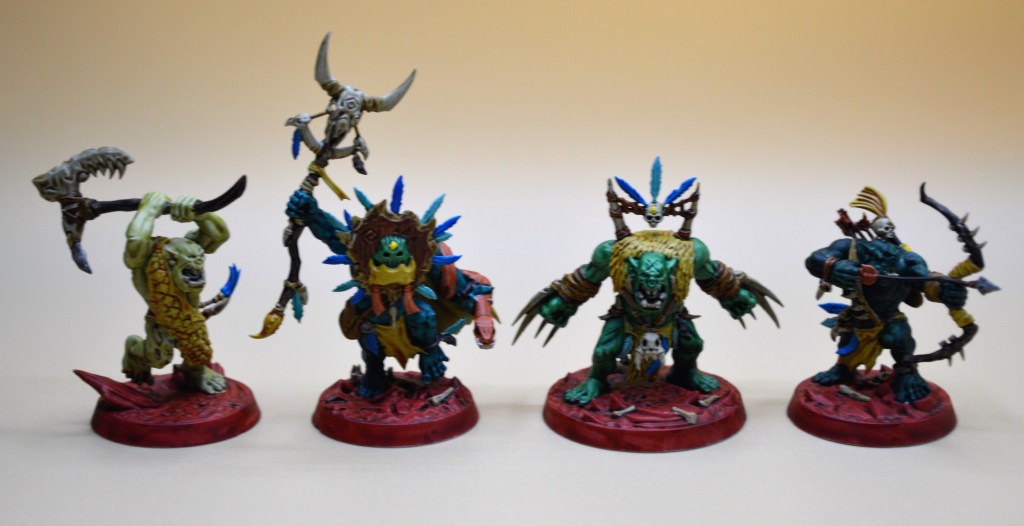
Player skill absolutely accounts for a lot of individual success in tournaments. There is a reason you tend to see the same names at the top tables in major events! A huge part of that skill is familiarity with the warband and deck that they are using. A warband you’ve played two dozen times against multiple different opponents or a Universal Rivals Deck you have brought to a dozen matchups is going to play smoother and be more intuitive to you than some new, complicated, foreign set of cards and fighters no matter how ‘good’ they supposedly are. You can certainly get the reps in prior to an event if you have enough notice to build that familiarity, but if you’re on short notice or are a newer player I’d encourage you to stick with what you know for a competitive event if the goal is to place as high as you think you’re able. Be careful not to let your favoritism of a weaker warband cloud your judgement though! Some warbands simply aren’t going to take you to the podium (no matter how much I love Gurzag and the Boyz), so while familiarity is important, you’ll need to balance it against the other factors listed above.
Wrap
That’s it for the first installment of the Contender Series! In full honesty anybody can be a legitimate contender with enough forethought and practice (yes, even you!). While the tips above aren’t all-encompassing, they can help guide your decision when choosing a warband to take to a competitive event. I hope I’ve been able to shed some light that will assist with your process, and make your first steps toward competing at a higher level go a little easier for you. This series will absolutely have more content in the weeks to come, but if you can’t wait and have chosen a warband, check out their overview on Path to Glory or What the Hex for thoughts on how best to use them from people who are a lot better at this game than I am. Now get out there and pick a good warband, get those practice games in, and don’t forget to Spend that Glory!





Leave a comment