
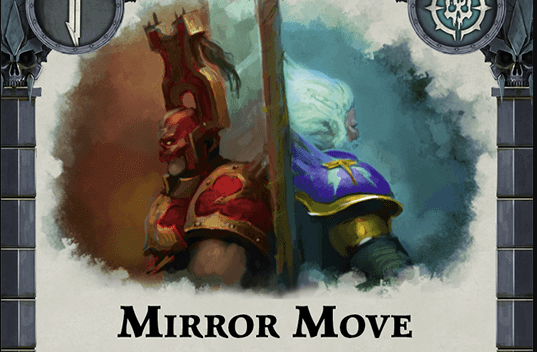
Today I want to touch on ‘mirror matches’ in the Underworlds – games where both you and your opponent are playing the same warband, possibly even the same pairing. This will be sort of a Counterplay article, and part a general ode to the beauty of the game and why all forms of play are fun and engaging. The original setting in Warhammer Underworlds, Shadespire, was known as the Mirrored City as it was made of reflective shadeglass and existed in somewhat of a twilight mirrored reality. Lore-wise, warbands could fight against themselves forward or backward in time, either themselves, some dark reflection of themselves, or possibly some imagined specter. This was the in-game explanation for why you could have duplicate warbands composed of unique named characters on the same playing field.
As the game has expanded to 50+ warbands we see these ‘mirror matches’ less often nowadays, but they still exist and are a somewhat polarizing event in the minds of some players – especially if you expand the definition to include scenarios where you play different warbands with the same Rivals deck pairing in Nemesis. Some, like myself, find them quite enjoyable and engaging, while others find them frustrating, boring, or both. Today I want to cover two topics in the mirror-match setting: what makes them enjoyable, and how to prepare for them in a competitive setting.
What’s so good about the mirror?
The fact of a mirror match is that many, perhaps most (or even all if you’re playing in Rivals) of the cards in your deck will be the same as your opponents’. This increases how much you know about what your opponent is probably trying to do, and they have the same advantage over you. Sure, this takes some of the mystique and guesswork out of the ‘what are they up to’ side of Warhammer Underworlds, but I think it some ways it is MORE interactive than the usual game.
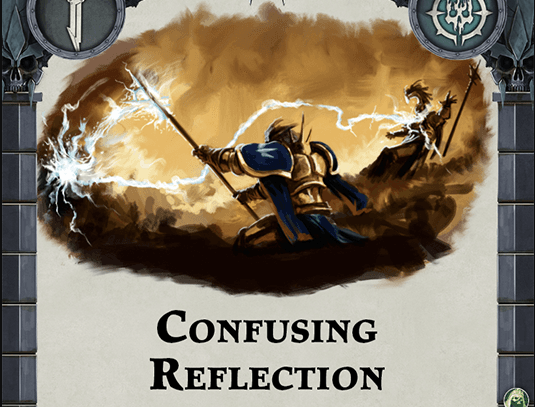
Some of the best moments I have had in Underworlds is when my opponent makes some ‘weird move’ and we lock eyes across the table and smile because we’re on to each other’s game. This happens whenever you have a good knowledge of your opponents’ deck or possible pairing and have gotten good at counterplay. It happens far more often when you’re literally holding the same cards in hand. You certainly can play WHU just focusing on meeting your own win conditions and scoring your own cards, but there’s a different kind of satisfaction when you do intentional counterplay and the possibilities are easier to envision and act on when you both have similar goals.
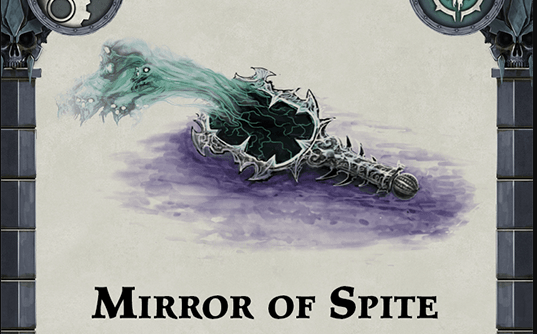
Another thing that can come up is when you have to adapt your own plan due to the difference, perceived or real, in your decks. I had a great moment at LVO this year playing a casual Khagra’s Ravagers mirror against Alexx. We were both down to our last fighter, both Razek, and he had run off into a corner. With my final activation I almost moved on to an objective for tiebreaker purposes and as a ‘why not’ desecration for fun, and then had to stop myself. My deck didn’t have the ‘four objectives are desecrated’ card, but… what if his did? Was I handing him a win if I desecrated and he scored it? The kind of thing I normally would do off-hand required a new level of thought and caused me to approach that final activation in a different way than I might otherwise have – a new wrinkle on counterplay.
How do you prep to win a mirror in a competitive setting?
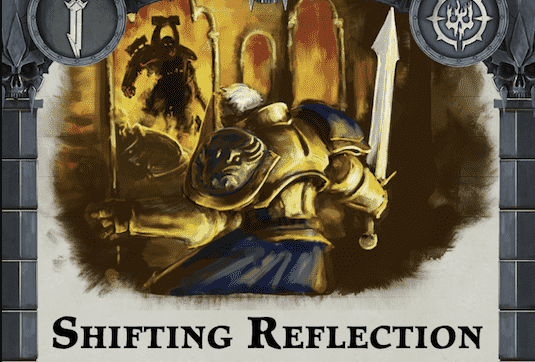
There are two types of mirror overlaps to consider in the Objective deck: cards that you’re both/neither going to score, and cards where only one of you can score. As an example in a Voidcursed Thralls Mirror, some cards will be a wash (if you score Uncounted Cost, your opponent will as well) and some cards are one-or-the-other (Threatening Presence scored by one player means the other player will not score it). This of course requires you to have those cards in hand at the same time, so it’s possible that you both score Threatening Presence in different rounds, or only one of you gets Uncounted Cost because one of you discarded or bottom-decked it. The point remains; you’ll need to consider which cards you likely both have, and figure out how to maximize those “one-or-the-other” ones in your favor to up your odds of winning.

Say there’s a card in your deck that your opponent probably has that only one of you can score at once. Making sure you score that card (and they don’t) will likely be the difference maker, as many of your other conditions are going to score for you both and won’t separate the two end results much. An important thing to think about before a mirror is which of your cards meet this type, and then working to make sure you’re the one who comes out on top.

Another point to think about is the ‘wash’ cards still shouldn’t be ignored. Say your deck has a card that says ‘no fighters are holding objectives’. In this setting you’re not planning to stand on any and presumably your opponent isn’t either. That said, if you’ve already scored the card (or discarded it) and your opponent hasn’t, get on those objectives and block them. If you don’t have the card in hand yet, but your opponent might, get on those objectives and block them. You already can’t score it since it’s out of your hand, but that doesn’t mean you need to just hand them that score as well. Knowing the sequencing of your ‘wash’ cards that have counterplay will also help drive you to victory.
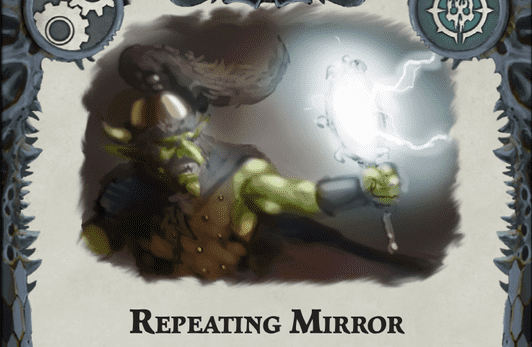
Finally, when facing a mirror, the winner of the best of three may well be the one who can figure out the difference between the two decks fastest. Unless you’re playing Rivals (or you both scooped the same deck off of the Battle Mallet Nemesis Library), presumably at least a couple of your cards will be different. It can be a fun cat-and-mouse game teasing that information out of the opponent while trying not to reveal much about your deck. Again, this is the sort of secret information counterplay stuff you can expect in a normal competitive match, but the stakes are a little higher and the relevant differences a little more important to catch in the mirror. When you realize they have a card that you don’t, you can work to counterplay it without risking that action slowing your own scoring, since it’s not a card you can score anyway. And if you get them focusing on that card, they’re not working to block the other card you took in its place.
Wrap
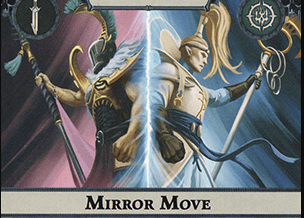
I do respect that some people find mirrors ‘boring’ since you’re ‘both doing the same thing’ and it could possibly feel like ‘whoever draws that one card first wins’. I take a different view and have quite enjoyed my mirrors – though maybe that’s because I play fun things with fun people. In any case, even if it’s not your cup of tea, going to a tournament with a ‘strong’ warband and/or deck pairing means at some point you will likely run into somebody else who took the same warband and/or pairing, so getting some practice in isn’t a bad idea. It can even sharpen your own deck when you talk it over afterward and discuss the differences between your card selection and whether one of you made the ‘better’ decisions.
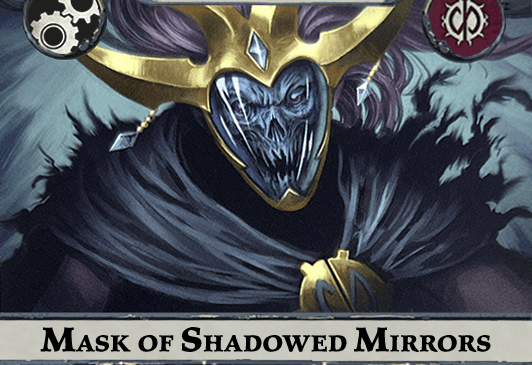
Regardless of whether you like to gaze into the pond like Narcissus, or you’re a vampire with no reflection, I hope you enjoy spending your glory!





Leave a comment