
This article is a part of the Contender Series, the goal of which is to encourage players to begin participating in Organized Play events, attending tournaments and Grand Clashes, and overall up their competitive game to improve as players and ultimately win more often. While I am not personally some competitive ace taking home glass every weekend, I do have advice to help get newer players off the ground and set you on the path to success, and also can point you to better players than myself where you can get more focused advice when you’re at that stage. I will attempt to keep this article series ‘timeless’, so while I’ll reference specific warbands, cards, and mechanics occasionally, I want it to be relevant for years and so will try to refrain from focusing too much on today’s current competition climate. With those things said, let’s dive into this article’s main topic: general considerations for Nemesis deckbuilding.
Articles in This Series:
Articles in This Series:
Warband Selection
Choosing a Deck/Pairing
Deckbuilding Overview
Evaluating Surge Objective Cards
Evaluating End Phase Objective Cards
Evaluating Ploys
Evaluating Upgrades
Deckbuilding: How Many Cards?
Opening Hand and The Mulligan
Board Choice and Orientation
Feature Token Placement
Fighter Placement
So You Won the Roll-Off – Do You Choose First or Second?
Practice
Event Format Considerations
Elites
Big Boys
Hordes (Coming Soon!)
Check out other tournament related articles:
Counterplay Series
Participating in Your First Tournament
What to Expect at your First Grand Clash
How to Run a Local Tournament
Building Your First Nemesis Deck
If you would like a more beginner oriented, less-competitive look at the basics of deckbuilding, here is a link to the ‘building your first nemesis deck’ article for Embergard
Deckbuilding Overview

Rivals
If your event is in the Rivals format, you can probably skip this article after you’ve chosen the deck you’ll take since you have very little to do here. I’ll refer you back to Choosing a Deck/Pairing from this contender series if you’d like a framework for choosing what deck to bring along for your Rivals event. See you in a handful of articles after we work through deckbuilding details!
Nemesis
If your event is using the Nemesis format, you will have some deckbuilding to do. I covered some Nemesis deckbuilding basics for beginners in a previous article, but we can expand upon this for the most competitive angle in order to win an event. The first thing to pay attention to is the list of eligible Universal Rivals Decks – depending on the status of Rotation (there is none at the time of this writing, but presumably some older decks will fall out of competitive validity) allowed options for the current Nemesis ruleset. Check here to see the current Nemesis rules, which detail which Rivals decks/seasons of releases are valid in Nemesis. The second thing you’ll have to look at is whether any of the decks you’ve taken contain a Plot Card – remember that you can only have one Plot card at a time.
The warband you have chosen is going to work better with certain Rivals deck pairings, and the meta is going to favor some Rivals decks over others. The most basic question to ask yourself is ‘which Nemesis pairing has the most overlap with my faction goals and strengths?’. Ideally the second Rivals deck you choose has upgrades and gambits that let you score your first deck’s objectives, and vice versa, as well as being particularly strong in areas that the other is weakest in. Click here to see the review of Choosing a Deck/Pairing to make sure you’ve got the right two before you get too deep into card choices. Once you have chosen your best pairing with your warband, it’s time to pick out cards.
General Theory
Objectives
Choose your objective cards first. Your deck should end up with 6 surge objectives and 6 end phase, unless those end phase are REALLY good and you have weaker surges. You want to get the snowball rolling as well as have the best chance of seeing all 12 throughout the game. 6 is the maximum number of Surge objectives you can take in a single deck, and you really want to have all six. There is some wiggle room to include a 13th objective (or 14-15 if you’re a madman) but until you have a good grasp on deckbuilding I would heavily recommend keeping yourself to 12 total.
If you are looking at an End Phase Objective that is unreasonable to score before the third round/end of the game, limit yourself to only 1. You don’t want to draw into these in the first round, and the more you take, the likelier that is to happen.
If you’re struggling to pick between two objectives, choose the one you can score more reliably, even if it’s worth less glory. Sure, you might get that 3 glory bomb that wins you a game once a day, but 1-2 glory you’ll get every time will win you more games across the whole tournament.
Power Cards
You should stick to 10 gambits and 10 upgrades. In very few scenarios should you take more than 20 power cards if you’re trying to win. You don’t want to reduce your chances of seeing your best cards! There are some warbands that make taking extra cards more reasonable (as they have ‘draw tech’ built into their warscroll) and some Rivals decks also have strong ‘draw tech’ in a few of their cards – but much like with Objectives you want to maximize your chances of drawing that super useful card early in the game, and if you ‘water down’ your deck with extra cards you’ll lower your odds of a killer opening hand.
If you’re so inclined, or in practice you find you’re consistently running out of power cards by the third round, you can add some to go to 11/11 or even 12/12 Ploys/Upgrades. Remember that you cannot have more Ploys than you have Upgrades in your deck, so if you want that 11th Ploy, you need to bring along an 11th Upgrade. As Ploys are usually more playable and more consistently useable, it’s better not to have more Upgrades than Ploys except in rare warband circumstances where they can ‘cheat out’ Upgrades like Hexbane (and even then, probably don’t do it).
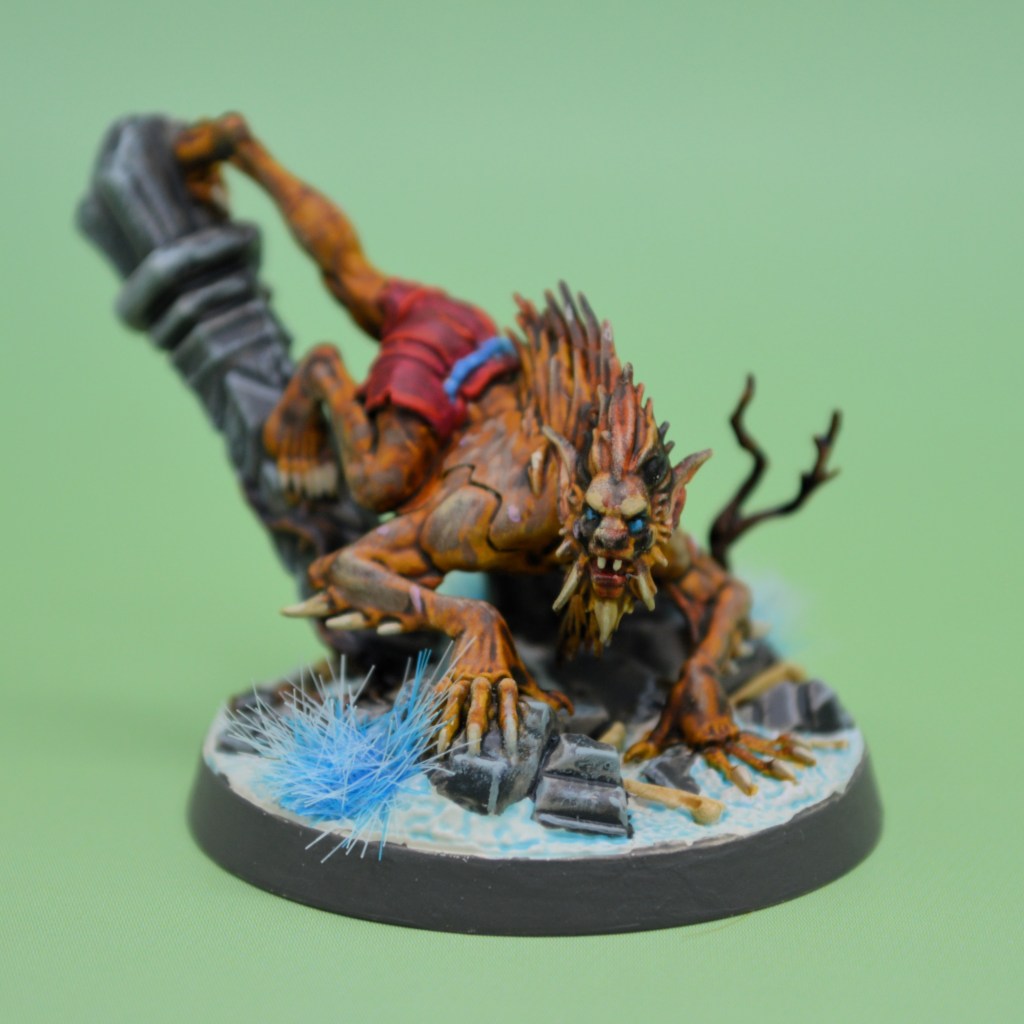
As a brief caveat/exception to the above rule, there exist a few warbands that have inbuilt draw-tech in their warscroll. Current examples are Khagra’s Ravagers, Ylthari’s Guardians, and Zondara’s Gravebreakers. These warbands will have a much easier time drawing through their 20 power cards and for them specifically, you could more easily consider increasing your power deck to 22-26 cards but you really should do so with caution. Yes, you might be more able to get through the extra cards, but those cards are on average going to be less potent. Ask yourself if having a few more cards at the end of round 3 is more valuable to you than having better cards more consistently earlier in the game – in most scenarios you’ll still want to go for the minimum 20.
Make sure you pick the power cards that let you score your objectives. Some cards might make you hit more reliably or do more damage, which is nice, but if your objectives all relate to non-aggro things then these may not be what you include first.
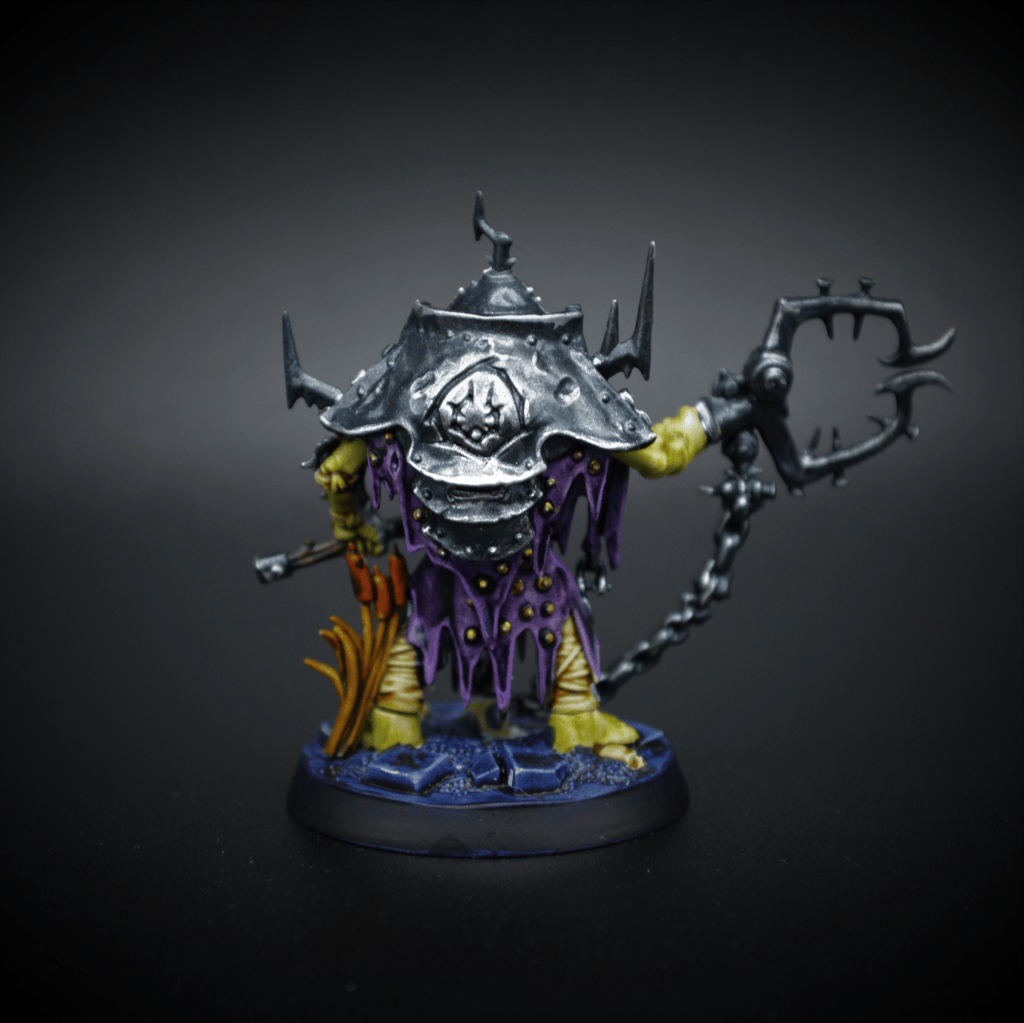
If you need keywords for your objective cards, you’ll need to include enough of that keyword in your power deck that you are likely to see them when you need them in order to score. A recent example of this is the Tempered status from Edge of the Knife – if you plan to take that deck, you need to either have plenty of Tempered fighters on your team at the start, take enough Power Card support to get the Tempered fighters that you need, or stay away from Objectives that require Tempered fighters.

Like Objective cards, when making your last few card cuts, focus on reliability in power cards. Sure, a card might be situationally awesome, but how often is that situation going to happen in your games? A card you can play and get the benefit of in every phase of the game or with every fighter/every territory etc is better across a tournament than a powerful card with lots of restrictions. You don’t want to find yourself in a spot where you say ‘man if only I drew this when I still had multiple fighters on the board’ or ‘this would have been great to have when my leader was still alive, but now I can’t use it’. Additionally, if you’re stuck between two cards, choose the one that is more useful in Round 1, as getting an early advantage can often be the difference-maker in tight games.
Wrap

Those are the basics of deckbuilding for each major format! If you are playing in a competitive event that is using some other custom format then this may not be helpful (but I’d love to hear how it went afterwards). If you’re struggling to find where to start building a deck, you might benefit from looking at community resources like The Battlemallet Nemesis Deck Library, the Repository on Staggerers or other people’s published decks at UnderworldsDB. I’ll cover each of the three card types in greater detail in subsequent articles, but that’s it for this installment of the Contender Series. Let me know if you have any feedback or specific questions. Now get out there and spend your glory!




 Spent Glory
Leave a comment