


Whether you have undergone the work of founding your local Underworlds community, put in the time to rebuild one after the pandemic, or want to help promote the growth of a new one entirely with a little competition and prize incentive, hosting a tournament is a great next step. While it’s certainly true that some players are not interested in the competitive side of things, I have found in my own experience that a tournament, no matter how small, helps bring in new people, bring back previous players, increase community engagement, and up the excitement for more games in general. Tournaments are great, but somebody is going to have to plan, organize, promote, and run them. If you’re reading this article, that person could (and should) be you! Let’s take a look at how to go about this process.
As an aside, if you’re looking for how to compete and win as a player in a tournament, take a look at my Contender Series. If you’re a first time tournament entrant just trying to figure out what to expect (or want to send your players a primer as a T.O.) take a look at my article “Participating in your First Tournament”. You might also benefit from What to Expect at your First Grand Clash
I do want to include a link to an incredibly helpful guide put together by the Battle Mallet crew that includes a T.O. Packet that you can use for your events to streamline many of the format and scoring things you may use when designing your event, and hopefully ease some of the administrative preparatory burden.
Pick a Location (and Coordinate with Them)
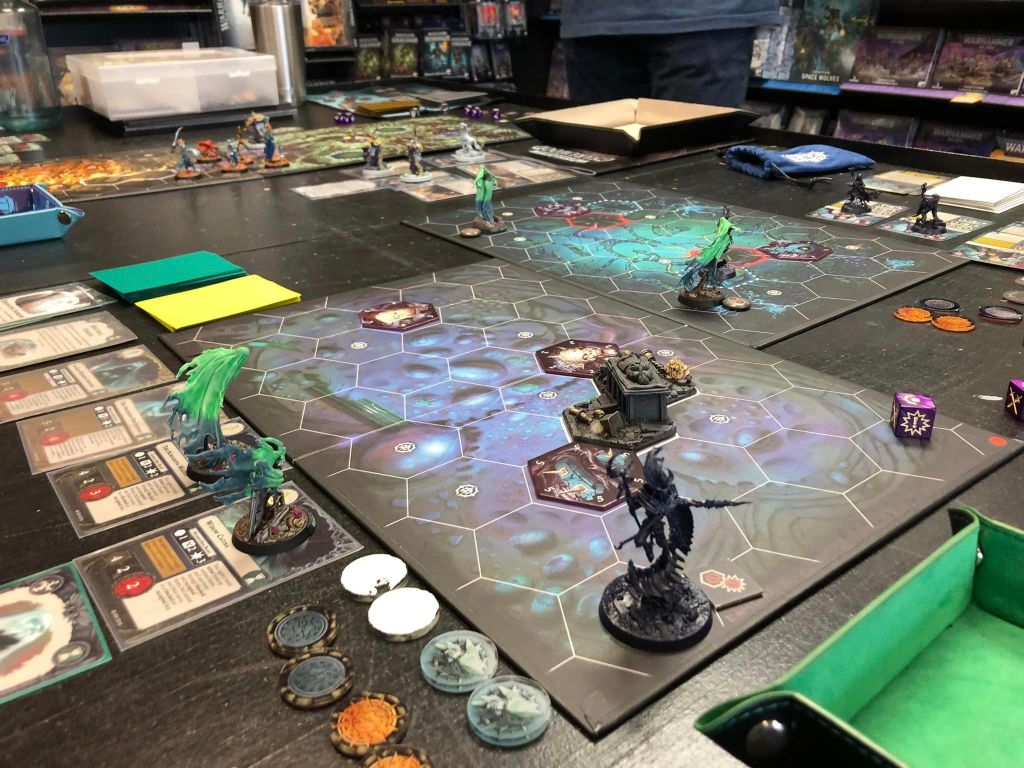
The first thing you’ll need is a place to hold the event. I have attended one smaller tournament at a person’s home, but generally speaking the players are going to be more likely to attend if it’s held in a public place. Your area will have different resources available, but I would suggest a game store or game club where your community plays at least some of its usual games. You could rent out a conference room or a library meeting space somewhere depending on your needs as well, but unless your community is short on game shops or you’re going to be hosting a very large event, I’d say your Friendly Local Game Store (FLGS) is the best option. People will probably know where it is or be able to find it, they’ll be able to purchase things in store (and post-event is one of the best times for people to want to buy), and the store has a vested interest in your event succeeding.
Wherever you choose, make sure the location itself is in on the planning. Don’t arbitrarily say you’re holding an event at noon on Saturday at ‘Cards R Us’ unless you know that they don’t have something else going on. You’d hate to show up to find they already have a different event reserving all the tables, or the place is closed! Coordinating with the venue not only is courteous for roping in the manager/owner/event coordinator, but they can then also help you advertise. More on that later.
Gather Community Input on Format and Date/Time
So you’ve spoken with the shopkeep or equivalent and they’re open to holding your event. Great news! You should get info from them about what days or times are options, and then take those to the dedicated community members you can rely on most. Obviously you would love to meet new people you’ve never played at your event or draw in people from afar, but you should aim to keep your regulars engaged and take those others as gravy if they happen to come along. Present your community, or a few chosen champions, with the options. Two of your most dedicated players prefer Sundays? More than half the group won’t come if it’s Championship format? These are the things you will want to know before making public advertisements. Gathering this information from your people not only helps you avoid embarrassing conflicts that reduce attendance, but it also helps garner goodwill and feelings of inclusion from your community; chances are people will appreciate being asked and having their input taken into consideration. Additionally, some people may be more likely to show up if they know ‘well the host made it Rivals for me specifically…’ which can also help with attendance or drawing in on-the-fence players.
Set an Event Duration and Round Schedule
So you have a place, you have a format, and you have a date. Now you’ll need a time. Some of this will be contingent on your location and your community – can’t start the event before the shop ends or let it run past closing, for example. You also shouldn’t hold an event that’s too long for your players’ needs – maybe people have to travel to get there, or have childcare to deal with. Community input is critical here.
Once you know about what you’re looking to do, you can set a start time and estimated event length to advertise. Having a set schedule can help your players know what to expect and more realistically assess if they’re able to attend. If your event is using Best of 3 matches, major tournaments usually run two hour rounds (45 minutes for game 1 and 2, then 30 minutes for game 3 as both players should have a feel for what to expect from their opponent, if it even gets that far). A best of 1 can probably be played in 45 minute rounds, or 1 hour if you’re hosting for newer players (especially in Rivals where suboptimal cards might make the pace of play a little slower). Build in breaks if able (people need to eat!), and if you do include breaks make sure to have set times for each round to begin so people are able to leave and come back if they need to.
Select or Design a Scoring System
A well run tournament has an explicit and defined scoring system, which is communicated to players in advance. Nobody likes being in the dark about ‘how to win’, nobody wants to feel like they got the short end of the stick on how their opponents/matchups are chosen, and nobody wants to feel cheated out of a trophy because of some nuance they weren’t aware of. There are literally dozens of ways to organize your event from this perspective, and none of them are wrong so long as you have a consistent application and everybody is on board.
If you have a good number of players for an elimination bracket (4, 8, 16, 32, etc), this is a classic way of charting tournament advancement. Best of one or best of three, somebody needs to win and they will go to the next round. Those who lose can go down to the ‘loser’s bracket’, and continue to compete. You may not know in advance that you’ll have the right number of players barring a reservation/invitational format, however, so this may not be as reliable for many tournament organizers, especially in a small or growing community.
A more flexible structure is random pairings to start, and then matching players based on their ‘performance’ in subsequent rounds. If you go this route, you will need to be very clear on what constitutes performance. Do total wins in a best of 3 count, or across the whole tournament? Are you choosing based on total glory scored, or glory differential across all games? Anything can work so long as all players know what to expect, and what to play for. Straight win/loss may be faster since people won’t feel the need to ‘play out’ a game with a clear winner early on, while other formats will encourage people to complete a foregone conclusion game because the winner is trying to get as much glory as possible for scoring purposes, and/or might punish the player who concedes.
If you have few enough players, you could opt for a ’round robin’ format, wherein everybody plays everybody else once, regardless of record. To determine a winner you’ll still need to choose win/loss record, total glory, or differential, but this is a ‘fair’ way to determine matchups since everybody has to play the whole field. If you have too many players to complete a round robin, another option is what is known as “Swiss Pairings” which is a similar concept in that you play random opponents regardless of rank or score, so long as each game is against somebody you have not faced thus far. This can encourage people to keep playing since you’re never truly “out of the running”, but you’ll need a fair way to determine each round’s opponents. A twist on the round robin and swiss pairings (when using total glory or differential) is to have each player drop their lowest game from the final standings, which can reduce the bad feelings associated with a rough game when dice or card draw just didn’t go your way.
Team tournaments complicate matters somewhat, but can otherwise follow the suggestions above. The sky is the limit for how to organize an event – just remember the cardinal rule: everybody must be informed prior to the first dice rolls.
A last note on this segment is that I personally find things are best if you have an even number of players to reduce byes and keep people in the action. This unfortunately means you might need to be on standby yourself – either you aren’t playing so that you can administer the event, or you should try to play the bottom tables to help people stay engaged without winning your own event (it was rigged from the start!). Sitting out a whole event can be a bummer, and so can trying to juggle rules queries and matchups while playing your own games – but I strongly believe byes should be avoided when possible. If you have to, let the bye player do a solo mode game like facing the glass-mad gargant or something to keep them from sitting on their phone for 1-2 hours.
Consider a Score Tracking App
Pen and paper can work just fine, and I have run plenty of local events with handwriting alone. That said, trying to manually document can have some challenges – any math you do (especially at the end of a long day) has the potential for human error. If you’re gathering sheets from multiple players, you have to interpret handwriting. Sheets can get lost. Maybe you’re so wildly successful you simply have too many players to manage! There are a couple of inline tracking options, including apps your players can use. Consider something like shadeglass.eu or Best Coast Pairings if you expect good turnout. These can formalize your tournament, but come with both drawbacks and advantages.
On the negative side, players need to use them, need internet/phones, and they may add a confusing layer of extra work for some people. But advantages are a streamlined process, people gain familiarity across repeated use making things easier with time, documentation makes it easier to look back at scores or share results, and you might be able to use to verify deck legality, etc. None of these things are explicitly necessary, but the larger the event the more appealing they may become.
Provide Prize Support (If Able)
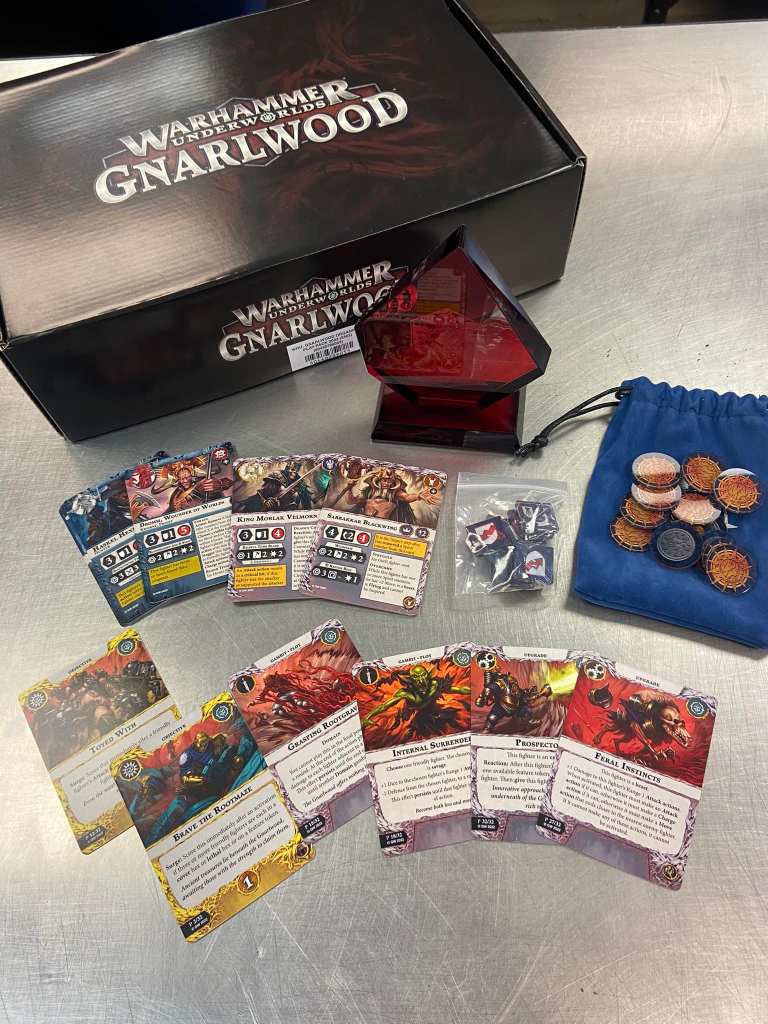
One of the things that helps Underworlds stand out as a game system is the original branding of ‘the ultimate competitive miniatures (or board) game’, and the accompanying Organized Play kits. While your town might have people getting together to see who is the baddest 40K player or who bought the spiciest MtG singles, the Underworlds community has the added benefit of glass trophies on top of the usual bragging rights. It doesn’t have to stop there of course! You can give out any number of goodies you scrounge up, and the more prizes on offer, the better attended your events might be (and people might go home with more warm fuzzy feelings). I usually spend a little extra of my own money to bring something to hand out – dice trays, deck boxes, a warband, etc. but you may not have the resources to do this out of pocket. You potentially can have a buy-in or ‘purchase price’ at tournament registration to assist prize support or thank the host store for holding the event for you.
Ideally you have something for the event winner – a trophy or certificate of some kind. If you’re using an Organized Play kit it should come with a glass trophy, but even if not you may still be able to find one. I have purchased ‘legacy’ glass trophies from eBay in the past – sure it might say “Champion of the Mirrored City 2019”, but a trophy is a trophy! If you have a GW run local Warhammer store, they may have some old unused glass trophies as well.
A tournament isn’t all about winning matches though – consider offering some kind of reward or kudos for other standouts as well. Best sportsmanship (as voted by their opponents) is a classic and can help keep everybody playing with a kind attitude. If your event is large enough, you could consider best in faction (Death, Chaos, etc). Maybe the Farstriders player isn’t taking home the gold, but they can at least be the highest ranked Order warband and get a card pack or a gift certificate. Best New Player is another option – Larry hasn’t competed in an event before but he did go 1-2 today, and you want to reward that effort and help encourage him to come back out next time. A friend of mine has also run “Smokin’ Boots” (In reference to Wile E coyote) – a consolation prize for the last place finisher who got blown up by an ACME bomb. Another classic is Best Painted. There are many ways to assess this, and you will need a standard and transparent scoring method. The easiest is all participants vote (ideally not for themselves) and you simply tally the community’s choice. You can also have an assigned painting judge or panel of judges (or do it yourself), but if you go this route you will need an semi-objective rubric to help keep people from feeling cheated.
Advertise Early and Often
Once you have a place, time, format, schedule, scoring system, and prize support sorted, you’re ready to recruit the field of players. To assist with this you should probably consider some sort of registration portal, Facebook event, Google form, etc to get a headcount, especially if there’s a registration fee in place for your event. Contact your usual play group through whatever your normal method is, and then get to spreading it further. The location you’re hosting can help with signs, mailers, social media posts and so on. You can reach out to nearby playgroups, and other community pages on Facebook, Discord, and elsewhere. If you’re running a beginner friendly event, make sure to let people know that no experience is required and/or you’ll bring extra warbands/boards etc for people to use. Advertise as soon as you have event details (maybe even a save the date!), again when everything is locked in, and preferably a couple times in the week or two beforehand to keep it on top of mind and increase the odds of people coming out. If you’re comfortable, reaching out to people individually is great as well. Sure you might bring in plenty by casting a broad “Please come to our event” message, but a personalized “I was hoping to see you at the event, friend” ups the odds much further.
Follow Up
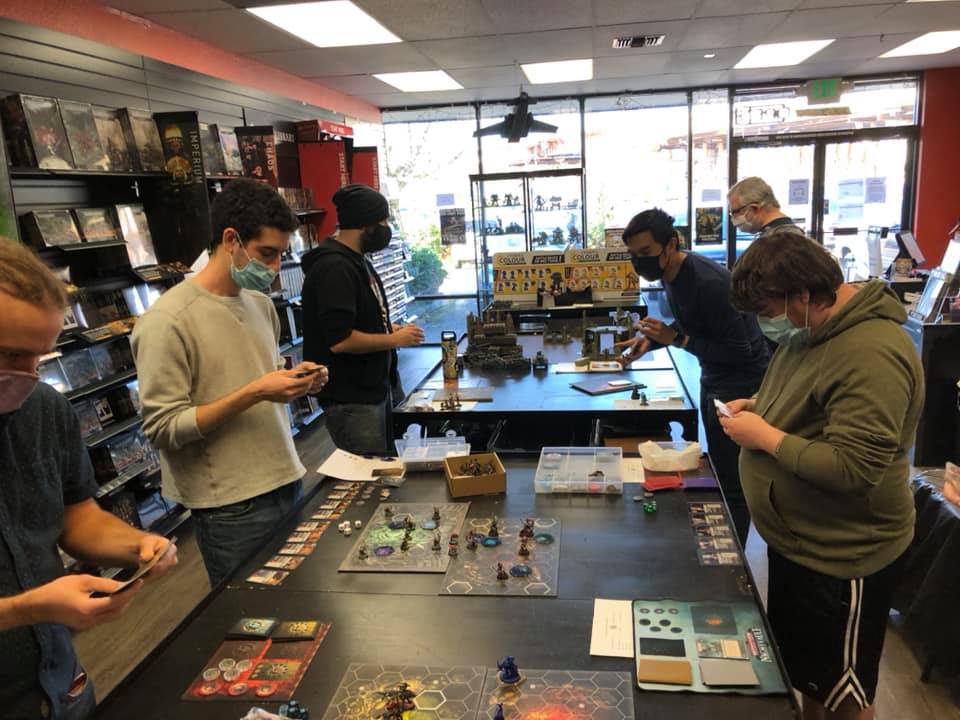
After the event, make sure to be gracious and thank people for coming. Do this in person/at the awards ceremony, but also reach out in the hours and days after to ask people how it went for them and whether they had good time, and solicit feedback about how to make the event better in the future. Take photos and make sure to post those to social media and wherever you advertised previously, as this helps confirm to people that yes, it did happen, and people attended/had fun. This can help get people who were on the fence out to the next event if they have some confidence that things look safe and enjoyable. It also can make those who attended feel happy to see their models displayed for others to view.
Do It Again
Keep the momentum rolling and work on the next one! Bonus points if you already have one scheduled at the time of your event – people are often at their most motivated right after an event and if you’re able to say ‘we have another tourney planned next month/quarter at XYZ location’ you can keep things moving and build on your success. Depending on your community’s needs, you can keep the event format the same, alter the scoring system, change the timing etc. The follow up you get from your players will help fine tune this.
Running an event can be an incredibly rewarding experience, and pays huge dividends for community engagement and community growth. It can look like a lot of work (and occasionally it really is) but I promise you it is worth the effort. Hopefully the tips above help break the task down into manageable steps and can ease your way into filling this role for the players in your area. Let me know what feedback you have, tell me stores of tournaments you’ve run, or rope me in and I can help you organize one yourself! Until next time, get out there and spend that glory!





Leave a Reply