Spent Glory promotes Warhammer Underworlds for beginners, encouraging new people get into the game, and old-timers to return from a hiatus. One thing I like to keep in mind is that people only have so much time, money, and energy to devote to a hobby or pastime such as this, and Underworlds realistically is competing with dozens of other possible interests for any one person. I’m probably as guilty as any Underworlds website or podcast in that I cover a lot of the intricacies of the game itself, and less of the surrounding components that make this such a great thing to get involved in. I want to spend some time today covering why the whole package is so great, and not just the ruleset, gameplay mechanics and so on. Competitive gaming isn’t for everyone, and that’s OK! We still have something for everybody to love.
Articles in this series:
The Benefits of The Hobby
Building Underworlds Models
Painting Supplies
Primer, and Why to Use It
Contrast/Speed Paint
Acrylic Paint
Miniature Basing
Making It Manageable
Don’t get me wrong – playing games is cool, and deck building, maximizing deployment efficiency, tier lists, tournament analysis etc. can be very rewarding for many people. Chances are those things are why many people read this page in the first place, but if you have a friend who is on the fence, or if you yourself would like something different, then read on. It’s worth noting that there is more to Warhammer Underworlds than just the ‘game’ itself – something quite different from many board games or video games; the collecting, model-kit building, painting, and storytelling/lore aspects of the Underworlds experience sets things apart from other games one could play or pastimes one could engage in. That, my friends, is what Games Workshop and accordingly our various GW-adjacent communities calls “The Hobby”, and today we will explore those oft-overlooked parts of the beauty of Warhammer Underworlds.
I’ve spoken before about why you should play this game comparing it to other card games, board games, and miniatures games, but that angle was from a mechanistic perspective. I still firmly believe this is the best board game on the market to actually play, but even aside from a pure ‘game’ perspective, it has so much that other games can’t offer. Compared to many board games with carboard cutouts (or at best wooden or pewter play pieces), Underworlds comes with gorgeous miniatures that you can form an emotional connection to during a building and painting process while expressing individuality. Compared to computer or video games, which have no physical objects at all, this goes even further. In addition, electronic games have incredibly limited or even zero social interaction. And sure, there exist games that have a ‘story’ in a passing sense; you want to know why you’re trying to accrue more gumdrops or plant more flags or what have you, but outside of a few very niche historicals, there is nothing that holds a candle to the storytelling and lore aspect of Warhammer and its assorted games. I mean, they even have their own publishing company! You could spend a thousand hours immersing yourself in the worlds of Warhammer and never play a single game. And when you finally do sit down for that game, you take part in writing the story, and what you do matters beyond scoring points. You like D&D or other RPGs, but can’t stand the slow grind of clunky combat and inventory management, or having to get five people to show up at the same time? Underworlds is right here.
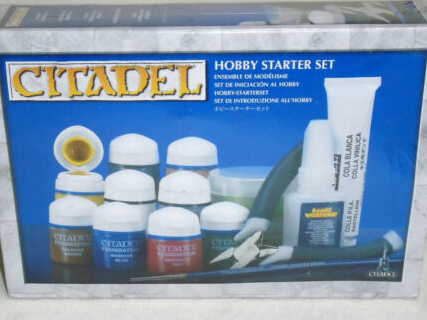
Part of the magic of WHU is the minis, building, painting, converting, and making them your own. Per a recent reader request, I will be doing a series of Hobbying for Beginners articles – if Underworlds is your first miniatures game and you have no idea where to start when it comes to building or painting, I’ll have some guides coming in the near future, starting with how to build models sometime next week. For the time being, I want to stress that the best way to get into The Hobby is to just get into it! Pick up a brush and start painting. There are more ways to paint a model than there are Youtube videos you can stomach, and decision paralysis is real. You’ll get your best start just trying it out for yourself.
One of the things that makes Warhammer Underworlds ideal as a first miniatures hobby experience is that the smaller warband size allows you bite sized projects that are attainable – you can do 3-7 models. Anybody can do 3-7 models. Will they look like the box art on your first try? Probably not, but then you’re done with them and can move onto your next project. The smaller size also allows you the creative flexibility to try something hard or something new; maybe you want to attempt non-metallic metal, or freehand insignia, tattoos, a notoriously difficult color like yellow or orange, etc. Having to only do that on a handful of models means that even if it goes poorly, you can call it a day and try a different technique on the next warband. Picking up 2,000 points of Space Marines and having to do them all in the same colors can get very dull very quickly, and it can be intimidating to think about applying complex heraldry when you’ll have to do it 75 more times across a full army. Underworlds does not have that problem.
Well, that was a rambler of an intro if I ever saw one. Can you tell I love this topic? Let’s look at the four big components of the Hobby that I feel makes Underworlds the greatest game there is, even if you never end up playing a match.
Building
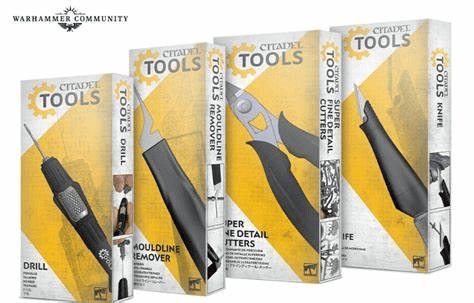
As children, many of us likely had some sort of ‘building set’ to play with. Whether it was a box of secondhand Legos, an Erector set, Kinex, Brio trains, all the way up to model airplanes or a ship-in-a-bottle, kids love to build stuff, or so the marketers would tell you. Eventually you age out of those toys, and stop having as many opportunities to physically create, and I honestly believe that’s an outlet that we could use more of in our lives. Maybe you complete a puzzle on your coffee table every few months or put together an IKEA cabinet, but there is something very satisfying, and very human, about spending an afternoon making something, and then being able to look at it and think ‘yes, I built that, with my own hands’. For some, cross-stitch might do the trick (and more power to you if so), but for me building miniatures for games has been quite cathartic over the years. I encourage you to give it a try! It has additional benefits over that Lego set as well.
The TV show Galavant (a riot if you have the time) had a character who was at one point mocked for having a room full of dolls, and defends himself by saying “They’re not dolls, they’re highly detailed miniature figurines!” I won’t pretend I’m not advocating for you to spend your time building toy soldiers or ‘war dollies’ as some affectionately refer to them, but the model kits, especially for Underworlds, really are highly detailed and there is a lot of psychological gain possible when putting them together. Physically building the model helps to identify which model is which when playing, if you plan to play a couple of games you’ll take to the game much faster as you’ll have a sense for what characters you’re bringing to the table. It also, for myself at least, begins an emotional bonding process, and places ownership (the ‘yes, I did that” from before) of the model firmly in your consciousness. It’s not just an ogre, it’s YOUR ogre.
After you hand build it, the model will mean much more to you than a prebuilt or single-piece plastic toy. Just ask the guys who have a hundred plastic Gundam kits (and you don’t even do anything with those!). You have the added benefit of it being relatively high effort-to-reward ratio – you can build a model in thirty minutes or less, and you already got the dopamine hit you were looking for – a hit that persists and refreshes every time you look at the model again. Spend thirty minutes scrolling your phone or playing a round of an online shooter and ask yourself if you get the same reward, or if you get that same reward when you think back on that experience two months from now.
Finally, building the model helps you notice the intricacies of detail you might not have noticed in a preconstructed figure, and honestly, these are statues – works of art. A real-life artist really designed these miniatures, and there is beauty in the craft that you will notice much more acutely if you build them than if you just look. Warhammer Underworlds models are unique among many miniatures games in that each model has ‘character level detail’ – they aren’t ten identical spearmen with no decorations or trinkets whose only job is to eat a cavalry charge and go back in the box; they each have names, personalities, stories, fashion choices, and more which are evoked by each, again, statuesque art piece.
Painting
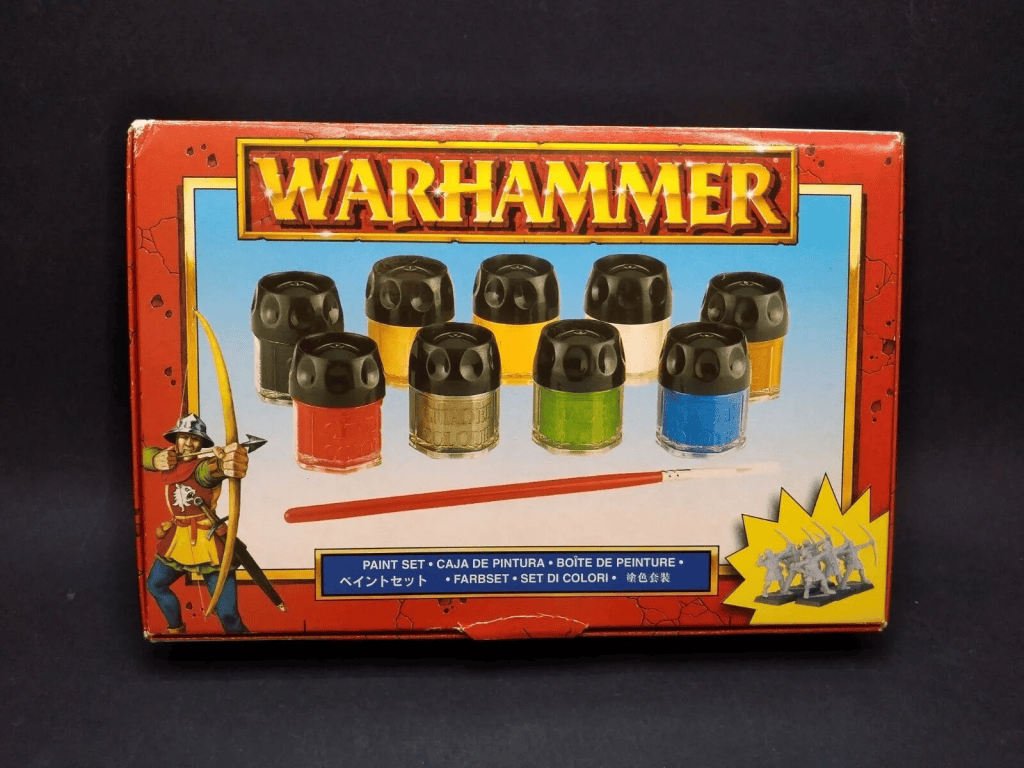
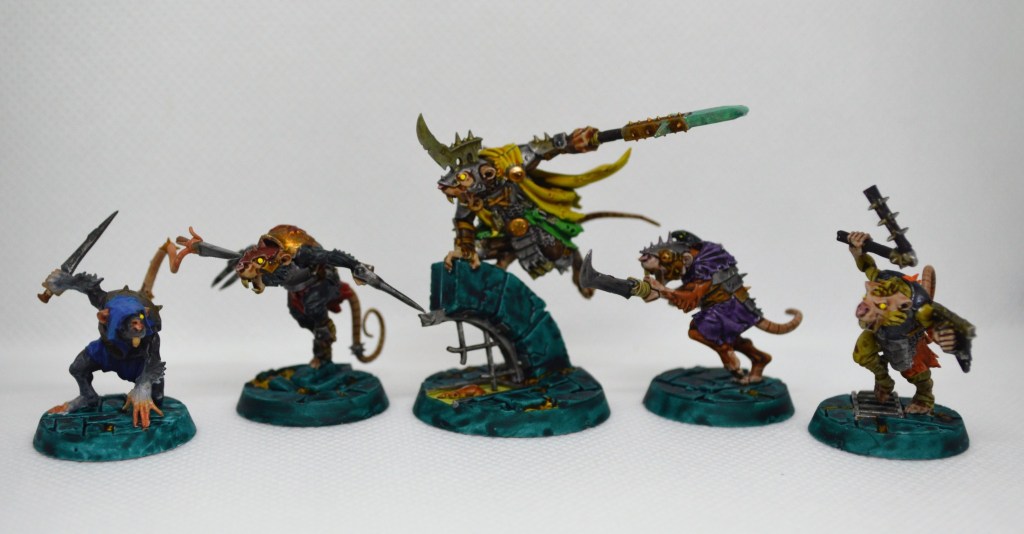
Painting your miniatures can be an immensely therapeutic experience for some, a frustrating chore for others, or even a daunting and overly intimidating prospect that leaves people unwilling to engage. If you’re in one of the last two groups, don’t worry! Underworlds models come in colored plastic so it’s usually pretty easy to tell what’s yours and what your what is your opponent’s, so you can play the game straight away without any need for paint, and it’s absolutely not required. That said, it’s a source of great joy for many people, and an opportunity for you to be creative, as in literally create, in a similar sense to the building of the models. You also have the creative prospect of choosing your own color scheme, art style, and general fashion choice to express your individuality and preferences when painting a warband. Do you like lime green and copper? Darn right you do. Give that a go and see how your lil’ guys stand out on the tabletop. I bet they’ll look really neat next to my pink ones.
Some people, especially those who are most interested in the lore and storytelling aspect of The Hobby, often aim to paint their miniatures in the same style and colors as the box art or what’s on their cards. These are named characters after all, and that’s what they supposedly look like. I personally like to pick my own color wheel pairings and try something that speaks to me artistically, but if you’re more of a color-by-numbers person there’s nothing wrong with that. Preset schemes can take some of the uncertainty or fear out of the process since you’re more following instructions rather than making it up as you go along, though you certainly still can add your own flair. And in terms of the emotional attachment to the model I wrote about in the last section, painting adds even more to that as you’ll have spent more time in most cases and get even more familiar with the model’s small details. That leather pouch on their belt – what color did you paint it? Did it have a scuff on the side, brass buttons, blue stitching, or anything else? Once you’re done that yourself, the mini will mean a lot more in your monkey brain. At least that’s how it works for mine. Your lived experience poured into the model increases its psychological value in a way so many other pastimes like a TV show simply won’t.
Should you opt for a custom scheme, your personal expression of creativity has psychological benefits as well. So much of our adult life, in Western cultures at least, revolves around consumption. Yes, I see the irony in that I’m telling you to buy a product and then buy more products to use with it. But the products will be used to produce something yourself, making your own product! That’s gotta count for something. You will also have the ability to put your own bit of storytelling into it if you make your own art choices – maybe your Stormcast Eternals come from some specific chamber you like the background of, or your ghosts will be Pac-Man colored because that brings you some joy. Whatever floats your boat! There aren’t really any rules.
Conversions/customization/proxy
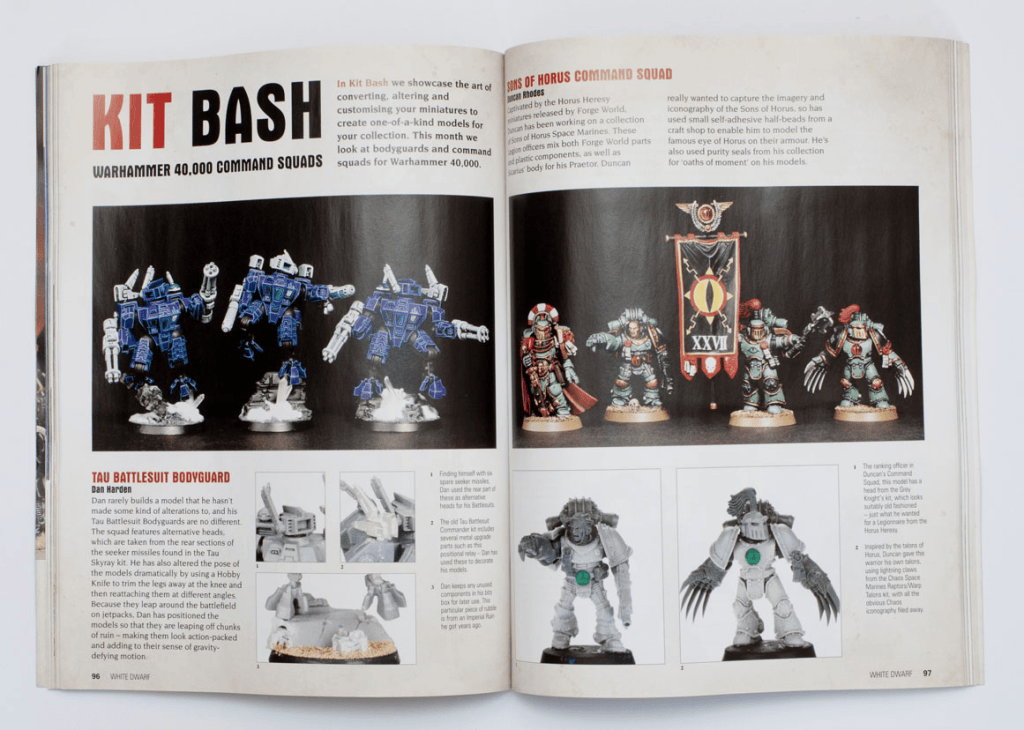
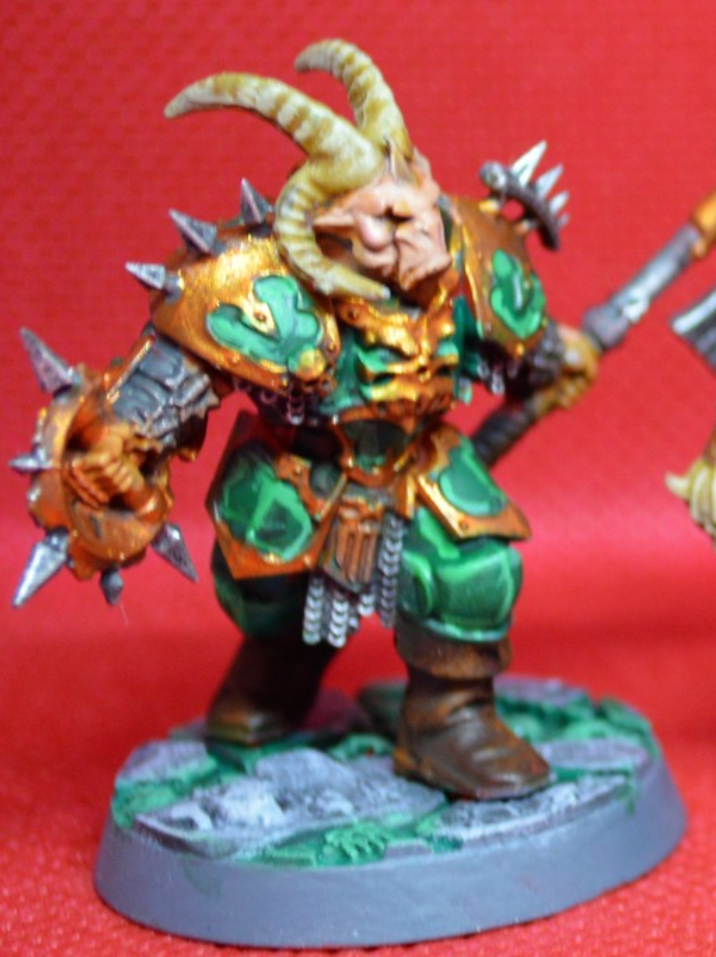
If you take the building and painting to the next level, you can even introduce the concepts of conversions, where you use different pieces from different model kits (or completely unrelated items) to make your things look different, allowing for even more personal creativity. In a conversion, you’re quite literally making something unique, and telling a story. In this situation, you even have the opportunity to make ‘your dudes’, to borrow a term from other Warhammer communities. Sure, everybody playing Magore’s Fiends has a Ghartok Flayskull model, but mine has been head-swapped to be a one-eyed beastman with a broken horn. In my head, his ram horn and goat-like stubbornness are where the ‘cannot be driven back’ trait comes from, and I’ve spent plenty of time imagining how my special ‘Gortok’ is somehow different and is his own unique character. It also allowed me additional bonding experience while making the model and painting it since it was wholly ‘my own’, something you really don’t get from a skirmish game/board game in a lot of instances. Arguably one of my roughest paintjobs since I was still learning, but I can’t help but love the dude.
Some people go to even greater extremes and do what is called Proxying. Proxy models and warbands are where you use a different figure altogether to represent something and allows you to have a substantial theme-shift. Maybe you want to play Rippa’s Snarlfangs, a warband that has three goblins riding on top of wolves, but you don’t really like goblins. You’re more on an elf fan. Very few things are stopping you from putting together three elves on horseback, or riding stags, or rainbow unicorns, or even substituting for three Ninja Turtles on Skateboards for that matter (If you make some TMNT sewer surfers, please send me a photo at SpentGlory@gmail.com). So long as your opponent can tell who is supposed to be who on the game board, the sky is the limit to show off your personal preferences and creative flair.
Lore
Finally, as a component of The Hobby, we come to the ‘Lore’. Say you are playing a different board game, maybe Chess. Who are these black and white kings, and why are they fighting? We’ll never know. Or in Settlers of Catan – what is Catan, and who is settling it, and why? If that’s ever explained, it was so far from the game box that I never learned it. Just win by completing these tasks before your opponent, whatever. You can certainly play Underworlds the same way – be the player with the most Glory by the end of round 3 – and be no poorer for it if that’s what you prefer. Even without the story aspect it’s a fantastically designed game.
If you want to go deeper, however, there is so much there to explore. Who are these people, why are they in this Underworld, and what is their goal? There are real answers to those questions. You can get to know a character, their history, their motivations, and more by reading the Black Library books, snippets of stories in rulebook pages, and even quotes and art on the playing cards. The models on the table aren’t just “two swordsmen and an archer” like you might find in a more generic game, but characters with names and personalities that can help you really dive into the immersion of the game experience. It’s not just your wizard who slew my demon, but this specific wizard with a cultural and ancestral fear/hatred of the god that demon represents, and the fight for survival of her species by the gathering of souls and so on. When it means more, it’s more fun and more memorable. When you win, it isn’t just that you had more points than me, we also told a story together.
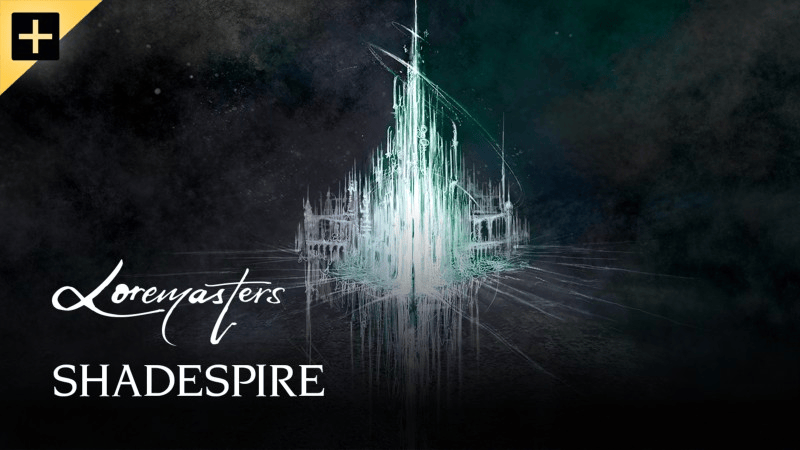
Warhammer Underworlds has its own rich and full background stories, and if you find me on a voice chat someday I’ll talk about the Mirrored City of Shadespire and the Katophrane Curse until the cows come home. Heck, they even released a Loremasters episode on the very topic just this week (March 6th, 2024) over on Warhammer +/Warhammer TV!
That said, Underworlds and the related lore actually is a small side-story to the much greater narrative arc of the Warhammer: Age of Sigmar universe, which has literally hundreds of full-length novels and multiple animated shows in its panoply of narrative offerings. If the idea of rolling a few dice and seeing if you can present your opponent with a card puzzle they can’t solve doesn’t get your gears going, maybe finding a way to get your intrepid hero out of danger or your dastardly scoundrel to the source of their coveted treasure will.
Wrap

Overall, Warhammer Underworlds is a marvelous way to spend your time, and there are many ways to spend that time that don’t involve the actual playing of the game. As mentioned earlier, I will be publishing some beginner’s guides to these non-gaming aspects of The Hobby to help ease your way into giving them a try, and you never know what you might fall in love with. Some people simply enjoy the collecting aspect, others love the satisfaction of a fully built model kit. Some people relish the act of painting, while others find excitement in customizing their models to suit their latest mad-scientist idea. Many more still enjoy reading stories, or even trying their hand at writing their own. All of these are legitimate pursuits in The Hobby. If you are the kind of person who doesn’t find competitive gaming very appealing, or if you’re looking for a competitive game that also offers so, so much more, come give Warhammer Underworlds a try. I promise you, there’s gold in them thar hills, and that gold is glorious.





Leave a comment