Today we are going to cover the best approaches to beginning Warhammer Underworlds as a brand new player. If you are reading this as as an existing player shepherding a new player into the hobby, thank you for helping to grow our community. If you’re a potential new player who is lost about where to start, welcome! You’re looking at one of the best games in circulation right now, regardless of whether you’re comparing board games, tabletop minis games, or card games. If you need convincing as to why you should give it a try, I wrote extensively on why the Embergard edition is a phenomenal jumping in point for new players, which you can read here. If you’ve decided to take the plunge, read this article, and hopefully by the end you’ll have a clearer sense of where to dive in and what you will need. Also be sure to check out the rest of the New Player Series!
If you’re a player returning after some time away from the game and want to see how things have changed, check out the Returning Player’s Guide here
Click HERE for a list of every warband in Second Edition, as well as tips for their best use
Click HERE for a similar list of Rivals Decks in Second Edition, and how to play them
If you prefer to listen to this in Audio format, Underworlds Underground has a podcast episode covering the same material here
What You Will Need
Be sure to read this guide to the most cost-effective ways to get into the game
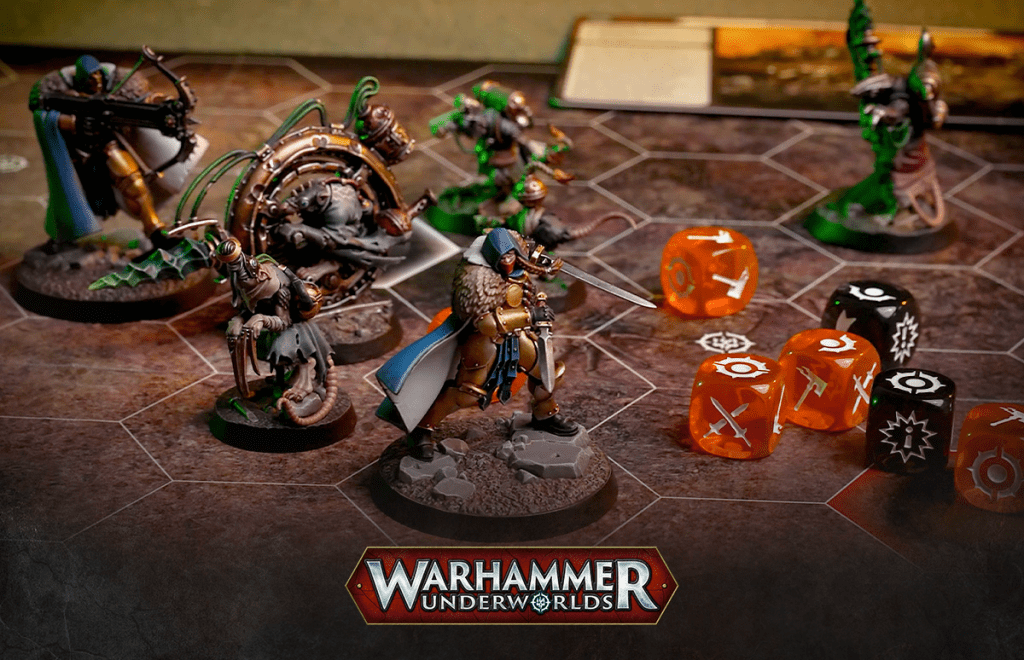
In order to play the game, you’re going to have to obtain some models, cards, boards and dice. If you are getting into an existing group or playing with a friend who already has these things, a great starting point is to simply borrow their stuff and play with them. Eventually, once you’re gotten your feet under you, it will be time to pick up some of your own items, but where do you even begin? There are quite literally dozens of products you can purchase in your friendly local gaming store or online, so we an look at some of the best boxes to start with as a beginner.
Likely the best single purchase you can make is to pick up the “Embergard Core Box”. This contains two straightforward warbands with the complete package of minis, cards, dice, boards, and tokens as well as a rulebook. It’s the starter set for a reason, as quite literally everything you need is there, and in a beginner friendly presentation. It’s worthwhile checking out the new rulebook in the Embergard core box, which you can do by reading here. It’s free online from GW!
You could also opt for any of the separate warbands available, such as those in the Grand Alliance four-sets or single releases like Grandfather’s Gardeners, The Jaws of Itzl, or Borgit’s Beastgrabbaz. These will released every handful of months and contain warband models, Warscroll cards for abilities and special rules, and fighter cards for stats. A warband you like in its own self-contained box won’t give you any dice or boards, nor will it come with a “rivals deck” you will need to play the game – so you’ll have to hope your opponent is willing to share dice, tokens, cards and boards (which effectively everyone is going to be). You could also purchase second hand boards and dice off eBay for relatively cheap, so if you have a specific warband in mind that is outside of a the core box, this is another option for you.
Some players also end up picking up an older warband, perhaps second hand from a garage sale or a local player who has moved on to other games. While these items are out of print and the cards have been ‘rotated out’ – you can still play with the old models and all of the old warbands have Warscrolls and rules for use in the Embergard edition – you may simply need to purchase a card pack to go along with them and you’ll be all set. For more information check out this article on older warbands, and as I work through more of the older seasons you can look there as well for similar information. Many of these older warbands have free online rules now, which can be accessed here. Be aware not all of them are ‘tournament legal’, but for casual play you can absolutely use any warband you like.
Beginner Friendly Warbands
Click HERE for a list of every warband in Second Edition, as well as tips for their best use
Click HERE for a specific discussion of which warbands are best for new players
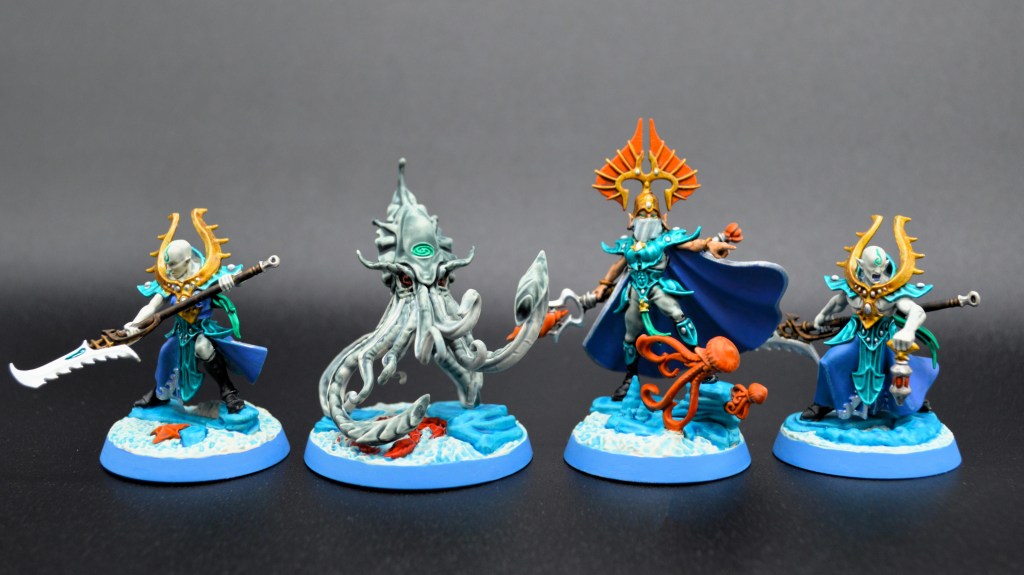
Whether you’re getting a starter set, a core box, or a separate warband box to begin, a list of beginner friendly warbands can come in handy especially as you look to expand your collection. This is only my opinion, but the following could be considered good ‘starting’ warbands. I chose these based on availability (can you easily find these around), ease of learning (do they avoid overly complex mechanics), and competitive floor (are you going to have a shot of winning a few of your games, even if you don’t play everything perfectly).
In no particular order (as of January 2026):
Ironsoul’s Condemnors – three strong fighters with a braindead-simple inspire condition and really concise warscroll abilities. Minimal reading or need to remember anything extra
The Emberwatch – three strong fighters that won’t die on you right away, will probably hit things, and have good single-use warscroll abilities. This warband also can play pretty much any deck!
Xandire’s Truthseekers – relatively simple mechanics and benefits when you lose fighters means new players can stay ‘in the game’ for longer
The Wurmspat – tremendous fighter profiles and capacity to remain on the table allows new players to make use of ther models all game long
Myari’s Purifiers – four solid fighters with well-defined roles, ‘always on’ abilities, and the opportunity for rerolls.
Khagra’s Ravagers – strong fighters with a straightforward gameplan and great warscroll abilities
Morgok’s Krushas – three strong fighters that hit hard and have some fun (though a little more challenging to use) warscroll abilities
– I’ll update this further as rules and information about other returning warbands is released – regardless of what you want to play, tons of the older stuff has free online rules you can access here

There are certainly more one could choose to begin with (and do please chase what interests you most), but the above are decent starting points based on what is currently available.
Finding a Group to Play With
The next thing you’ll need is people to play against. If you’re being brought in by an existing player, lean on them for a few learning games and get your toes wet, which will help you figure out both how best to play, and what styles you enjoy to help guide your path forward. If you’re getting in fresh with a friend, split the Embergard box with them and work through it together. There will shortly be plenty of “how to play” videos available online if you’re a visual learner.
If you don’t have a ready-made partner, don’t dismay! I have made an online directory of local groups across the world. Check there to see if there’s anybody near you! Many local gaming groups have Facebook pages or Discord servers and you can search to see what exists in your area. Alternatively, you could look for pages for your local gaming stores or clubs, and post there saying you’re new to Underworlds and are looking for other players. You could also stop in at an official Warhammer store if you have one in your area, and the shopkeeper there will be able to run you through an introductory game before referring you to the other local players. Lastly, spamming Reddit, Facebook, and Discord with “is anybody from XYZ?” can actually get you more friends than you might expect. If there’s no group in your area, consider founding an online community yourself (and then let me know and I can add you to the directory)

Playing Your First Games
There are plenty of “how to play” videos available online if you’re a visual learner. Here’s an excellent overview of Spitewood by Agents of Sgimar. This page has an official how to play video from games Workshop if you’d prefer the source material.
The first thing to be aware of when setting up your first game is that there exist multiple formats to play. There are many options, but the most common are going to be Rivals and Nemesis. I have covered the major formats in this article here. For most players, your first games should be in the Rivals format as this is more straightforward and does not require any deckbuilding on your part. The warband you’ve selected will have an archetype – Strike (for aggressive attacking play), Take and Hold (for grabbing treasure tokens and dominating the boardspace), Flex (a combination of styles) and Mastery (which have special goals and different mechanics). The Rivals decks are also assigned these same archetypes, so pick one that matches what your warband is categorized as and you should be relatively ready to go. If you’re totally in the dark, take a Flex or Strike warband with a Strike deck and start swinging those fists.
If you have somebody to teach you that’s great, but it’s also worthwhile checking out the new rulebook in the Embergard core box, which you can do by reading here.
After you’re played a few games in the Rivals format (or if you’re interested in the deckbuilding component of the game and want to cut straight to the action), the Nemesis format is your next step and is currently the most popular format to play in many circles. Here’s a Beginner’s guide called Building Your First Nemesis Deck. In this format, you will create your own deck by combining cards from any two universal rivals decks. You will select any 12 objectives (as long as no more than 6 of them are “Surge” or “score immediately”), 10 upgrades, and 10 gambit/ploy cards to make 20 total power cards. You have the option to select more than 20 power cards, so long as you don’t have more gambits than upgrades, but this is usually not the best competitive choice.
Your deck can contain any ratio of cards from each of your two decks in the ‘pairing’. In competitive play, the universal rivals deck you choose will need to be from the ‘in rotation’ decks from recent seasons. The last thing to know if you can’t include duplicate cards with the same name – even if both Rivals deck contain Great Strength in them separately, your Nemesis deck can only have one copy of it. The various rules updates on Warhammer Community maintain a “Forsaken and Restricted” List which can be found in the Nemesis Rules Document – you can only have one restricted card in your nemesis deck and cannot take forsaken cards.

Optional Extras
There are a number of products that can be purchased to help flesh out your collection, but are in no way necessary to play the game. Some experienced players never pick these up at all! The hobby exists beyond simply rolling dice, however, and you may find these helpful or fulfilling in different measure so I’ll provide a quick list here. I’m not going to make any specific product recommendations, but there are a wealth of options out there to explore.
Card Sleeves – These can help protect your cards from wear and tear, and if they have opaque backing, can also standardize the look of your deck to prevent any allegations of card modification/deck stacking/cheating in a competitive event. You should be able to find these at most card shops, and they’re a staple in most TCGs.
Deck Boxes – Likewise, your cards can get damaged in transport and these will help keep them safe. Games workshop produces some deck boxes with seasonal artwork on them, and you can often win some by competing in Organized Play event as well. Some higher quality products exist, and can be purchased wherever you get card sleeves. These boxes are useful when bringing multiple warbands out to play, as you will be more easily able to keep different decks separate and they won’t get mixed together. Card binders are also available if you wanted to organize your ‘loose’ cards when they’re not actively built into a deck.

Glue – While the models for Warhammer Underworlds are all ‘push-fit’ and don’t require glue for assembly, many modelers prefer to glue their figures together for more stability and a secure fit. This will also reduce the risk of damage if a model is dropped during transport or play. Plastic glue creates an inseparable bond between the joined pieces, so it’s the strongest option, but you’ll need to be careful when assembling. Super glue can also work well. You may find you need to do some trimming of the pegs and boring of holes a little since the glue does occupy some space and the push fit models don’t always accommodate this. See this article for how to build Underworlds models.
Paint – A major part of the hobby for many players is painting your miniatures. While this is not necessary to play your games, it can be a very rewarding experience and some competitive events require it (or offer ‘best painted’ awards). I would suggest using miniatures specific paints (Citadel Paints, Army Painter, Vallejo, and several others) rather than craft store acrylics as they will go on smoother and thinner, allowing better detail and ultimately making your models look much better in the end. See this article for painting supplies to look for, and you can also check out this guide to spray priming and this article on painting basics.
Model Transport Cases – You can probably get away with putting the models in the boxes they came in, but if your figures are lovingly painted some people prefer to have them in protective cases. Multiple companies produce hard cases with soft foam for miniatures games, and a few even have specifically cut foam to fit Underworlds warbands. You can also place magnets on the bases of your miniatures and affix them to metal/magnetic sheets in a tupperware container, or pack them in an egg carton with some tissue paper for a budget option.

Get Playing!
Those are the basics! There is a lot to take in for an aspiring Warhammer Underworlds player, but hopefully I have provided some clarity for you in this article. You’ll need a warband, potentially some boards and dice, maybe an extra card pack, but that’s about it. Ultimately, you can begin playing Warhammer Underworlds with just one box, one friend, and one hour. Now go check out the rest of the New Player Series, get out there, and spend some glory!





Leave a comment